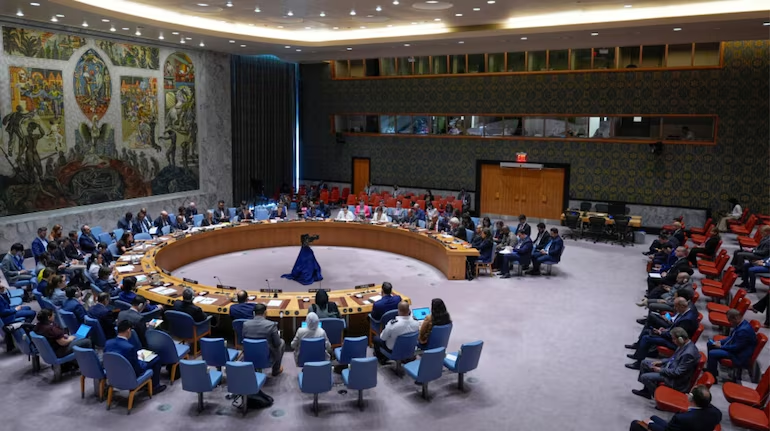
The recent Pahalgam terror attack, which claimed the lives of 26 civilians, most of them tourists, has triggered heightened tensions between India and Pakistan. In response, the United Nations Security Council (UNSC) convened a closed-door meeting at Pakistan’s request on Monday to address the escalating situation. Although the 90-minute session ended without a formal statement, the discussions highlighted the growing concern over the deteriorating security situation in the region. Both sides have been engaged in a tense exchange, with Pakistan pushing for international attention, while India is focused on ensuring accountability for the attack.
The meeting, which did not include any public declaration, was called by Pakistan’s Permanent Representative to the UN, Asim Iftikhar Ahmad. Ahmad explained that the objective was to allow UNSC members to deliberate on the increasing hostilities between India and Pakistan, especially following the deadly attack in Pahalgam. The council’s inability to release a joint statement reflects the complex nature of the dispute and the diverging views within the body.
After the meeting, Khaled Mohamed Khiari, the Assistant Secretary-General for Political and Peacebuilding Affairs, urged both nations to pursue dialogue and a peaceful resolution to the conflict. He also acknowledged the volatile situation between the two countries. Greece, which is presiding over the council in May, described the meeting as “productive” and “helpful” but refrained from offering any specific solutions or resolutions. Meanwhile, Russia echoed the sentiment of de-escalation, expressing hope for a reduction in tensions.
UN Secretary-General António Guterres, in a separate statement, condemned the Pahalgam attack and expressed his deep sympathy for the victims. He reiterated that targeting civilians is unacceptable and called for those responsible to be brought to justice. Guterres also advocated for maximum restraint, emphasizing that a military solution would not resolve the conflict between India and Pakistan.
Meanwhile, India’s Prime Minister Narendra Modi vowed that those behind the attack would be brought to justice. India has already taken several retaliatory actions, including suspending visa services, restricting Pakistani air traffic, and putting the Indus Waters Treaty under review. While some Pakistani officials claim that India’s military response is imminent, Pakistan has requested an independent investigation into the terror attack.