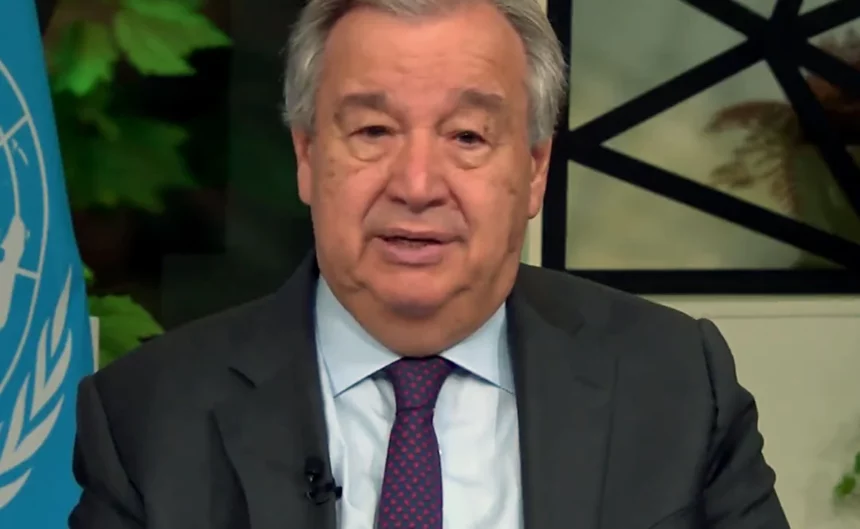
In the wake of the recent Pahalgam terror attack that claimed the lives of 26 civilians, UN Secretary General Antonio Guterres has called for India and Pakistan to exercise “maximum restraint”. While this might appear as a diplomatic stance, it mirrors a consistent pattern in Antonio Guterres’ past statements that have often been perceived as critical of India, especially following key national events such as the abrogation of Article 370, the passage of the Citizenship Amendment Act (CAA), and the Pulwama-Balakot episode.
Muted on terror, vocal on India
On April 22, when terrorists armed with AK-47 rifles targeted a tourist vehicle in Jammu and Kashmir’s Pahalgam region, Antonio Guterres condemned the killing of civilians but failed to acknowledge the religious motivation behind the attack. Reports suggest that the attackers selectively targeted victims based on their religious identity, a detail that was missing in the UN chief’s statement. This omission has drawn criticism from Indian observers who argue that the UN has consistently shied away from calling out Islamic terrorism by name, especially when it emanates from Pakistan-based groups such as Lashkar-e-Tayyeba.
Antonio Guterres had issued a similar call for restraint in 2019 after the Balakot air strikes, which were a response to the Pulwama terror attack orchestrated by Pakistan-based militants. Then too, critics noted the absence of direct condemnation of Pakistan’s role in cross-border terrorism, despite clear evidence of its involvement.
Political messaging from abroad
Antonio Guterres’ stance on India has also drawn attention for its timing and tone. After the Indian government revoked Article 370 in August 2019, Antonio Guterres publicly urged India to avoid actions that could alter the status of Jammu and Kashmir. He invoked the 1972 Simla Agreement, echoing Pakistan’s diplomatic talking points. Similarly, when India passed the CAA in December 2019, Antonio Guterres expressed concern about the “risk of statelessness” for Muslims, issuing this statement from Islamabad just as then-US President Donald Trump was preparing to visit India. These remarks coincided with violent riots in Delhi, further fuelling the perception that his commentary contributed to international pressure on New Delhi.
Despite Antonio Guterres’ repeated remarks, the Indian government under Prime Minister Narendra Modi has opted to focus on national security priorities. Following the Pahalgam massacre, Modi is holding high-level consultations with security officials to formulate a response that sends a clear deterrent message to Pakistan. The government appears determined to respond firmly to cross-border terrorism, while largely ignoring what it sees as one-sided commentary from the United Nations.