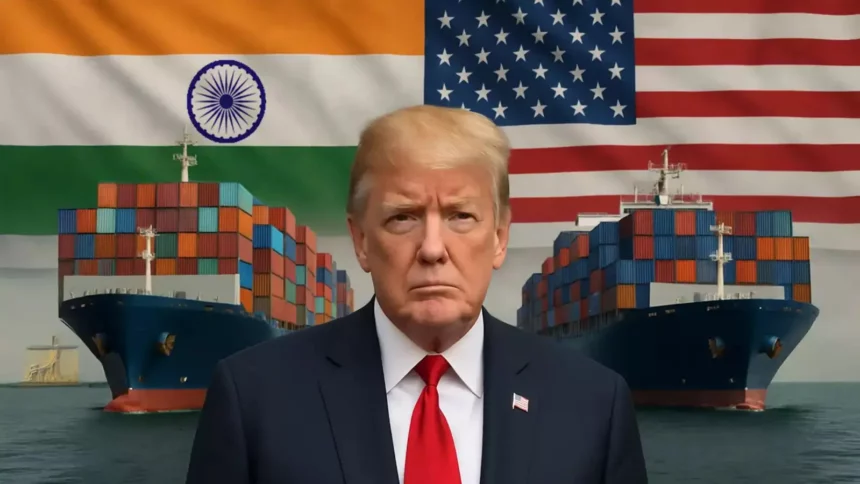
In a move that rattled investors and shook the early morning trading session, India’s benchmark stock indices opened sharply lower on August 7, following US President Donald Trump’s decision to double tariffs on Indian exports. The surprise announcement, which raised levies from 25% to 50%, has deepened economic friction between the two countries and raised concerns over how prolonged trade tensions could dampen India’s export momentum and broader economic growth.
At the opening bell, the BSE Sensex dropped by 335.71 points, slipping to 80,208.28, while the NSE Nifty declined 114.15 points, settling at 24,460.05. The negative market sentiment reflected growing investor anxiety over potential retaliatory measures, currency pressures, and a drag on key sectors like pharmaceuticals, textiles, and auto components.
Tariff Hike Sparks Investor Concerns
The sudden spike in tariffs came just a day after Washington announced that it was imposing additional duties on Indian imports, escalating them to 50%, one of the steepest trade measures taken against any US partner. The policy shift, while positioned by the Donald Trump administration as a corrective step against what it terms “unfair trade practices” and India’s ongoing dealings with Russia, has left Indian exporters facing an increasingly uncertain outlook.
Dhiraj Relli, CEO of HDFC Securities, noted that the tariffs, if sustained for a full year, could shave off 30 to 40 basis points from India’s GDP growth. This projection underscores the broader economic risk posed by the tariff war, especially as India remains heavily dependent on global markets for its merchandise exports.
While the Reserve Bank of India (RBI) maintained its GDP growth forecast at 6.5% for the financial year during its last policy meeting, experts are cautioning that persistent geopolitical stress could derail momentum. With the Indian government yet to respond formally, markets remain on edge awaiting a policy roadmap or potential diplomatic outreach.
Rupee Steady, Global Markets Mixed
Interestingly, despite the turbulence in equities, the currency markets appeared relatively stable. One-month dollar-rupee non-deliverable forwards (NDF) indicated that the rupee would likely open without significant change compared to its last close. This steadiness suggests that traders may be waiting for further clarity before repositioning aggressively in currency pairs.
Meanwhile, global markets presented a mixed picture. In Asia, MSCI’s regional gauge climbed 0.8%, while US equity futures indicated modest gains, thanks in part to exemptions provided to firms such as Apple Inc. from Donald Trump’s 100% semiconductor tariffs. Shares of Nvidia rose in after-hours trading, and companies like Samsung Electronics and Taiwan Semiconductor Manufacturing Co. also posted notable gains.
Oil prices also ticked higher, reversing a five-day losing streak as global investors evaluated the US’s diplomatic push to end the war in Ukraine and its campaign to sanction buyers of Russian crude. Bond markets saw mild shifts, with the yield on 10-year US Treasuries edging up to 4.25%.
Back in India, market veterans like Nilesh Shah, CEO of Kotak Mahindra Asset Management, warned that the combination of rising tariffs and deteriorating US-India relations could lead to sustained volatility in equities. He remarked that the market’s previous complacency might soon be tested if tensions escalate further without timely policy interventions.
Investors and analysts alike are now closely watching both governments for signs of easing rhetoric or new negotiations. Until then, market participants are bracing for a potentially volatile period driven by trade policy developments, global headwinds, and shifting investor sentiment.