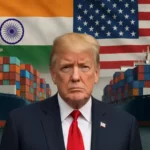
In a bold move that could reshape global trade dynamics, US President Donald Trump has implemented a 25 per cent tariff on Indian imports starting August 7, 2025, escalating already simmering economic tensions between the two nations. The action follows Donald Trump’s earlier warnings and executive orders targeting nearly 70 countries, with India receiving some of the steepest penalties. While Donald Trump claims this decision will channel billions into the American economy, concerns mount over the long-term implications for global trade, diplomatic ties, and supply chain stability.
Donald Trump’s Midnight Declaration Sparks Economic Alarm
At midnight on August 7, Donald Trump took to Truth Social to declare the tariffs live, writing in all capital letters, “It’s midnight!! Billions of dollars in tariffs are now flowing into the United States of America!” This statement was followed by another post blaming past administrations and foreign nations for taking advantage of the United States for decades. Donald Trump claimed that the inflow of money through tariffs was a step toward restoring America’s economic independence, adding that only a “radical left court” could stop what he called the resurgence of American greatness.
The tariffs are part of a broader push to realign America’s trade policies, encouraging domestic manufacturing and reducing dependency on foreign goods. According to Donald Trump’s team, these measures will redirect global trade routes and strengthen American industries.
India, one of the key countries targeted, has been hit with a 25 per cent tariff across a wide range of goods. Donald Trump had earlier cited India’s “far too high” tariff barriers and continued military and energy cooperation with Russia as justification for the hike. In a follow-up announcement just days after the initial tariff, Donald Trump escalated the pressure by declaring an additional 25 per cent levy on Indian imports, effectively doubling the duty to 50 per cent. This second wave of tariffs is scheduled to take effect on August 27.
The Wider Tariff Landscape and Global Impact
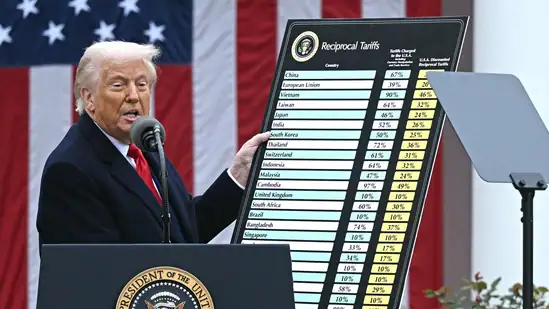
Donald Trump’s latest trade offensive is not limited to India. His executive orders last week outlined new tariff structures for nearly 70 nations, ranging from moderate 10 per cent duties to much steeper penalties for nations like Syria, Laos, and Myanmar. These new levies, according to Bloomberg Economics estimates, are poised to increase the average US tariff rate to 15.2 per cent—the highest since World War II. In comparison, last year’s average tariff rate stood at just 2.3 per cent.
A particularly aggressive step came in the form of a 100 per cent tariff on semiconductors imported from companies that neither manufacture in the United States nor have committed to doing so. The move is aimed at repatriating technology production and reducing reliance on global semiconductor supply chains, which have already been strained by geopolitical tensions and post-pandemic disruptions.
Donald Trump’s actions signal a full-throttle embrace of economic nationalism, placing American manufacturing at the heart of policy. His administration insists that such moves are necessary to protect national interests, build technological resilience, and correct historical trade imbalances that he argues have weakened the American worker.
India Faces Diplomatic and Economic Crossroads
The Indian government has so far refrained from issuing a direct response but is widely expected to take the matter to the World Trade Organization (WTO). The abrupt imposition of tariffs is seen by New Delhi as a breach of bilateral trade agreements and a politically motivated move ahead of the US election cycle.
While India has diversified its trade partnerships over the years, the United States remains a critical export market. The new tariffs are likely to hit sectors such as textiles, pharmaceuticals, machinery, and agricultural products. Indian exporters, already facing inflationary pressures and global demand uncertainties, now find themselves navigating a significantly more hostile trade environment.
Strategic observers also note that Donald Trump’s reference to India’s defense and energy cooperation with Russia points to a growing overlap between economic policy and foreign affairs. India has maintained a neutral stance in the Russia-Ukraine conflict and continues to import discounted oil and defense equipment from Moscow—a policy that increasingly irritates Washington.
If New Delhi retaliates with counter-tariffs or restricts market access for American firms, the ripple effects could be substantial. The trade imbalance between the two nations, which the Donald Trump administration frequently highlights, could widen further if cooperation erodes. Business leaders in both countries have called for diplomatic dialogue to de-escalate tensions, but with elections nearing in both nations, policy hardening appears likely.
As the world watches this economic confrontation unfold, Donald Trump remains unapologetically aggressive in his tone and policy, determined to frame tariff enforcement as a patriotic act. Whether the economic gains touted by the administration will materialize in the long run remains to be seen, but for now, both India and the US are bracing for an intense phase of trade hostilities.