In a bold and pointed intervention, US President Donald Trump asserted that India was being singled out for penalty tariffs due to its continued energy and defense trade with Russia—part of a broader plan that could bring further secondary sanctions. President Donald Trump emphasized that similar treatment of countries like China remains possible, signaling a hardening US stance toward nations engaging with Moscow despite diplomatic sensitivities.
Why India was targeted over Russian oil purchases ?
Donald Trump clarified that while multiple nations—including China—import Russian energy, India was chosen for punitive tariffs because it is viewed as a strategic partner that should know better. “India should not be buying oil from Russia,” he stated, underscoring that punitive tariffs serve as a message to allies: trade with adversaries will carry consequences, especially when it involves critical sectors like energy and defense.
His remarks followed criticism from Republican leader Nikki Haley, who warned against giving China a “pass” while penalizing India. “China got a 90‑day tariff pause, but India faces full penalties,” Haley wrote on social media, positioning India as a trusted ally rather than an adversary.
Threat of broader sanctions and China’s uncertain fate
When pressed about whether China could face similar tariffs, Donald Trump avoided a definitive answer: “Could happen. Depends on how we do,” he said, implying that future action hinges on how the US assesses foreign policies and strategic alignment. He further warned that more secondary sanctions were in the pipeline, suggesting a global recalibration of relations with countries engaged in Russian commerce.
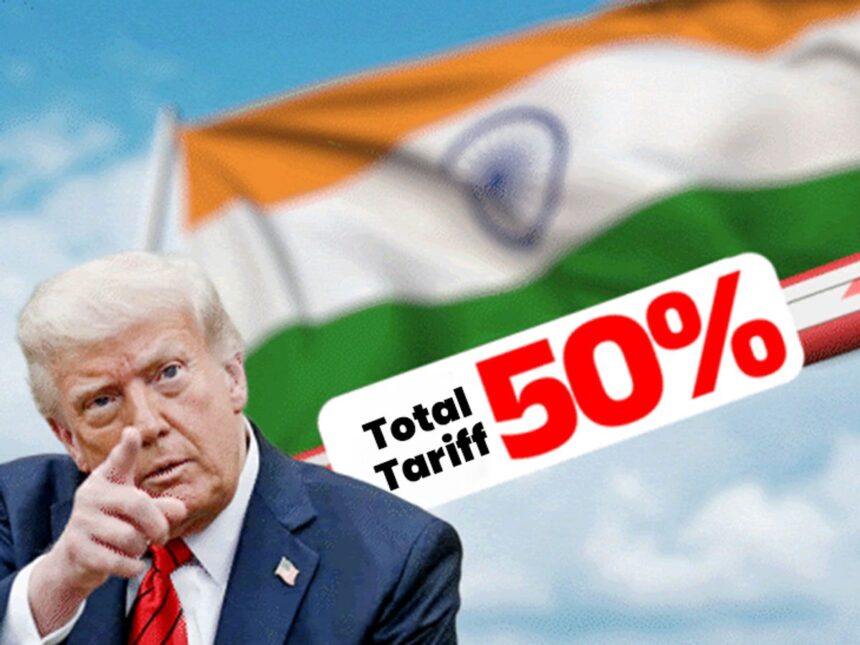
Earlier in the week, Donald Trump had doubled US tariffs on Indian goods—from 25% to 50%—with the additional 25% set to come into force on August 27. This escalation starkly contrasts with tariff rates imposed on other Asian exporters like Bangladesh, Indonesia, and Vietnam, which currently face tariffs of around 19–20%.
India has labeled the tariffs “unjustified and unreasonable,” accusing the US and EU of unfairly targeting it while overlooking larger oil purchasers. Prime Minister Modi’s government maintains that India’s defense and energy ties with Russia are driven by long-standing, strategic necessity, not political favoritism or alignment.