Gautam Buddh Nagar, March 6, 2026:
A district-level monitoring committee meeting for the PM Surya Ghar Free Electricity Scheme was held at the Collectorate auditorium in Gautam Buddh Nagar to review the progress of the program and ensure its effective implementation. The meeting was chaired by Chief Development Officer Shivakant Dwivedi, who conducted a detailed review of the scheme’s execution, pending cases, and steps required to expand its reach among consumers.
During the meeting, officials discussed strategies to ensure that a larger number of households benefit from the scheme, which promotes the installation of grid-connected rooftop solar power plants on private residential buildings.
Focus on Clearing Pending Loan Disbursement Cases
Chief Development Officer Shivakant Dwivedi directed banks to resolve pending loan disbursement cases related to the scheme at the earliest. Referring to the list of pending applications with financial institutions, he instructed bank officials to expedite approvals so that eligible consumers can proceed with rooftop solar installations without delays.
The meeting was attended by the Lead Bank Manager, registered vendors from UPNEDA, the nodal officer for the PM Surya Ghar scheme, officials from UP Power Corporation Limited (UPPCL) and Noida Power Company Limited (NPCL), as well as representatives from Resident Welfare Associations (RWAs) and Apartment Owners Associations (AOAs).
Officials emphasized the need for coordinated efforts among departments, financial institutions, and vendors to achieve the targets set for the district.
Emphasis on Increasing Registrations and Solar Installations
During the review, the Chief Development Officer stressed that registrations under the scheme should be increased in proportion to the targets allocated to the district. He urged officials and stakeholders to encourage residents to install rooftop solar plants on their homes.
The installation of grid-connected solar rooftop systems will allow households to generate their own electricity while feeding surplus power into the grid. This initiative aims to reduce dependence on conventional electricity sources and promote clean and renewable energy.
Dwivedi instructed departments to intensify awareness campaigns and assist eligible beneficiaries in submitting applications through the online portal. He noted that expanding the scheme’s reach would not only help residents reduce their electricity bills but also contribute to environmental sustainability by promoting green energy.
Financial Benefits and Subsidy Structure
During the meeting, Project Officer in charge Loves Kumar Sisodia provided a detailed presentation about the scheme to RWA and AOA representatives. He encouraged them to spread awareness among residents and motivate more households to adopt rooftop solar systems.
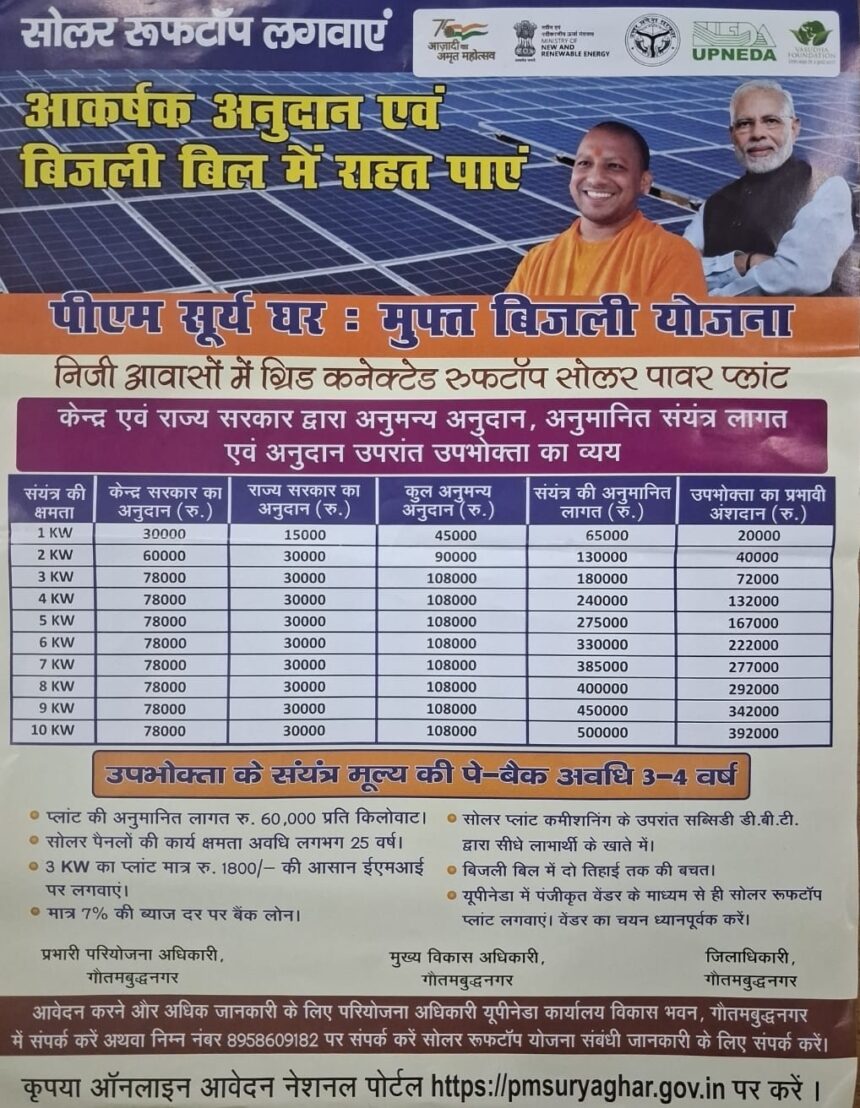
Under the PM Surya Ghar Free Electricity Scheme, both the central and state governments provide substantial financial subsidies for installing solar rooftop plants.
The subsidy structure includes:
1 kilowatt solar plant: Approximately ₹45,000 subsidy (₹30,000 from the central government and ₹15,000 from the state government)
2 kilowatt solar plant: Approximately ₹90,000 subsidy
3 kilowatt or higher capacity plant: Up to approximately ₹1.08 lakh subsidy
The estimated installation cost of a solar rooftop system is around ₹60,000 per kilowatt. After the subsidy is applied, consumers are required to pay a significantly reduced amount.
Officials explained that solar panels typically have an operational lifespan of about 25 years, allowing households to benefit from long-term electricity savings.
Savings and Payback Period
The scheme offers substantial financial benefits for consumers. Households installing rooftop solar systems can reduce their electricity bills by up to two-thirds. In addition, the cost of installation is expected to be recovered within a payback period of approximately three to four years.
Once the investment cost is recovered, consumers can continue to enjoy significant savings on electricity expenses over the lifespan of the solar panels.
Loan Facilities and Vendor Guidelines
Officials also informed participants that consumers must install rooftop solar systems through vendors registered with UPNEDA. After the solar plant is commissioned, the subsidy amount is transferred directly to the beneficiary’s bank account through Direct Benefit Transfer (DBT).
For consumers who require financial assistance, banks offer loan facilities at an interest rate of around 7 percent, enabling households to adopt solar energy without a heavy upfront financial burden.
Application Process and Contact Details
Residents interested in installing rooftop solar systems under the scheme can apply online through the national portal https://pmsuryaghar.gov.in
.
For additional information or assistance, applicants may contact the UPNEDA Project Officer at the office located in Vikas Bhawan. A dedicated contact number, 8958609182, has also been provided for queries related to the rooftop solar program.
Officials and Stakeholders Present
The meeting was attended by District Divyangjan Empowerment Officer Ashish Kumar, District Lead Bank Manager Rajesh Kataria, officials from various departments, bank representatives, registered vendors from UPNEDA, and representatives of RWAs and AOAs.
Authorities expressed confidence that with coordinated efforts, increased awareness, and timely financial support, the PM Surya Ghar Free Electricity Scheme can significantly expand rooftop solar adoption in Gautam Buddh Nagar.