30 March 2026, Gautam Buddh Nagar.
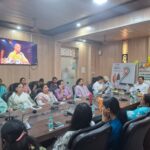
A comprehensive one-day district-level workshop on disaster risk reduction and community participation was successfully organised at the seminar hall of Noida World School, Sigma-1, Greater Noida. The programme was conducted under the directions of the Uttar Pradesh State Disaster Management Authority and the Additional District Magistrate (Finance & Revenue), with a focus on strengthening disaster preparedness, enhancing coordination, and building resilience among citizens. The workshop brought together a diverse group of participants, including women from Self Help Groups (SHGs), district-level officials, teachers, students, civil defence members, and ‘Aapda Mitra’ volunteers, all of whom actively engaged in the training sessions.
A district-level workshop on disaster risk reduction was held in Greater Noida, where NDRF trained participants in emergency response, rescue techniques, and community preparedness.
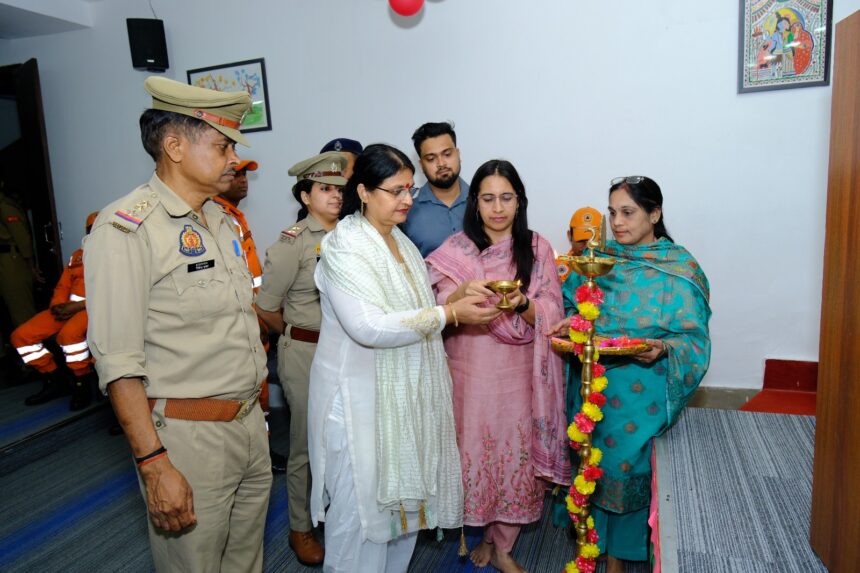
The programme commenced with a formal inauguration by Anukriti Sharma, Shiv Pratap Parmesh, and Manju Kaul Raina, who jointly lit the ceremonial lamp. Addressing the participants, the dignitaries emphasised the importance of awareness, preparedness, and active community participation in mitigating disaster risks. They highlighted that disaster management is not solely the responsibility of government agencies but requires collective efforts from individuals, communities, and institutions.

NDRF Training and Emergency Response Skills
The technical sessions were led by the National Disaster Response Force (NDRF) 8th Battalion, Ghaziabad, where trainer Raju Yadav provided detailed insights into the structure, objectives, and operational role of the force. Participants were trained to handle both natural and man-made disasters such as earthquakes, floods, cyclones, fires, landslides, and chemical or industrial accidents. The session focused on rapid response techniques, coordination mechanisms, and the importance of professional rescue operations during emergencies.
A major highlight of the training was the practical demonstration of life-saving techniques. Participants were trained in CPR (Cardiopulmonary Resuscitation), FBAO (Foreign Body Airway Obstruction), and BLS (Basic Life Support), which are critical in handling medical emergencies such as cardiac arrest and choking. They were also taught how to control bleeding using direct pressure, tourniquets, and wound packing techniques.

Additionally, the trainers demonstrated how improvised stretchers and floating devices can be created using locally available resources, ensuring that even in resource-limited situations, effective rescue operations can be carried out.
Participants also received guidance on safe evacuation procedures during disasters. This included understanding alarm systems, following designated evacuation routes, maintaining discipline at assembly points, and adhering to instructions from team leaders. Such practical insights were aimed at ensuring that individuals can respond quickly and efficiently in real-life emergency scenarios.
Healthcare, Aapda Sakhi Model and Community Empowerment
Dr. Tikam Kumar delivered an important session on first aid, crowd management, and triage systems. He explained how timely medical intervention and systematic prioritisation of patients can significantly reduce fatalities during disasters. His session highlighted the role of healthcare systems in emergency preparedness and response.
Another key component of the workshop was the ‘Aapda Sakhi’ model, presented by District Resource Person Mamta Bhardwaj and Master Trainer Shreyansh Chaturvedi. This initiative focused on empowering women from self-help groups to act as first responders in disaster situations. Participants were trained in search and rescue techniques, fireman lifts, evacuation methods, and the preparation of stretchers using bamboo and cloth materials. The trainers emphasised that women in rural areas can play a crucial role not only as victims but also as protectors and leaders during emergencies.

The session also covered risk mapping, identification of safe and vulnerable zones, and the integration of disaster preparedness into Gram Panchayat Development Plans (GPDP). Participants were encouraged to use local knowledge and resources to strengthen community resilience and preparedness.
Fire Safety and Multi-Agency Coordination
Fire Officer Jitendra Kumar conducted a specialised session on fire safety, demonstrating the correct use of fire extinguishers and explaining preventive measures to reduce fire-related risks. He highlighted the importance of coordination among SHG leaders, disaster volunteers, and government officials in managing emergency situations effectively.

Informative video clips on disaster prevention and response were also screened during the workshop, providing participants with real-life examples and reinforcing the importance of preparedness.
Conclusion and Participation
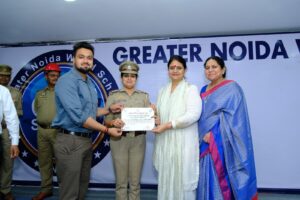
The workshop concluded with a certificate distribution ceremony and a group photograph session. A total of around 245 participants attended the programme, including district officials, teachers, students, home guards, civil defence members, and volunteers. The event was successfully coordinated by District Disaster Expert Omkar Chaturvedi, with the presence of several officials such as District Panchayati Raj Officer Ajay Kumar Yadav, District Project Officer Neha Singh, police officials, NCC representatives, and others.
The workshop served as an important step toward building a disaster-resilient society in Gautam Buddh Nagar by equipping participants with practical skills, enhancing awareness, and promoting a culture of preparedness and collective responsibility.