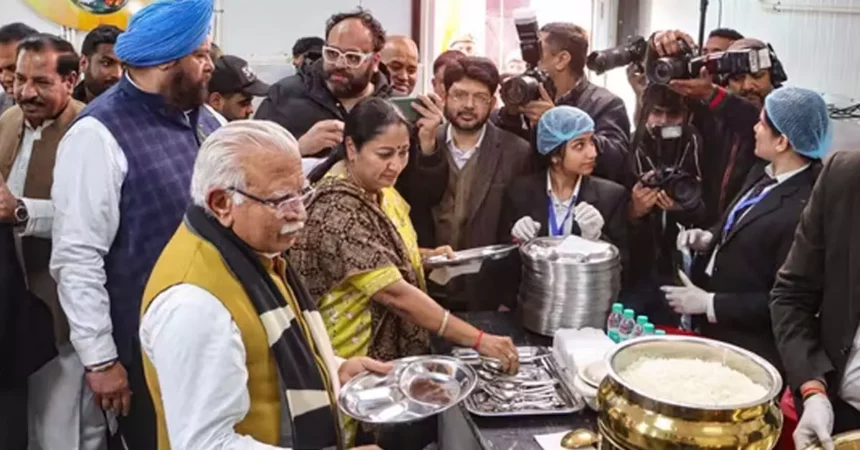
The Delhi government has launched the Atal Canteen scheme, offering a complete and nutritious meal for just five rupees at 100 locations across the city, marking a major step toward addressing hunger and food insecurity among the urban poor.
The initiative was formally launched on December 25 by Rekha Gupta as part of efforts to strengthen social welfare and ensure that no resident of the national capital is forced to sleep hungry. Introduced on the occasion of the 101st birth anniversary of Atal Bihari Vajpayee, the scheme draws inspiration from his emphasis on inclusive development and dignity for the underprivileged. With meals priced far below market rates, the Atal Canteens aim to support labourers, daily-wage earners, and low-income families who struggle to afford regular, wholesome food in the city.
Atal canteen scheme expands affordable nutrition access across delhi
Under the new initiative, the Delhi Government has opened 45 Atal Canteens from the first day, with the remaining 55 expected to become operational in the coming days. These canteens are spread across multiple parts of the city, including residential, commercial, and industrial areas, ensuring accessibility for people from different neighbourhoods. Locations such as R K Puram, Jangpura, Shalimar Bagh, Greater Kailash, Rajouri Garden, Narela, and Bawana are among the first to benefit from the programme.
Each Atal Canteen will serve two meals daily. Lunch will be available from 11 am to 4 pm, while dinner will be served between 6:30 pm and 9:30 pm. According to officials, each canteen is expected to cater to approximately 500 people every day, significantly easing the burden of food expenses for working-class households. In a city where the cost of a basic meal in a restaurant can range from several hundred to thousands of rupees, the availability of a complete thali at just five rupees represents a transformative intervention.
The standard meal offered under the scheme includes dal, rice, chapati, a seasonal vegetable, and pickle. Officials have emphasised that the focus is not merely on low cost but also on nutritional value and consistency. By providing a balanced meal, the government aims to address both hunger and malnutrition, which disproportionately affect low-income groups, especially migrant workers and informal sector employees.
Chief Minister Rekha Gupta described the Atal Canteens as a space of dignity rather than charity. In her remarks at the launch, she stated that the canteens are envisioned as welcoming community spaces where people can eat without stigma or discomfort. The emphasis on dignity is central to the programme’s design, reflecting a shift from ad hoc food distribution toward a structured, respectful system of support.
Digital tokens, social welfare goals, and long-term impact
To ensure smooth operations and transparency, the Delhi government has introduced a digital token system for meal distribution at the Atal Canteens. This system is intended to streamline queues, reduce waiting times, and prevent misuse, while also allowing authorities to track footfall and demand more accurately. By adopting a digital approach, the government aims to combine social welfare with administrative efficiency, ensuring that resources reach intended beneficiaries.
The Atal Canteen scheme aligns with a broader national and state-level focus on food security and social protection. Urban poverty, rising living costs, and irregular employment patterns have made access to affordable meals a persistent challenge for many residents of large cities like Delhi. The scheme acknowledges these realities and seeks to provide immediate relief while reinforcing the idea that access to food is a basic right.
Officials have indicated that the canteens are designed to complement existing welfare measures rather than replace them. By situating the canteens in areas with high concentrations of labourers and economically weaker sections, the government hopes to maximise impact. The programme also has the potential to create local employment opportunities, from cooking and serving meals to managing logistics and cleanliness at the canteens.
The symbolic timing of the launch, coinciding with Atal Bihari Vajpayee’s birth anniversary, underscores the political and ideological significance of the initiative. Vajpayee was widely regarded as a leader who prioritised consensus, social harmony, and inclusive growth. By naming the canteens after him, the government has sought to associate the programme with values of compassion, accessibility, and public service.
Public response to the launch has been largely positive, particularly among beneficiaries who see the canteens as a reliable source of daily meals. For many daily-wage workers, the assurance of affordable food reduces financial stress and allows limited income to be directed toward other essential needs such as housing, education, and healthcare. Over time, officials believe the scheme could contribute to improved health outcomes and greater economic stability for vulnerable populations.
As the remaining canteens become operational, the focus will shift to monitoring quality, hygiene, and sustainability. The government has stressed that maintaining food standards and ensuring uninterrupted supply will be critical to the programme’s credibility. With consistent implementation and community engagement, the Atal Canteen scheme is expected to become a permanent feature of Delhi’s social welfare landscape, reflecting a commitment to inclusive urban governance.