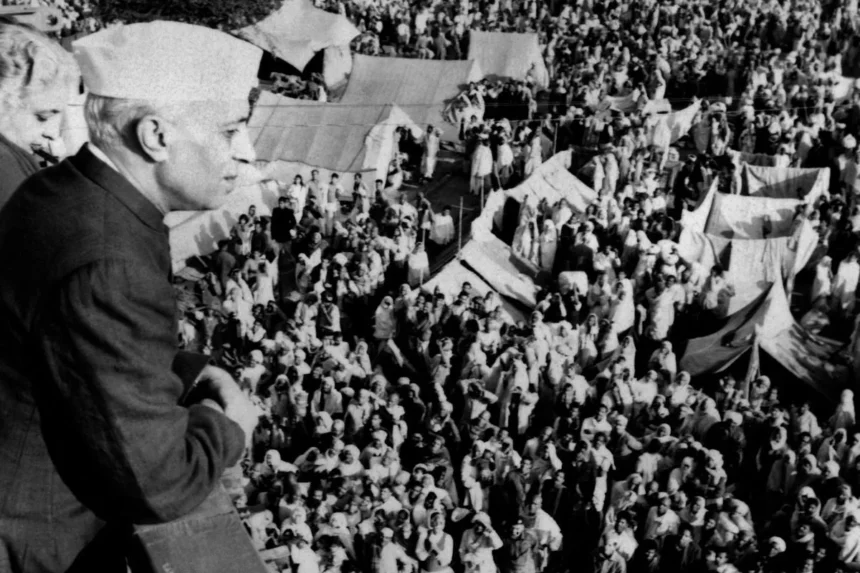
As preparations for the Maha Kumbh 2025 in Prayagraj—the largest Hindu religious gathering in the world—gear up, the tragic memories of the 1954 stampede that claimed over 800 lives come to the forefront. This tragedy, the deadliest in the recorded history of Kumbh Melas, occurred on February 3, 1954, during the first post-independence Kumbh at Prayag, now Prayagraj. The horrific incident serves as a stark reminder of the challenges in managing such vast gatherings and the consequences when things go wrong.
Prime Minister Jawaharlal Nehru’s visit to the Kumbh Mela on the fateful day became a focal point of blame for the disaster. His presence, along with that of other dignitaries, was criticized by many as a contributing factor to the chaos that ensued. While the official inquiries pointed to a variety of reasons such as the shifting course of the Ganga and overcrowding at the ghats, Nehru faced severe scrutiny from both the public and the parliament. He was not far from the location of the tragedy, and despite later exoneration, the incident continued to haunt him politically for years.
In fact, the controversy surrounding the 1954 stampede was reignited as recently as 2019, when Prime Minister Narendra Modi raised the issue during a rally in Kaushambi, Uttar Pradesh. Modi accused the Congress government, led by Nehru, of “insensitivity” and alleged that the tragedy was deliberately downplayed to avoid tarnishing Nehru’s image. He compared the handling of the Kumbh by the Congress government during Nehru’s tenure with the arrangements made by the BJP government in more recent years.
Nehru’s own account of the tragedy, provided in the Rajya Sabha, acknowledged the scale of the disaster. He expressed deep sorrow for the loss of life and argued that the responsibility largely lay with the Uttar Pradesh state government, although he conceded that it was a national tragedy. Nehru, who was present at the Mela, recalled the overwhelming crowd of around 40 lakh devotees at the time of the stampede. However, inquiries conducted by the Uttar Pradesh government later did not find any direct correlation between Nehru’s presence and the incident.
The events of that day, especially between 9:00 AM and 10:00 AM on Mauni Amavasya, are etched in the memory of many. Photographer NN Mukherjee, who was present at the scene, shared his harrowing eyewitness account in 1989. He vividly described the aftermath of the stampede, where he had to cross over the bodies of the deceased, including women and children, to take photographs. The stampede occurred as a large number of devotees, who had been stopped by barricades to allow VIPs to pass, surged towards the ghats after Nehru and President Rajendra Prasad had passed. The sudden influx of people caused the barrier to collapse, creating a stampede-like situation. Mukherjee described the scene as resembling “waves made by standing crops when a storm strikes,” with the cries of people unable to rise from the ground filling the air.
In the aftermath, the authorities’ slow response was also questioned. The bodies of the victims were reportedly piled up and set on fire, with the administration taking steps to conceal the scale of the tragedy. Photographers were prohibited from taking pictures of the burnt bodies, but Mukherjee managed to sneak in a photograph, which was later published, revealing the extent of the calamity.
Despite the tragedy, the 1954 stampede was not an isolated incident in the history of Kumbh Melas. Stampedes, unfortunately, have been a recurring feature at these gatherings. In February 2013, another stampede at the Allahabad railway station killed 42 people when a footbridge collapsed during the Kumbh Mela. Other significant stampedes have occurred over the years, including incidents in Nashik (2003), Haridwar (1986), and a major one in 1820 at Haridwar. More recently, in 2023, a stampede occurred in Tirupati, claiming six lives as pilgrims jostled for tickets to the Vaikunta Dwara Darshanam at the Lord Venkateswara temple.
India’s history of religious stampedes also includes several other devastating incidents, such as the 2011 tragedy at Kerala’s Sabarimala temple, where 106 people lost their lives, and the 2008 Naina Devi shrine stampede in Himachal Pradesh, which claimed 146 lives. In 2005, a stampede at the Mandher Devi temple in Maharashtra killed 300 people, while a fire and explosion triggered panic among the massive crowd.
These repeated incidents of mass casualties serve as a grim reminder of the challenges in managing large religious gatherings. The 1954 Prayag Kumbh stampede, however, stands as a turning point in the history of Kumbh Melas. It highlighted the need for improved crowd management and disaster preparedness, lessons that continue to influence the arrangements for future events.
The scale of Kumbh Melas and the sheer number of devotees that attend make it one of the most challenging events to manage. Yet, as India continues to hold these large gatherings, the shadow of the 1954 Prayag Kumbh stampede remains a sobering reminder of the human cost of such tragedies and the necessity for better planning and vigilance to avoid such disasters in the future.