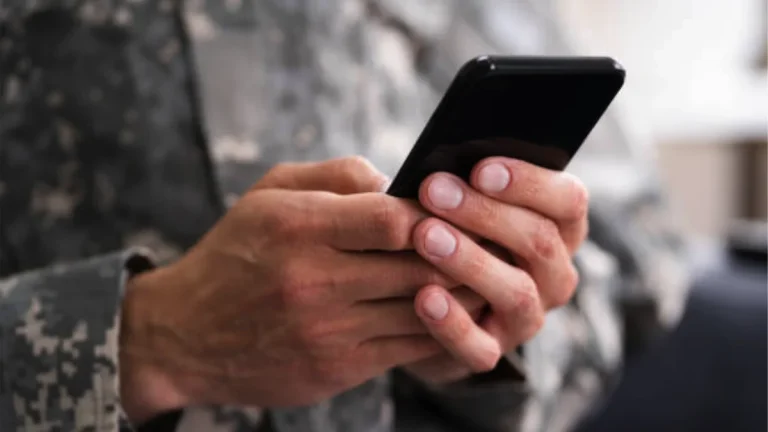
The Indian Army has updated its social media policy, permitting personnel restricted access to select platforms while maintaining tight controls to safeguard operational security and prevent misuse.
The revised guidelines, announced on December 25, reflect a calibrated shift in the Army’s approach to digital engagement. While earlier rules imposed an almost complete ban on social media use by serving personnel, the new policy recognises the growing role of digital platforms in information awareness and professional networking. At the same time, defence officials have underlined that the changes do not signal a relaxation of discipline. Instead, the policy draws clear boundaries on what Army personnel can view, share, and communicate, ensuring that national security, confidentiality, and professional conduct remain paramount.
Controlled access focused on viewing and information awareness
Under the updated rules issued by the Indian Army, serving personnel are now allowed to access certain social media platforms strictly for “viewing and monitoring” purposes. This means that soldiers and officers may browse content to stay informed, but they are explicitly prohibited from engaging publicly. Activities such as posting comments, expressing opinions, sharing personal views, or uploading original content are not permitted on open platforms.
On widely used social networks and content-sharing sites such as X, Instagram, Quora, and YouTube, personnel are restricted to passive participation. Even on platforms where commenting is a common feature, Army users are barred from interacting in any visible manner. The intent, officials have clarified, is to allow awareness of public discourse without exposing individuals or the institution to risks associated with online engagement.
Messaging applications occupy a slightly different category under the revised policy. Services such as WhatsApp, Telegram, Signal, and Skype may be used to exchange unclassified information of a general nature. However, this communication is allowed only with contacts personally known to the user. The responsibility for verifying the identity of the recipient lies entirely with the individual soldier or officer, reflecting the Army’s emphasis on personal accountability in digital communication.
Defence officials have stressed that no classified, sensitive, or operational information may be shared through these channels under any circumstances. Even seemingly harmless details, when aggregated, can pose security risks, and the policy seeks to prevent inadvertent leaks arising from casual online conversations. The emphasis on “general and unclassified” information is intended to draw a clear line between permissible personal communication and prohibited disclosures.
LinkedIn exception reflects professional realities and past lessons
One of the most notable aspects of the revised policy is the special treatment accorded to LinkedIn. Recognising that LinkedIn functions both as a social network and a professional platform, the Army has carved out a narrowly defined exception for its use. Personnel are permitted to use LinkedIn solely to upload their résumé and to obtain information about potential employers or employees. Any broader engagement, networking, posting, or commentary remains outside the permitted scope.
This limited allowance reflects an acknowledgement of the professional realities faced by serving and transitioning personnel, particularly those planning careers after retirement. At the same time, the restrictions underscore the Army’s cautious approach, shaped by past experiences where social media misuse led to serious security concerns.
Until 2019, serving Army personnel were prohibited from being part of any social media group or platform. These restrictions were tightened further in 2020 following multiple incidents involving misuse of digital platforms, including cases of honey-trapping and unauthorised information sharing. Such incidents highlighted how adversarial elements could exploit social media to extract sensitive details or influence behaviour, prompting the Army to adopt an extremely conservative stance.
Against this backdrop, the latest policy represents an attempt to strike a balance. By allowing limited, clearly defined access, the Army aims to bring serving personnel in line with the realities of a digitally connected world without repeating past mistakes. Officials have noted that the institution’s public digital footprint has so far been largely confined to official Army handles and accounts of retired personnel. The revised rules may result in more serving members accessing social platforms, but only within strict constraints designed to minimise risk.
The updated policy also reflects a broader trend within armed forces worldwide, where militaries are grappling with how to manage social media use among personnel. Information warfare, cyber threats, and online influence campaigns have elevated the stakes, making digital discipline as important as physical and operational discipline. In this context, the Indian Army’s revised guidelines seek to reinforce awareness, responsibility, and restraint rather than encourage active online participation.
By clearly spelling out what is allowed and what is prohibited, the Army has aimed to remove ambiguity and ensure uniform compliance across ranks. The emphasis on passive consumption, personal accountability, and professional boundaries signals that while limited access is now permitted, the underlying philosophy of caution remains unchanged.