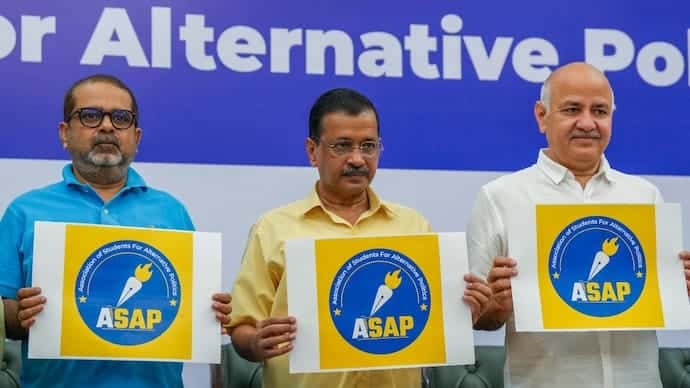
In a significant step aimed at promoting meritocracy and curbing the influence of money and muscle power in student politics, the Aam Aadmi Party (AAP) has announced that it will support deserving candidates who wish to contest Delhi University Student Union (DUSU) elections but lack the financial resources to fund their campaigns. This initiative, spearheaded by AAP’s youth wing, the Association of Students for Alternative Politics (ASAP), seeks to redefine campus political culture by ensuring that talent, leadership skills, and dedication are the primary criteria for contesting elections, rather than the availability of funds or access to extravagant campaigning tools. Through this move, the party hopes to cultivate a model political process within colleges, where students’ idealism and enthusiasm are not overshadowed by materialistic displays or extravagant spending. By encouraging students who demonstrate capability and commitment to public service, AAP aims to foster a political environment in educational institutions where merit prevails over monetary influence, and genuine leadership qualities are nurtured from the grassroots level.
Merit-Based Support and Application Process
The youth wing of AAP has outlined a clear and structured approach to identify and support deserving candidates. Applications for financial and organizational support will be accepted from August 15 to 25, providing a window for students across Delhi University who aspire to participate in the union elections but are constrained by monetary limitations. According to Saurabh Bharadwaj, Delhi State President of AAP, this initiative is designed to counter the prevailing culture of high-spending campaigns, which often prioritizes material displays over genuine leadership potential. Bharadwaj emphasized that a student with capability but limited resources should not be excluded from political participation, and AAP’s support will be entirely merit-based, ensuring that financial limitations do not obstruct the emergence of talented young leaders.
Candidates wishing to contest for DUSU positions are required to secure endorsements from fellow students as a demonstration of credibility and support. Specifically, applicants must obtain 50 proposers from at least five different colleges, while college-level candidates must secure endorsements from 10 students within their respective campuses. Additionally, applicants are expected to submit a one-minute video appealing for votes and a written statement of purpose ranging from 200 to 500 words. This process is designed not only to streamline the selection of candidates but also to encourage them to articulate their vision, leadership philosophy, and commitment to student welfare in a clear and coherent manner. By instituting these requirements, AAP ensures that candidates are judged on their ability to communicate effectively, inspire peers, and demonstrate a commitment to democratic values.
Bharadwaj highlighted the broader significance of student union elections as the first direct exposure to democratic processes for young individuals, shaping their understanding of governance, responsibility, and civic engagement. He argued that contemporary election processes have become excessively commercialized, with campaigns often featuring luxury cars, fleets of vehicles, and extravagant events that elevate the role of money over merit. Such practices, he noted, are the initial stages of political corruption, normalizing the idea that success in politics depends more on wealth than on competence, vision, or ethical conduct. By supporting underfunded candidates, AAP seeks to challenge this trend, laying the foundation for a culture where leadership potential and the ability to serve the student body are prioritized.
Fostering a Culture of Clean Politics and Leadership
The initiative has also received support and emphasis from AAP legislators, including Sanjeev Jha, who underscored that the program is an essential step in fostering clean and merit-based political engagement within colleges. Jha pointed out that talent should be measured by ability, dedication, and oratory skills rather than material displays, aligning with the broader objective of creating a culture of ethical politics from the ground up. According to him, encouraging leadership development at the college level ensures that students internalize the principles of accountability, public service, and democratic participation from an early stage, setting a precedent for their future roles in governance and public life.
In practice, AAP’s support for candidates will encompass guidance on campaign strategies, organizational resources, and mentoring to enhance their ability to engage with peers effectively. By focusing on these aspects, the party ensures that students from financially disadvantaged backgrounds are not deterred from political participation and have an equitable chance to compete on merit. The initiative also encourages students to envision political engagement as a platform for service and advocacy rather than personal gain or prestige. The requirement to submit a video appeal and statement of purpose further emphasizes substance over style, compelling candidates to present thoughtful policy perspectives, constructive proposals for student welfare, and a clear vision for enhancing campus life.
The upcoming DUSU elections, scheduled for September 18 with results declared on September 19, provide a timely opportunity for the implementation of this merit-focused initiative. AAP’s efforts aim to influence not only the immediate electoral outcomes but also the long-term political culture within Delhi University. By challenging the entrenched dominance of money-driven campaigns, the party seeks to demonstrate that student politics can be both competitive and ethical, offering a model for other educational institutions to emulate.
Bharadwaj and Jha’s statements collectively underscore the transformative potential of this initiative. By redirecting focus from extravagant campaigning to the evaluation of ability, dedication, and leadership qualities, the program aligns with the broader vision of fostering responsible citizenship, cultivating democratic sensibilities, and nurturing a generation of students prepared to engage constructively in public life. The support extended to underfunded candidates exemplifies an innovative approach to democratizing political participation, ensuring that merit and ethical leadership are at the forefront of student politics.
Furthermore, the initiative highlights the importance of inclusivity and equal opportunity within campus politics. By enabling students from diverse socioeconomic backgrounds to contest elections, AAP is addressing systemic barriers that have historically limited participation to those with financial means or access to influential networks. The emphasis on merit-based evaluation also encourages students to invest in personal development, honing skills such as public speaking, critical thinking, and policy analysis, which are essential for effective leadership.
The approach taken by AAP demonstrates a commitment to embedding ethical practices and transparency into student politics. By providing structured support, mentoring, and a clear application framework, the party is creating an environment where capable students can thrive and contribute meaningfully to the university community. This aligns with the broader objective of fostering leadership qualities that extend beyond campus politics, equipping students with the tools and experiences necessary to engage responsibly in broader societal governance in the future.
Through this initiative, AAP is redefining the role of student unions as platforms for genuine democratic engagement, prioritizing talent, vision, and service over superficial markers of status. By challenging the dominance of money and privilege, the party is setting a precedent for future reforms in campus politics, demonstrating that political participation can be both accessible and principled. The program not only benefits the candidates themselves but also enhances the quality of discourse, decision-making, and governance within the student body, contributing to a healthier, more equitable political culture overall.
The emphasis on merit-based support and ethical campaigning also has the potential to influence peer behavior and expectations, cultivating a generation of students who value integrity, accountability, and competence over material display. By fostering such a culture early in their political experience, AAP aims to create a ripple effect, inspiring future political leaders to adopt ethical practices and prioritize public service over personal gain.
In conclusion, while the DUSU elections are the immediate focus, the broader implications of AAP’s initiative extend far beyond campus politics. By empowering deserving but underfunded candidates, the party is not only promoting fairness and equity but also setting a benchmark for how democratic engagement can be nurtured in educational institutions. The program underscores the importance of skill, vision, and ethical conduct as the foundation of effective leadership, reinforcing the principle that student politics should be a training ground for responsible, principled, and merit-based participation in governance.