A violent mob attack in Bangladesh’s Rajbari district has resulted in the death of a Hindu man, highlighting growing concerns over vigilantism, public unrest, and the fragile state of law and order amid continuing instability in parts of the country.
The victim, identified as Amrit Mondal, was beaten to death on Wednesday night in Hosendanga village in the Pangsha area of Rajbari. According to local reports, the incident followed allegations that Mondal had gone to the house of a local resident to demand extortion money. The situation escalated rapidly when villagers gathered at the scene, ultimately leading to a fatal assault. The incident has drawn attention not only because of its brutality, but also due to its broader implications for communal harmony, policing, and the rule of law in Bangladesh during a period of heightened unrest.
Incident in rajbari and police response to the killing
The killing took place in Hosendanga village under Pangsha upazila in Rajbari, an area that has recently witnessed heightened tension. According to reports published by The Daily Star, Amrit Mondal, a member of the minority Hindu community, was allegedly demanding extortion money from Shahidul Islam, a local resident. When Shahidul and his family raised an alarm, villagers rushed to the spot, confronting Mondal and his associates.
While Mondal’s accomplices managed to escape, he was caught by the crowd, reportedly in possession of weapons. The situation quickly spiralled out of control as the mob assaulted him severely. He was later taken to a hospital, where doctors declared him brought dead. The violence, which occurred around 11 pm, underscores how swiftly allegations and anger can translate into deadly vigilantism.
Assistant Superintendent of Police for the Pangsha Circle, Debrata Sarkar, confirmed the timing and location of the incident and stated that police have taken swift action. One of Mondal’s associates, Mohammad Selim, has been arrested, and firearms were recovered from his possession. Authorities also revealed that Mondal had at least two criminal cases registered against him at Pangsha police station, including a murder case.
Local residents told police that Mondal was allegedly part of a criminal gang involved in extortion and other illegal activities for a prolonged period. While these claims are part of the investigation, law enforcement officials have emphasised that mob justice cannot be justified under any circumstances. The police have assured that the case will be thoroughly probed and that those responsible for the killing will be held accountable.
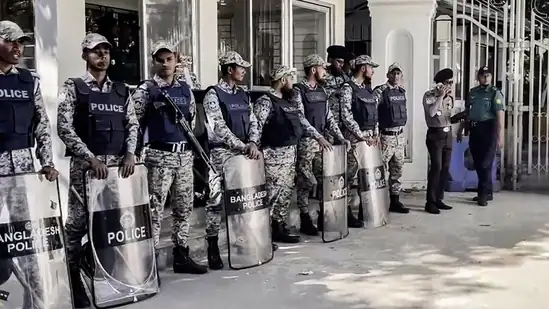
The presence of Bangladesh Police has been reinforced in the area following the incident, as authorities seek to prevent further violence and reassure local communities. However, the killing has reignited debates about policing capacity, community trust, and the dangers of civilians taking the law into their own hands.
Broader unrest, mob violence, and minority concerns in bangladesh
The Rajbari killing is not an isolated incident but part of a troubling pattern of mob violence unfolding amid ongoing unrest in Bangladesh. In recent weeks, several violent episodes have been reported, raising alarm over public safety and political stability. On the same day as the Rajbari incident, another man died in Dhaka after miscreants hurled a crude bomb from a flyover, injuring him while he was at a roadside tea stall. The victim later succumbed to his injuries, further intensifying fears about the spread of violence in public spaces.
Earlier, a 27-year-old man, Dipu Chandra Das, was reportedly killed by a mob, with his body tied to a tree and set on fire. Such incidents have shocked the public and human rights observers, particularly as they involve extreme brutality and the apparent breakdown of restraint among crowds. These episodes are occurring against the backdrop of widespread unrest following the killing of Osman Hadi, a prominent figure associated with last year’s student protests, who died from gunshot injuries in Dhaka earlier this month.
The killing of Amrit Mondal has also brought renewed attention to the vulnerability of minority communities during periods of instability. While authorities have framed the Rajbari incident primarily as a criminal matter linked to alleged extortion, the fact that the victim belonged to the Hindu minority has added a sensitive communal dimension. Minority rights groups and civil society voices have warned that unrest often amplifies existing social tensions, making marginalised communities more vulnerable to violence and discrimination.
Analysts note that mob violence often reflects a deeper crisis of trust in institutions. When citizens believe that law enforcement is ineffective or slow to respond, they may resort to vigilantism, with devastating consequences. In Bangladesh, repeated incidents of crowd-led killings suggest the need for stronger preventive policing, faster legal processes, and sustained public outreach to reinforce confidence in the justice system.
The government has reiterated its commitment to maintaining law and order and protecting all citizens, regardless of religion or background. Officials have stressed that criminal allegations must be addressed through due process, not through collective punishment or violence. Legal experts have also emphasised that mob killings undermine the rule of law and risk normalising brutality as a response to crime.
As investigations into the Rajbari killing continue, the incident stands as a stark reminder of the fragile balance between security and social cohesion during times of unrest. It highlights the urgent need for accountability, effective policing, and community engagement to prevent further loss of life and to ensure that justice is delivered through lawful means rather than through violence.