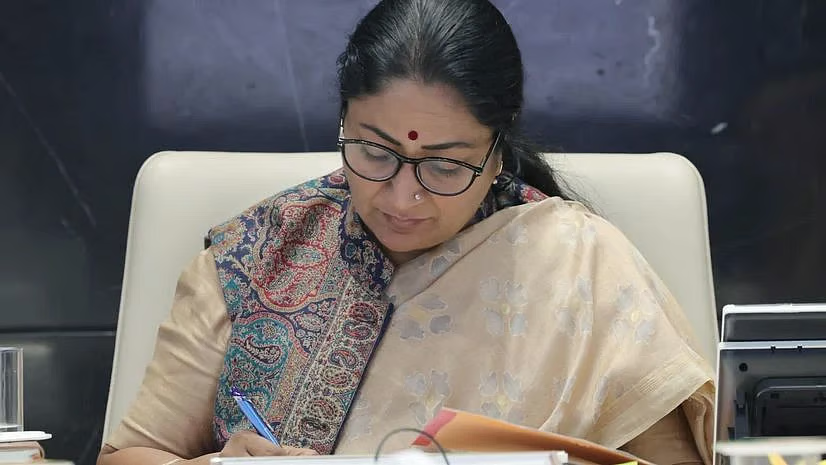
New Delhi, 20 December 2025:
In a major step towards curbing pollution and modernising urban transport, Delhi Chief Minister Rekha Gupta announced that the Delhi Government is preparing to implement a comprehensive Electric Vehicle (EV) Policy from the next financial year. The policy aims to make EV adoption seamless for residents, positioning Delhi as the country’s—and potentially the world’s—EV capital while significantly reducing vehicular emissions.
Cleaner Capital Through EV Adoption
Chief Minister Rekha Gupta highlighted that emissions from conventional vehicles are a major contributor to Delhi’s air pollution. She stated that the EV Policy is not merely about financial incentives but about securing a cleaner future for the city. “When every citizen adopts electric vehicles, there will be a direct reduction in PM2.5 and PM10 levels,” she said, adding that technology and government support will be key tools in the fight against pollution.
The policy framework will integrate EV adoption with necessary infrastructure, ensuring the availability of public and residential charging points, battery swapping facilities, and a streamlined ‘single-window’ system to make ownership convenient. Citizens will also be given sufficient time to transition from conventional vehicles to electric mobility.
Subsidies and Incentives to Encourage Transition
To bridge the price gap between traditional petrol–diesel vehicles and EVs, the government plans to provide substantial subsidies. Delhi has already abolished road tax and registration fees on EVs, making them more accessible. In addition, a vehicle scrappage scheme will incentivise residents to retire older, highly polluting vehicles. Under this scheme, citizens scrapping an old petrol or diesel vehicle will receive additional financial benefits when purchasing a new EV, encouraging a gradual shift to cleaner transportation.
Chief Minister Gupta emphasised that the government has instructed vehicle manufacturers to ensure timely supply and maintain reasonable pricing. Consultations are ongoing with OEMs, power distribution companies, and scrap dealers, and a draft of the policy will be made public for citizen feedback before finalisation.
Infrastructure Development and Long-Term Vision
The Delhi Government plans to expand EV charging infrastructure, including installation of charging points in residential colonies, public spaces, and high-traffic areas. Scientific battery disposal and recycling facilities will be developed to address environmental concerns. Permanent measures for battery swapping and rapid charging are being integrated to ensure convenience for EV owners.
CM Gupta also reiterated alignment with the national vision, noting Prime Minister Narendra Modi’s commitment to achieving ‘Net Zero’ emissions by 2070. She highlighted that electrification of transport not only reduces pollution but also decreases dependence on crude oil imports and creates green jobs for the youth.
High-Level Committee for Policy Formulation
A Group of Ministers (GoM), chaired by Energy and Education Minister Ashish Sood, has been constituted to guide the policy. Working closely with experts from IIT Delhi and other advisers, the committee has developed a robust scientific framework addressing challenges such as battery recycling, charging infrastructure, and sustainable EV adoption. The committee continues to explore measures beyond subsidies to make Delhi completely zero-emission.
Through this policy, the Delhi Government aims to make EVs affordable, convenient, and widely adopted, ensuring a cleaner, healthier, and sustainable future for the city while achieving long-term environmental and economic benefits.