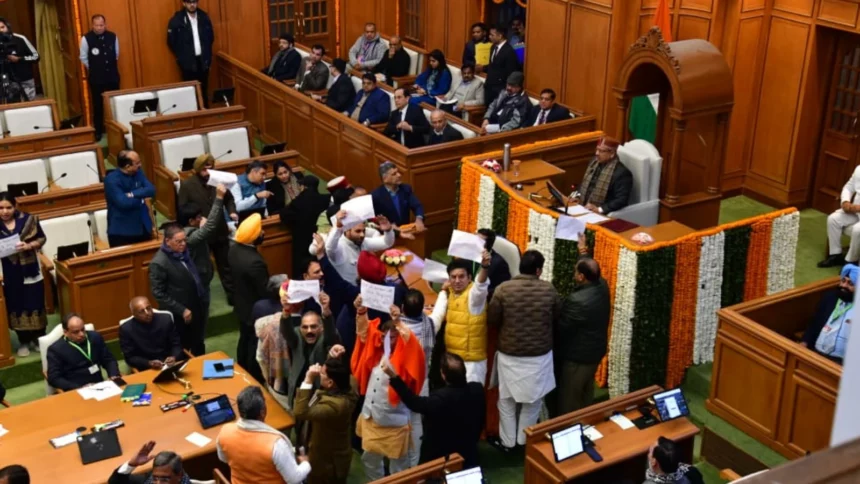
New Delhi: The Speaker of the Delhi Legislative Assembly, Vijender Gupta, has taken cognizance of a complaint raised by MLA Harish Khurana against MLA Jarnail Singh, concerning an alleged breach of privilege and contempt of the House. The matter has been formally referred to the Committee of Privileges for examination and appropriate action in accordance with the established rules and procedures of the Assembly.
Complaint Reviewed and Referred for Detailed Inquiry
According to official information, the Speaker considered the complaint submitted by Harish Khurana, which alleges conduct on the part of Jarnail Singh that may amount to a violation of the privileges of the House. After examining the complaint at the preliminary level, the Speaker decided that the issue warrants a detailed inquiry through the prescribed parliamentary mechanism.
Role of the Committee of Privileges
In line with Assembly rules, the Speaker has referred the matter to the Committee of Privileges, which is empowered to examine cases involving alleged breaches of privilege or contempt of the House by members or other individuals. The Committee is expected to study the complaint, assess the facts and circumstances surrounding the allegations, and recommend appropriate action, if required, after following due process.
Maintaining Dignity and Decorum of the House
Assembly sources stated that the referral underscores the Speaker’s commitment to maintaining the dignity, authority, and decorum of the House. Matters related to privilege and contempt are treated with seriousness, as they directly affect the functioning of the legislature and the rights and responsibilities of its members. By referring the complaint to the Committee of Privileges, the Speaker has ensured that the issue will be examined objectively and institutionally, rather than being addressed through political or procedural confrontation on the floor of the House.
Examination Process and Parliamentary Procedure
The Committee of Privileges plays a crucial role in safeguarding the institutional integrity of the legislative body. It examines whether any action or statement has obstructed or undermined the functioning of the Assembly or violated the privileges enjoyed by its members collectively or individually. Once a matter is referred, the Committee may seek explanations, examine evidence, and hear the concerned parties before arriving at its conclusions.
Officials familiar with Assembly procedures noted that the Committee’s examination is carried out strictly in accordance with the rules. The Committee may submit its findings and recommendations in the form of a report to the Speaker, which can subsequently be placed before the House for consideration. Any further action, including admonition or other measures, is taken based on the House’s decision after reviewing the Committee’s report.
Ensuring Fairness, Transparency, and Documentation
The Speaker’s decision to refer the matter also reflects the principle that allegations involving legislative privilege should be resolved through established parliamentary processes. This approach helps ensure fairness, transparency, and adherence to constitutional and procedural norms, while avoiding arbitrary or unilateral action.
Meanwhile, Assembly officials confirmed that the letter received in connection with the complaint has been formally recorded and attached for reference. The documentation will form part of the material placed before the Committee of Privileges during its examination of the case. Maintaining proper records, officials said, is essential to ensure that the inquiry is conducted in a systematic and well-documented manner.
Political Context and Importance of Referral
The development comes amid an environment of heightened political engagement within the Delhi Legislative Assembly, where issues related to conduct, privilege, and propriety have increasingly drawn attention. Legislative sources emphasized that such referrals are not uncommon and are an integral part of parliamentary functioning, aimed at preserving mutual respect among members and upholding the authority of the House.
Speaker Reiterates Institutional Process and Accountability
By taking cognizance of the complaint and referring it to the appropriate committee, the Speaker has reiterated that the Assembly will function strictly within the framework of rules and procedures. The action sends a clear message that any allegation concerning breach of privilege or contempt will be examined through due process, without prejudice and with full respect for institutional norms.
Next Steps Dependent on Committee Findings
Further steps in the matter will depend on the proceedings and findings of the Committee of Privileges. Once the Committee completes its examination and submits its report, the Speaker will decide on placing the report before the House for further consideration, in accordance with the rules of the Delhi Legislative Assembly.
Formal Parliamentary Inquiry Reinforces Institutional Integrity
The referral of the complaint marks the beginning of a formal parliamentary inquiry process, reinforcing the Assembly’s commitment to accountability, procedural discipline, and the protection of its institutional dignity.