New Delhi, December 17, 2025:
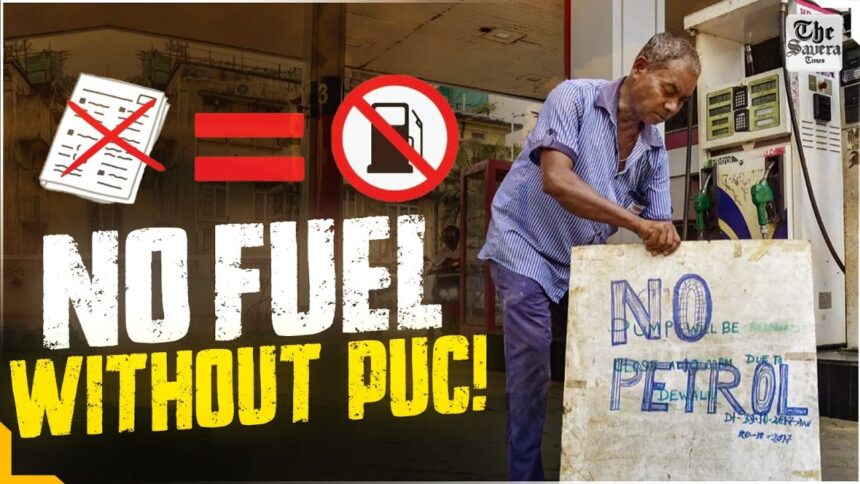
In a decisive step to combat worsening air pollution, the Delhi Government, under Chief Minister Rekha Gupta, has announced strict enforcement of the “No PUC, No Fuel” rule from tomorrow. The move, led by Environment Minister Manjinder Singh Sirsa, comes alongside a ban on non-BS VI registered outstation vehicles entering Delhi. Authorities are deploying extensive enforcement measures, signaling the government’s determined approach to tackling air quality challenges in the capital.
Speaking to stakeholders, including petrol pump dealers and senior traffic officials, Minister Sirsa said, “Our government is fighting Delhi’s war against pollution on four fronts: vehicular, dust, industrial, and solid waste. Forecasts for the coming week indicate challenging air quality levels, but our efforts are continuous to ensure cleaner air for every citizen.”
To ensure compliance, 126 checkpoints will be operational with 580 police personnel and 37 Prakhar Vans, while enforcement teams from transport departments will be stationed at petrol pumps and border points. ANPR cameras and voice alerts will support officers in preventing fuel supply to vehicles without valid PUC certificates. Minister Sirsa emphasized, “Pollution control is a shared responsibility. All dealers must ensure no vehicle is refueled without a valid certificate. This campaign is not intended to inconvenience citizens but to make Delhi’s air breathable again.”
The minister appealed to citizens to cooperate, saying, “Please do not argue or create disputes with officers or pump staff. Every Delhiite must ensure their vehicle’s PUC certificate is up to date. This is not just a rule, but a collective responsibility for the health of our children and the future.” Non-BS VI vehicles registered outside Delhi will also be turned back as part of the enforcement drive.
In addition to enforcement, the Delhi Government is exploring technological interventions to further manage pollution and traffic congestion. Minister Sirsa chaired a high-level meeting with Google Maps officials to create an integrated traffic management system. The collaboration aims to leverage live traffic data, integrate signals, identify emerging hotspots, decongest roads faster, and reduce vehicular emissions. The government plans to identify at least 100 new traffic hotspots for targeted interventions.
The Public Works Department (PWD) has also launched a permanent pothole-monitoring system, managed by a third-party survey agency, ensuring repairs within 72 hours under an Annual Rate Contract. An independent agency will continuously collect data on potholes and audit the ground-level implementation of pollution control measures throughout the year. Minister Sirsa added, “Our effort is to bring down pollution by converting policy into ground-level action.”
Separately, Minister Sirsa, along with Trilokpuri MLA Ravikant, exposed an alleged incident involving an AAP councillor setting garbage on fire in Trilokpuri to deliberately worsen pollution levels. Sirsa condemned the act, stating, “It is deeply unfortunate that instead of helping Delhi breathe, some political workers are trying to set it on fire. I appeal to all opposition leaders to refrain from harmful politics and join hands with us to fight this war against pollution.” MLA Ravikant noted that the incident highlighted a broader indifference toward public health that must be addressed.
With these measures, the Delhi Government is signaling a no-nonsense approach to air pollution, combining strict enforcement, technological innovations, and community cooperation to improve the city’s air quality and protect public health.