The decision to grant National Council of Educational Research and Training deemed university status under a distinct category is being considered a historic and far-reaching step for India’s education system. In the changing landscape shaped by the National Education Policy 2020, this decision is not merely an institutional recognition but is being viewed as a transformative move that will elevate school education, teacher training, and research to new heights. For a long time, education experts and the academic community had been demanding that a nationally important institution like NCERT should be given greater autonomy and authority in the field of higher education and research.
Established nearly seven decades ago, NCERT has played a significant role in shaping the country’s school education system. The institution has consistently remained at the forefront in developing the National Education Policy, curriculum frameworks, teacher training systems, digital education, and research-based teaching methodologies. With the grant of university status, its academic and research activities are now expected to gain further momentum.
Strong Foundation of India’s Educational Structure
Operating from its headquarters in Delhi, NCERT has worked through its Regional Institutes of Education to prepare quality teachers across the country. The Regional Institutes located in Mysuru, Bhopal, Ajmer, Bhubaneswar, Shillong, and Nellore have for years been providing modern and research-oriented teacher training through integrated B.Ed and M.Ed programs.
One of the key strengths of these institutes has been the development of interdisciplinary teaching models in subjects such as science, social science, languages, commerce, agriculture, and technical education. These initiatives are regarded among the most successful experiments in teacher education in India.
Selected students from across the country have studied in these institutions, and graduates trained here have gone on to play important roles in Kendriya Vidyalayas, Navodaya Vidyalayas, universities, educational administration, and other academic sectors.
New Opportunities for Research and Academic Expansion
Until now, professors, associate professors, and other faculty members working at NCERT were recruited according to University Grants Commission standards. However, due to the institution not having university status, they were unable to fully function as research supervisors and PhD guides.
Education experts believe this led to a loss of talent and research potential for many years. More than 500 faculty members, despite their expertise and experience, remained limited in independently advancing research programs.
With deemed university recognition, NCERT will now be able to play a more effective role in research, PhD programs, advanced academic initiatives, and international academic collaborations. This is expected to encourage new research and innovation in the field of education.
Expanded Scope Under the National Education Policy
Under the National Education Policy 2020, efforts are being made to connect the education system seamlessly from foundational learning to research-oriented models. In such a framework, NCERT’s role has become broader and more significant than before.
The institution is already actively involved in curriculum development, digital content creation, radio and television-based education, online learning, psychology, inclusive education, and teacher training. With university-level autonomy, these activities are expected to move forward in a more organized and effective manner.
Experts also believe that this decision will help bridge the gap between school education and higher education and will support the integration of research-based learning into school-level teaching.
Longstanding Demand of Students and Teachers Fulfilled
Students and teachers associated with NCERT had long felt that despite studying in a nationally reputed institution, degrees continued to be issued in the name of other universities. With university status now granted, the path has been cleared for students to receive degrees directly from NCERT.
The education community views this as a major academic reform. Experts say that this recognition will further strengthen the institution’s global identity and provide India’s teacher education system with greater international prestige.
Several former education administrators and academicians have described this decision as a milestone. According to them, this step will play a crucial role in making India’s education system more research-oriented, innovative, and effective in the future.
Author Profile
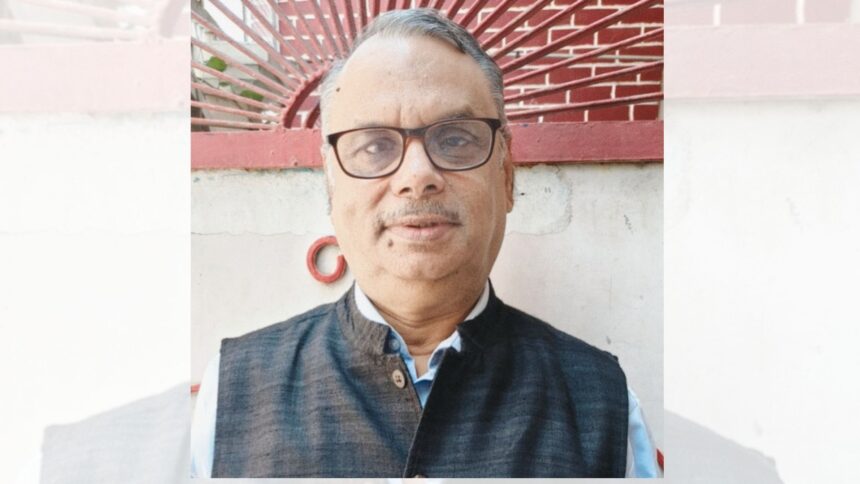
Professor Binod Tripathi served as former Director of IUCTE and former Professor, Dean Research, Joint Director, and Additional Director in-charge at National Council of Educational Research and Training (Retired).