March 20, 2026 | 06:45 PM
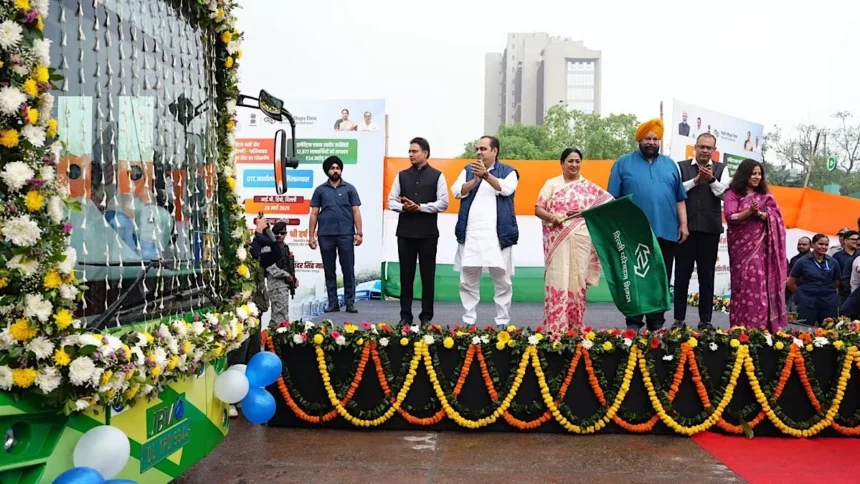
New Delhi witnessed the launch of multiple key initiatives aimed at transforming public transport into a modern, sustainable, and commuter-friendly system. From the Indraprastha Bus Depot, 300 new zero-emission electric buses were flagged off, alongside the launch of a new interstate e-bus service connecting Nanaksar and Ghaziabad. The foundation stone for a multi-storey DTC office building was also laid.
The EV incentive portal was relaunched, and over ₹24 crore in subsidies was directly transferred to 12,877 beneficiaries through Direct Benefit Transfer. These steps are part of a broader strategy to promote clean mobility and improve urban transport efficiency.
Fleet Expansion and Passenger-Friendly Features
The newly introduced electric buses are low-floor, air-conditioned, and equipped with CCTV surveillance, panic buttons, real-time tracking, and accessibility features for differently-abled passengers. With this addition, Delhi’s total bus fleet has crossed 6,100 and continues to expand rapidly toward its electric mobility goals.
The government is also focusing on modernizing bus depots, redeveloping ISBTs, setting up automated testing stations, and strengthening pollution control systems to enhance operational efficiency and service quality.
Improved NCR Connectivity and Infrastructure Push
The newly launched 21-kilometer interstate e-bus service between Nanaksar and Ghaziabad is expected to benefit thousands of daily commuters by offering an affordable and convenient travel option. This move will significantly improve connectivity across Delhi-NCR.
Meanwhile, the upcoming DTC office building, spread over approximately 1,800 square meters, will feature modern infrastructure and energy-efficient design, ensuring better administrative efficiency and service delivery.
Focus on EV Subsidy and Financial Stability
The government has resumed pending EV subsidy disbursements, ensuring that 12,877 beneficiaries receive over ₹24 crore directly in their bank accounts. The move addresses earlier delays and reinforces transparency in the system.
Efforts are also being made to improve the financial health of DTC, which was previously running at a loss but is now gradually moving toward stability. Clearing financial liabilities and improving governance remain key priorities.
The overall vision is to build a safe, affordable, environmentally sustainable, and future-ready public transport system for Delhi.