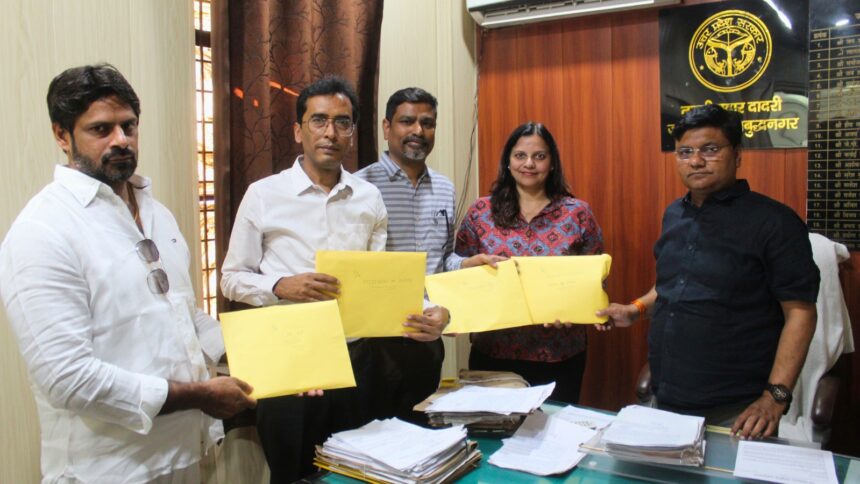
A nationwide citizen-led initiative, the “Gau Samman Aahvaan Abhiyan,” marked its first major public step on Sunday with the submission of a detailed petition in Dadri, Uttar Pradesh, calling for a comprehensive national framework for the protection and welfare of indigenous cattle.
The petition was formally submitted to the Tehsildar through representatives of GauSatv, for onward transmission to Prime Minister Narendra Modi as well as the Uttar Pradesh government. According to organisers, similar submissions are being carried out across multiple districts as part of a coordinated nationwide outreach.
The document reflects the support of a wide spectrum of participants, including members of the sant community, cow protection workers, rural stakeholders and concerned citizens. It raises concerns about the current condition of cattle in different parts of the country and points to challenges such as cattle smuggling, abandonment and insufficient care infrastructure.
At the centre of the petition is a call for a cohesive national policy framework, including the enactment of a central law on cow protection and the creation of an independent Central Cow Protection or Cow Welfare Ministry. Campaign organisers argue that such an institutional mechanism would allow better coordination between states, strengthen enforcement, and ensure more focused allocation of resources.
The petition also highlights the need to expand gaushalas and cattle care facilities, improve veterinary support systems and promote cow-based agricultural practices, particularly natural farming models that have traditionally relied on indigenous cattle.
Organisers emphasise that the campaign seeks to frame cow protection as a broader national issue connected with agriculture, sustainability and rural livelihoods, rather than limiting it to a matter of faith. Indigenous cattle, they note, have historically played a key role in maintaining soil health, supporting rural economies and sustaining ecological balance.
Describing the initiative as a voluntary and non-political movement, organisers said it will progress in phases, beginning with submissions at the tehsil level and followed by engagement with district, state and central authorities. Depending on the response, further public outreach and mobilisation may be undertaken.