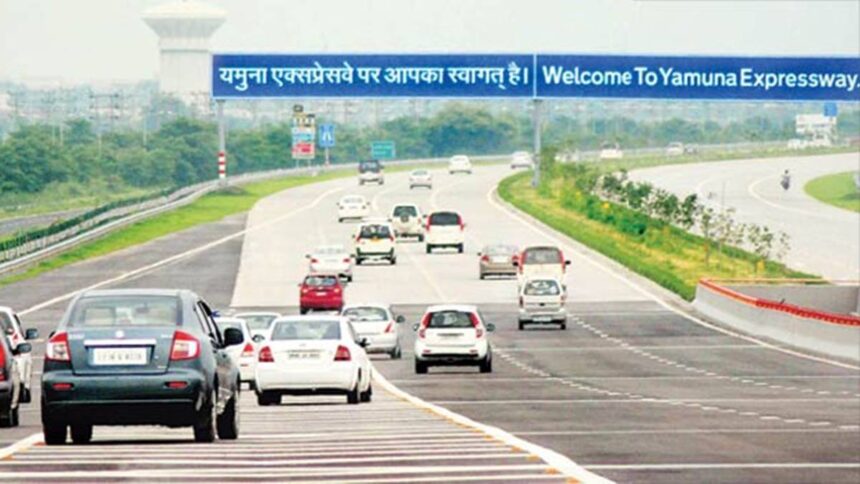
The transport department has taken a significant step toward strengthening road safety measures in Yamuna Expressway by identifying four designated holding zones aimed at regulating roadside parking and minimizing accident risks. The move comes in response to the growing concern over vehicles being parked along highways, which often leads to traffic disruptions and serious road accidents.
According to Assistant Regional Transport Officer (Enforcement) Udit Narayan Pandey, the initiative has been implemented under government directives to improve traffic discipline and ensure safer road conditions. The identified holding zones will serve as designated parking spaces for heavy vehicles, including trucks, buses, tractors, and other commercial carriers that frequently halt along the expressway.
Identified Holding Zones for Safer Parking
The four locations selected for the holding zones are strategically positioned along the expressway to accommodate vehicles traveling in both directions. These include Chhapargarh (km 16+000 RHS, Agra to Noida), Sabota (km 35+000 LHS, Noida to Agra), Jewar (km 38+250 RHS, Agra to Noida), and Alawalpur (km 39+250 LHS, Noida to Agra). These sites have been chosen to ensure accessibility and to reduce the likelihood of vehicles stopping at unsafe locations.
Authorities emphasized that these designated areas will help streamline traffic flow and significantly lower the chances of collisions caused by improperly parked vehicles. The initiative is particularly crucial for high-speed corridors like the Yamuna Expressway, where sudden obstacles can lead to severe accidents.
Strict Enforcement Under Motor Vehicle Laws
Officials have made it clear that parking vehicles along highways, expressways, and major roads is a punishable offense under the Motor Vehicles Act 1988. Legal provisions under Sections 122 and 177, along with other relevant rules, will be enforced against violators.
Drivers and vehicle owners have been instructed to use only the designated holding zones for parking. Failure to comply may result in penalties, including fines or vehicle impoundment. Authorities stressed that responsibility for such violations will lie entirely with the vehicle owner or driver.
Joint Effort by Transport and Development Authorities
The initiative has been implemented in coordination with the Yamuna Expressway Industrial Development Authority, ensuring that infrastructure planning aligns with traffic safety requirements. The collaboration highlights a broader strategy to integrate enforcement with infrastructure development for better road management.
Officials believe that the introduction of holding zones will not only improve safety but also enhance operational efficiency for transporters, who will now have clearly defined spaces for halts.
Focus on Reducing Road Accidents
Road safety remains a key priority for authorities in Gautam Buddh Nagar, especially given the region’s rapid urbanization and heavy vehicular movement. Unregulated roadside parking has been identified as a major contributor to accidents, particularly involving heavy vehicles.
By directing vehicles to designated parking zones, the administration aims to eliminate unpredictable stoppages and improve visibility for drivers. This is expected to reduce accident rates and create a safer travel environment for commuters.
Advisory to Vehicle Owners and Drivers
Authorities have urged all drivers, transport operators, and vehicle owners to strictly adhere to the new guidelines. Public cooperation is seen as essential for the success of this initiative.
The transport department reiterated that road safety is a shared responsibility and that compliance with rules not only avoids penalties but also protects lives. With immediate implementation of the holding zone system, officials expect a noticeable improvement in traffic discipline and a reduction in road-related incidents across the expressway.
The move marks another step toward building a safer and more regulated transport ecosystem in the region, reinforcing the importance of structured planning and strict enforcement in modern traffic management.