Noida, January 14, 2026
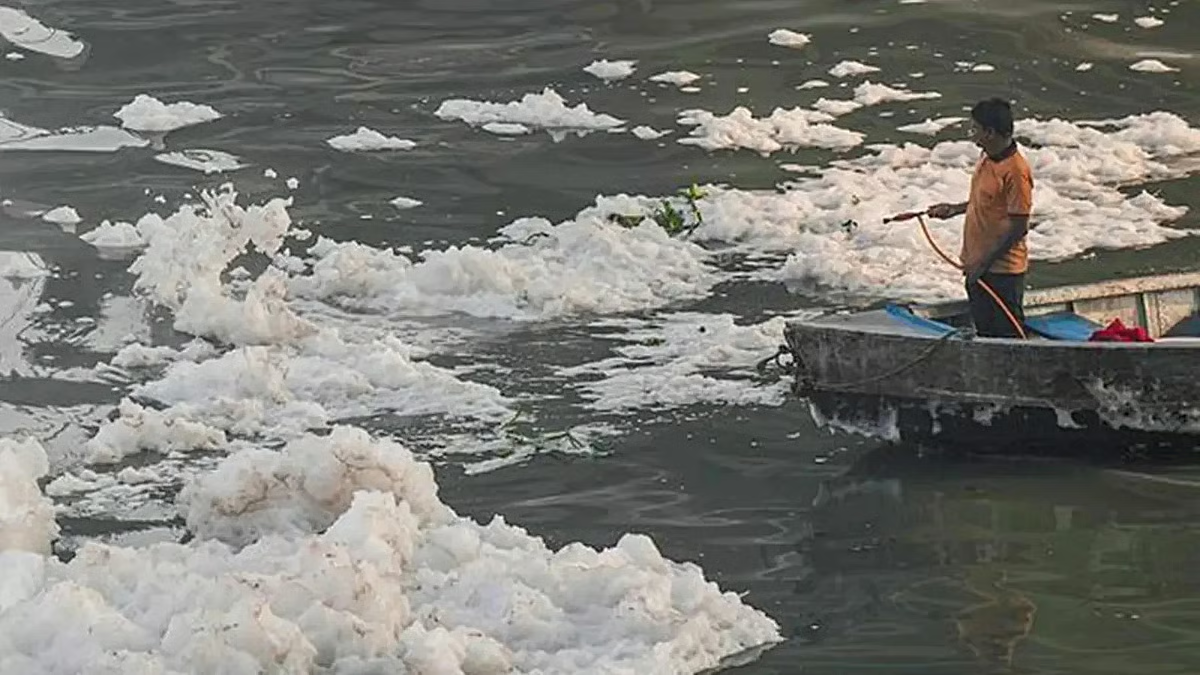
The chemical used to eliminate foam that forms on the Yamuna River during festivals has been officially disclosed, following a Right to Information (RTI) query filed by Noida-based social activist Dr. Ranjan Tomar. The Delhi Jal Board (DJB) responded that the substance used is Akurul DFS 171 – Silicon, which is employed to remove foam from the river.
Dr. Tomar had raised concerns after noticing that foam accumulating over several years on the Yamuna during the Chhath festival last year suddenly disappeared, prompting him to seek clarity on the chemicals applied by the DJB. In response, the Board confirmed the use of Akurul DFS 171, a chemical designed specifically to eliminate river foam.
While acknowledging the effectiveness of the chemical in making it easier for authorities to manage the foam during Chhath celebrations, Dr. Tomar stressed the importance of understanding its ecological impact. “It is essential to conduct thorough research to determine how this chemical affects the Yamuna River and its aquatic ecosystem,” he said. “At the same time, the government should explore alternative methods to prevent foam formation so that we can ensure a cleaner Yamuna in the coming years.”
Call for Noida to Take Initiative
Dr. Tomar also emphasized the need for Noida authorities to actively engage in river conservation efforts. He suggested that the Noida Authority should focus on managing foam locally, researching methods to maintain the Yamuna’s cleanliness, and developing clean corridors and accessible public spaces along the river. “Universities and research institutions in Noida could study the causes and control of foam formation, while aesthetically and environmentally improving riverfront areas,” he added.
The disclosure highlights growing public demand for transparency in environmental management and calls attention to the balance between festival celebrations and ecological preservation. Dr. Tomar’s RTI has made it possible for citizens to know the interventions used to maintain the river during key cultural events, while also sparking discussions about sustainable solutions.
Environmental experts have long expressed concerns over foam in the Yamuna, which is largely caused by untreated sewage and industrial effluents entering the river. While chemical treatments like Akurul DFS 171 offer temporary relief, they underscore the need for long-term strategies that reduce pollution at its source and protect river health.
Dr. Tomar concluded by urging both Delhi and Noida authorities to collaborate on a comprehensive plan for the Yamuna, combining scientific research, preventive measures, and public awareness initiatives. “A proactive approach is needed to maintain the Yamuna’s cleanliness year-round, ensuring a better environment for residents and future generations,” he said.
This revelation through RTI not only clarifies the technical steps taken to manage foam during festivals but also brings attention to the urgent need for research, innovation, and community-driven efforts to preserve the ecological balance of the Yamuna River.