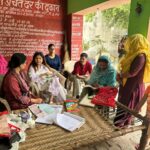
Gautam Buddh Nagar | March 14, 2026 — The Central Government and the Government of Uttar Pradesh have introduced changes in the Pradhan Mantri Matru Vandana Yojana (PMMVY), a flagship scheme aimed at providing financial assistance to pregnant and lactating women. Under the revised provisions, the financial benefit of ₹5,000, which was earlier provided in three installments, will now be disbursed in two installments.
The scheme is designed to support women during pregnancy and after childbirth, particularly for the first child and for the birth of a girl as the second child. The initiative aims to improve maternal health and encourage a positive attitude towards the birth of girl children.
According to officials, another significant change introduced in the scheme is the removal of the requirement of the father’s Aadhaar card for availing the benefits. This amendment will allow divorced women and single mothers to access the scheme more easily. The decision has been taken to make the scheme more inclusive and ensure that eligible women are not excluded due to documentation requirements.
Under the revised guidelines, registration for the scheme will now be carried out after the completion of the first cycle of immunization. The financial assistance provided under the scheme will be transferred directly to the beneficiary’s bank account through the Direct Benefit Transfer (DBT) system.
District Programme Officer Ashish Kumar Singh stated that women who are pregnant for the first time can register for benefits within 570 days from the date of conception. The financial assistance for first-time mothers will now be provided in two installments, with the first installment of ₹3,000 and the second installment of ₹2,000, which will be credited directly to the beneficiary’s registered bank account.
In addition, under the new provisions of the scheme, if the second child born in the family is a girl, the beneficiary will receive a lump sum financial assistance of ₹6,000. For availing this benefit, registration must be completed within 270 days of the birth of the child.
Officials further informed that women can also apply for the scheme online through the official portal pmmvy.wcd.gov.in. For further information about the scheme, beneficiaries can contact the financial and literacy expert through the mobile number 8882228683.
The scheme has now been made fully digital, eliminating the need for physical forms. Under the digital system, Anganwadi workers will directly enter the beneficiary’s details on the portal, simplifying the application process and improving efficiency in the implementation of the scheme.
Women who wish to avail the benefits can also visit their nearest Anganwadi centre, where officials will assist them in completing the registration process and verifying eligibility.
Under the scheme, benefits are available for the birth of the first child (boy or girl) and for the second child if the child is a girl. However, beneficiaries must possess at least one of the specified eligibility documents or meet one of the defined eligibility criteria.
Women eligible for the scheme include those whose total annual family income is less than ₹8 lakh, women who hold MGNREGA job cards, e-Shram card holders, and beneficiaries of the Ayushman Bharat – Pradhan Mantri Jan Arogya Yojana. Additionally, women who are partially or fully disabled, BPL ration card holders, and women belonging to the Scheduled Caste category are also eligible.
Other eligible beneficiaries include women who are beneficiaries under the Pradhan Mantri Kisan Samman Nidhi scheme, as well as those who possess ration cards under the National Food Security Act, 2013.
Officials stated that the revised provisions are aimed at improving accessibility and ensuring that financial assistance reaches eligible women in a timely and transparent manner. The digitalization of the scheme is expected to streamline the process and reduce administrative delays.
The initiative also seeks to promote maternal health and strengthen support systems for pregnant and lactating women while encouraging positive social attitudes toward the birth and upbringing of girl children.