31 March 2021, New Delhi.
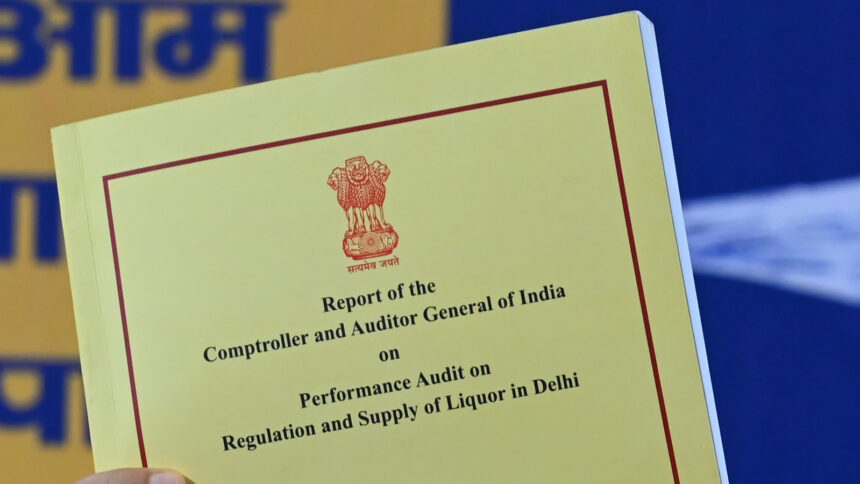
The Comptroller and Auditor General of India has presented a detailed audit report covering the Revenue, Economic, Social, and General Sectors along with Public Sector Undertakings of the Government of the National Capital Territory of Delhi for the years ended 31 March 2020 and 2021. The report provides an analytical review of financial operations, focusing on revenue trends, compliance issues, audit responses, and expenditure patterns across various departments. It aims to strengthen financial governance by identifying systemic gaps and suggesting improvements in transparency, accountability, and efficiency.
Report Structure and Coverage
The report is divided into two primary chapters. Chapter I focuses on the Revenue Sector and presents an overview of revenue receipts, audit planning, audit results, and departmental responses. It also examines specific cases related to stamp duty, taxation, and enforcement mechanisms in different departments.
Chapter II covers the Economic, Social, and General Sectors along with Public Sector Undertakings. This section provides details on audit coverage, the response of departments to audit observations, pending replies, and the status of annual report submissions. It also includes performance and compliance audits of selected schemes and departments, highlighting issues in implementation and financial management.
Revenue Sector Analysis
The audit report highlights several deficiencies in revenue collection and tax administration. It notes short levy of stamp duty and registration fees in certain cases, indicating gaps in assessment and enforcement. The Department of Trade and Taxes was found to have multiple compliance issues, including irregular claims of input tax credit and shortcomings in processing refund claims under the Goods and Services Tax system.
The report also identifies instances where interest was not levied on additional tax demands, leading to loss of potential revenue. In several cases, demands related to tax, interest, and penalties were not recovered in a timely manner, reflecting weak follow-up mechanisms. Additionally, concessional tax rates were allowed on the basis of invalid statutory forms, which further contributed to revenue leakage.
In the Transport Department, the audit observed short collection of fines from repeat traffic offenders, indicating inefficiencies in enforcement and monitoring systems. These findings collectively highlight the need for stronger compliance controls and better coordination among departments to improve revenue realization.
Audit Response and Recovery Issues
The report emphasizes that timely and effective response to audit observations is essential for ensuring accountability. However, it notes that several departments had pending replies to audit paragraphs, which delayed corrective action. This lack of timely response weakens the overall audit framework and reduces the effectiveness of financial oversight.
Recovery of accepted audit cases is another area of concern. While some recoveries were made based on audit findings, the overall progress was not satisfactory. The report suggests that departments need to strengthen recovery mechanisms and ensure that identified irregularities are addressed promptly. Improved monitoring and follow-up processes are necessary to enhance accountability and prevent recurrence of similar issues.
Economic, Social, and General Sectors
Chapter II of the report provides a detailed examination of financial management and program implementation across various sectors. A performance audit of Direct Benefit Transfer schemes was conducted to assess their effectiveness in delivering benefits to intended beneficiaries. The findings indicate that while the scheme has improved efficiency in some areas, there are still gaps in implementation and monitoring.
The report also highlights instances of inefficient expenditure in different departments. In the Department of Home, funds amounting to ₹4.02 crore remained blocked, along with avoidable expenditure of ₹70.41 lakh. Similarly, the Irrigation and Flood Control Department incurred unproductive expenditure of ₹81.56 lakh, indicating deficiencies in planning and execution.
The implementation of the Rights of Persons with Disabilities Act, 2016 by the Department of Social Welfare was also reviewed, revealing gaps in service delivery and compliance with policy provisions. The Tourism Department’s activities were examined to assess their effectiveness in promoting tourism and utilizing allocated resources efficiently.
Public Sector Undertakings and Governance
The report also reviews the functioning of Public Sector Undertakings, focusing on financial performance and compliance with regulatory requirements. It highlights delays in submission and tabling of annual reports, which affect transparency and legislative oversight.
The findings indicate that stronger governance mechanisms are required to ensure timely reporting and effective monitoring of public sector entities. Improving operational efficiency and adherence to financial norms is essential for enhancing the performance of these organizations.
Conclusion
The audit report provides a comprehensive assessment of Delhi’s financial and administrative systems, identifying key challenges in revenue collection, compliance, and expenditure management. While certain processes are functioning effectively, significant gaps remain that need to be addressed through policy reforms and administrative improvements.
The report underscores the importance of strengthening internal controls, improving audit response mechanisms, and ensuring efficient utilization of public funds. By addressing these issues, the government can enhance transparency, accountability, and overall governance.
This report serves as a critical reference for policymakers and administrators, offering valuable insights to improve financial management and public service delivery in the National Capital Territory of Delhi.