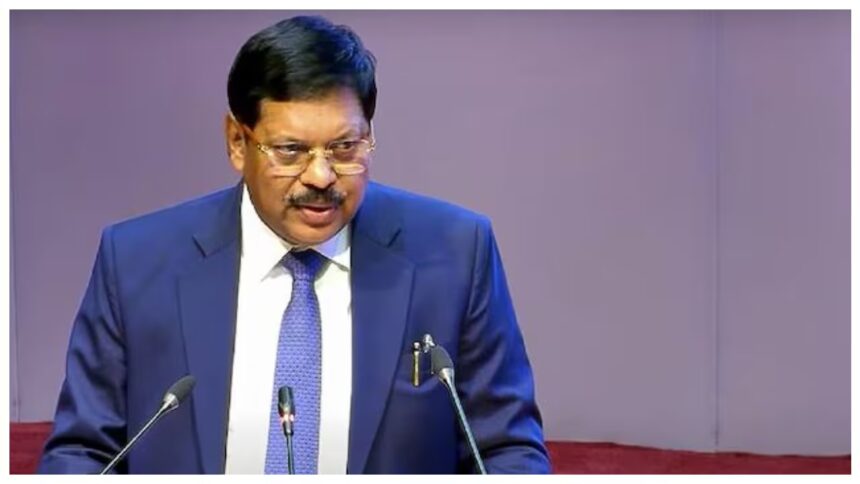
Chief Justice of India BR Gavai has once again emphasized the importance of the “None of the Above” (NOTA) option in Indian elections, highlighting how it empowers citizens, strengthens democratic participation, and encourages ethical governance by providing voters with the ability to register dissent against unsuitable candidates. Speaking on constitutional governance, the CJI underscored that the Supreme Court’s recognition of NOTA ensures that the electorate has a meaningful choice and the ability to voice disapproval, reinforcing the essence of participatory democracy in India. The discussion comes at a crucial juncture where the role of citizen awareness and ethical voting has become a central focus in the discourse on democratic accountability and transparency.
Judicial Recognition and Historical Context of NOTA
The journey of NOTA in India represents a significant landmark in the evolution of electoral rights and citizen empowerment. Before its formal recognition, voters who wished to reject all contesting candidates had to rely on Rule 49-O of the Conduct of Election Rules, 1961, which required them to inform the presiding officer about their decision not to vote for any candidate. This process, however, undermined the secrecy of the ballot and often discouraged citizens from expressing genuine dissent due to fears of social or political repercussions. Recognizing this gap, the Supreme Court of India, in its landmark judgment in People’s Union for Civil Liberties (PUCL) v Union of India on September 27, 2013, mandated that the Election Commission of India (ECI) introduce a NOTA option on Electronic Voting Machines (EVMs) and ballot papers.
The ruling explicitly protected the secrecy of the vote, establishing that the right to vote implicitly includes the right not to vote, thereby linking it to the fundamental right to freedom of expression under Article 19(1)(a) of the Indian Constitution. The Supreme Court emphasized that an informed and empowered electorate is vital to the health of a democratic system, and the ability to register a negative vote is a critical component of active citizen participation. By providing voters with the means to express disapproval without compromising confidentiality, the court intended to compel political parties to field candidates with higher moral and ethical standards.
NOTA, in essence, became a constitutional tool to promote accountability and ethical governance. While the ruling did not mandate the invalidation of elections based on the number of NOTA votes, it introduced a symbolic mechanism to reflect public dissatisfaction and encourage political parties to engage more responsibly with the electorate. The implementation of NOTA in state assembly elections starting in 2013, followed by its adoption in the 2014 Lok Sabha elections, marked a transformative moment in India’s electoral history, emphasizing transparency, choice, and citizen empowerment.
Impact, Symbolism, and Democratic Implications of NOTA
Since its introduction, NOTA has emerged as a powerful instrument for expressing voter dissent, symbolizing a conscious decision by the electorate to reject candidates deemed unworthy of public office. Although casting a vote for NOTA does not currently trigger re-elections or disqualify candidates, its growing tally in various elections serves as a visible metric of public sentiment. The highest NOTA count to date was recorded in the Indore Lok Sabha constituency during the 2024 general elections, crossing the two-lakh mark, signaling a notable level of voter awareness and deliberate expression of dissatisfaction. This unprecedented use of NOTA reflects the electorate’s insistence on accountability and their refusal to passively accept poorly qualified or ethically compromised candidates.
The CJI’s remarks highlight that the underlying principle of NOTA goes beyond mere symbolism. It is a mechanism that contributes to the ethical evolution of political parties, compelling them to field candidates who meet standards of integrity, competence, and public trust. By enabling voters to reject all candidates without risking personal exposure, the Supreme Court’s decision ensures that democratic processes are more participatory and reflective of citizen intent. Moreover, it empowers citizens to assert their right to meaningful choice, reinforcing the notion that democracy is not only about voting in favor but also about responsibly exercising the right to dissent.
The discussion around NOTA also has broader implications for electoral reform and civic education. It emphasizes the necessity for political parties to address voter concerns more responsibly and for the electorate to remain vigilant in evaluating candidates’ qualifications, conduct, and commitment to public service. Over the years, the visibility of NOTA has encouraged public debate on ethical candidacy, the quality of representation, and the accountability of political leaders. By observing the patterns of NOTA votes, policymakers, civil society, and the Election Commission can gauge public dissatisfaction, identify gaps in candidate selection processes, and promote reforms that enhance democratic legitimacy.
CJI Gavai’s reaffirmation of NOTA’s significance during his official visit to Bhutan, where he spoke at the Royal Institute of Management as part of the Fifth Wisdom for Future Talk Series hosted by JSW School of Law, underscores the enduring relevance of this right. His emphasis on informed and empowered citizenry aligns with global democratic principles, highlighting that a meaningful choice extends beyond the act of voting for a candidate to include the conscious decision to reject unsatisfactory options. In his address, the CJI stressed that the power to vote negatively ensures that voters remain engaged, vigilant, and accountable, thereby enhancing the overall quality of representative governance.
NOTA’s continued relevance also lies in its potential to influence the internal dynamics of political parties. By observing voter behavior, parties are increasingly incentivized to recruit candidates with ethical credentials, professional competence, and commitment to public welfare. The presence of NOTA acts as a subtle yet powerful deterrent against complacency and corruption within political ranks. Although its legal framework does not yet allow for the nullification of elections based on NOTA votes, the symbolic weight of the option exerts pressure on political stakeholders to remain responsive to citizen demands.
Furthermore, the introduction of NOTA has catalyzed discussions on comprehensive electoral reforms, highlighting the need for transparency, accountability, and citizen empowerment in governance. It reinforces the principle that democratic participation is not limited to endorsing candidates but also encompasses the moral responsibility to reject those who fail to meet acceptable standards. By institutionalizing this choice, the Supreme Court has provided voters with a non-confrontational, constitutionally protected method to exercise dissent, thereby contributing to the ethical maturation of India’s democratic framework.
The CJI’s comments serve as a reminder that democracy thrives when citizens are informed, empowered, and capable of meaningful participation. In a country with complex social, political, and economic dynamics, mechanisms such as NOTA offer voters the ability to communicate their expectations, demand accountability, and reinforce the values of transparency and integrity. Through this lens, voting becomes not only an act of selection but also an assertion of ethical standards, reinforcing the accountability of elected representatives.
Moreover, the consistent use of NOTA by an increasing number of voters demonstrates a shift in public consciousness towards higher standards of governance. It encourages political discourse centered on integrity, competence, and citizen welfare, rather than personality-driven politics. By acknowledging the impact of NOTA, the judiciary reinforces the notion that voter empowerment is an ongoing process requiring continuous attention, education, and facilitation.
The Supreme Court’s recognition of NOTA, as reinforced by CJI Gavai, is therefore not merely procedural but transformative. It highlights the interplay between citizen rights, democratic accountability, and the ethical obligations of political actors. As voters increasingly exercise their right to dissent, political parties and governing institutions are prompted to respond more responsibly, creating a feedback loop that strengthens democratic norms. The symbolic power of NOTA lies in its ability to reflect collective disapproval while preserving the secrecy and dignity of the individual vote.
NOTA represents an essential democratic instrument that empowers voters to exercise informed choice and ethical judgment. Its recognition by the Supreme Court has provided citizens with a constitutionally protected avenue to assert dissent without fear or compromise. Chief Justice BR Gavai’s reaffirmation of its significance underscores the continuing importance of citizen empowerment, transparency, and ethical accountability in India’s electoral system. By ensuring that voters have the ability to reject candidates who fail to meet moral and professional standards, NOTA strengthens the foundations of participatory democracy, encourages responsible political behavior, and highlights the evolving relationship between citizen agency and institutional governance.