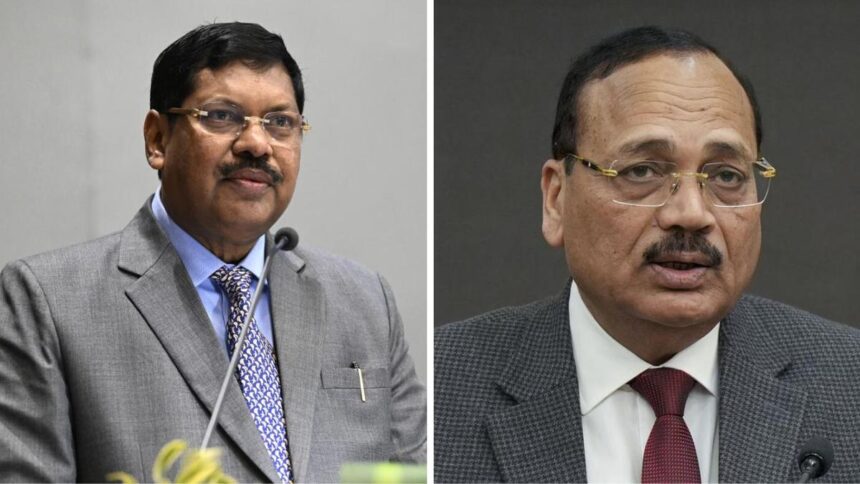
The Union law ministry has formally requested Chief Justice of India (CJI) Bhushan R Gavai to recommend his successor, setting the stage for Justice Surya Kant to assume the role of India’s 53rd Chief Justice on November 24. This procedural step, a long-standing convention, comes ahead of CJI Gavai’s retirement on November 23 and marks the formal initiation of the process to appoint the next head of the Indian judiciary. Justice Kant, the senior-most judge of the Supreme Court, is expected to take charge with a tenure of approximately 14 months, guiding the apex court through a critical period of constitutional and judicial developments while maintaining the delicate balance of independence, efficiency, and fairness within the judicial system.
Centre Initiates Succession Process and Judicial Conventions
The process of selecting a Chief Justice in India follows an established constitutional convention and judicial practice originating from the landmark Second Judges Case of 1993. According to this convention, the Union law ministry writes to the incumbent CJI about a month before his retirement, seeking his recommendation for a successor who is the senior-most judge “considered fit to hold office.” This recommendation is then formally acted upon by the government, which issues the notification appointing the new Chief Justice. In line with this procedure, the law ministry approached CJI Bhushan R Gavai on Friday, initiating the succession process for the Supreme Court’s top post. Justice Surya Kant, a jurist of high repute and the senior-most member of the bench, has emerged as the designated successor and is widely expected to take office on November 24. The continuity of this process ensures stability in the judiciary while respecting the balance between seniority, merit, and institutional integrity.
Justice Surya Kant’s anticipated appointment carries both ceremonial and administrative significance. As the designated successor, he will begin participating in key judicial and administrative discussions alongside CJI Gavai prior to formally assuming office. This period allows for a smooth transition, enabling him to understand ongoing cases, management responsibilities, and procedural protocols, ensuring that the Supreme Court continues to function efficiently without interruption. Justice Kant’s experience, combined with his long-standing tenure in the judiciary, positions him well to handle the responsibilities of overseeing judicial administration, managing constitution benches, and addressing emerging legal challenges during his tenure.
Journey of Justice Surya Kant: From Hisar to Supreme Court Leadership
Justice Surya Kant’s rise to the apex of India’s judiciary is a story of perseverance, intellectual rigor, and consistent professional development. Born on February 10, 1962, in the modest town of Hisar, Haryana, he pursued his early education locally before obtaining a law degree from Maharishi Dayanand University, Rohtak, in 1984. Demonstrating an unwavering commitment to scholarship, he completed an LL.M. from Kurukshetra University in 2011, achieving First Class First, an accomplishment attained while he was already an established judge. This academic foundation reflects his lifelong dedication to learning and legal expertise, a trait consistently acknowledged by peers and legal practitioners.
Justice Kant began his legal career in 1984 at the Hisar District Court before relocating to Chandigarh, where he built a distinguished practice in the Punjab and Haryana High Court. Specializing in constitutional, civil, and service law, he appeared for universities, corporations, and governmental boards, earning recognition for meticulous preparation and persuasive advocacy. At the age of 38, he became the youngest Advocate General of Haryana in July 2000, a testament to his capabilities and reputation within the legal community. The following year, he was designated a senior advocate, solidifying his standing as a leading figure at the Bar.
His transition from advocacy to the judiciary began in January 2004, when he was elevated as a judge of the Punjab and Haryana High Court. Over the years, he demonstrated exemplary judicial competence and administrative acumen, culminating in his appointment as the Chief Justice of Himachal Pradesh High Court in October 2018. His leadership there was widely praised for accessibility, efficiency, and fairness. In May 2019, he was elevated to the Supreme Court of India alongside Justice Gavai, marking the beginning of his tenure at the apex judicial forum of the nation.
During his time in the Supreme Court, Justice Kant has contributed to over 300 judgments spanning constitutional, criminal, and administrative law. He has been part of several landmark benches, including the historic Article 370 abrogation case, the Section 6A Citizenship Act verdict, and the ruling affirming Aligarh Muslim University’s minority status, where his dissenting opinion reflected judicial independence and careful reasoning. Additionally, he presided over cases balancing individual liberty with procedural compliance, such as granting bail to former Delhi Chief Minister Arvind Kejriwal in the CBI liquor policy case while upholding legal protocols, highlighting his nuanced approach to justice.
Justice Kant has also participated in pivotal benches addressing constitutional questions, including the presidential reference on the powers and timelines for governors and the President to act on bills passed by state legislatures. He has reviewed high-profile cases, including judgments related to the Enforcement Directorate’s authority under the Prevention of Money Laundering Act, demonstrating a comprehensive understanding of the complexities of modern governance and statutory interpretation.
Beyond adjudication, Justice Kant has actively contributed to legal institutions and reforms. He has served on the governing body of the National Legal Services Authority (NALSA) for two consecutive terms, highlighting his commitment to access to justice and legal aid. Currently, he is the executive chairman of NALSA and spearheaded initiatives such as the Veer Parivar Sahayata Yojana 2025, providing free legal support to soldiers, veterans, and their families—a pioneering nationwide scheme reflecting his vision for integrating constitutional duty with social responsibility.
Known for his measured demeanor, intellectual rigor, and consensus-building approach, Justice Kant is regarded as a jurist with a humanistic perspective. His ability to navigate complex legal issues, manage administrative responsibilities, and maintain collegiality among peers has earned him widespread respect within the legal community. As he prepares to assume the office of Chief Justice, he is expected to continue fostering judicial efficiency, spearhead reforms, and guide the apex court through an era of increasing public scrutiny and evolving legal challenges.
Justice Surya Kant’s upcoming tenure will coincide with critical constitutional and administrative questions, requiring careful balancing of judicial independence, institutional integrity, and public accountability. His leadership is anticipated to influence policy deliberations, technological integration within the judiciary, and procedural reforms, reinforcing the judiciary’s role as a cornerstone of democracy. His career, marked by dedication, scholarship, and a humanistic judicial approach, exemplifies the qualities deemed essential for the highest judicial office in India.
As the nation prepares for this transition in judicial leadership, Justice Kant’s journey from the modest lanes of Hisar to the Supreme Court’s corridors stands as a testament to diligence, intellect, and service. His tenure as Chief Justice of India is poised to be defined by a combination of experience, principled decision-making, and commitment to the constitutional values that underpin India’s democratic framework. The legal community, policy makers, and citizens alike will closely watch the impact of his leadership, recognizing both the historical significance and contemporary challenges associated with the position of the Chief Justice.
Justice Surya Kant’s story represents the trajectory of a jurist who has combined scholarship, integrity, and administrative competence to rise through the ranks of India’s judiciary. His tenure promises continuity, stability, and reform-oriented leadership at a time when the Supreme Court faces complex legal, technological, and social challenges. The CJI’s upcoming term marks a moment of reflection for the judiciary, highlighting the intersection of legal expertise, institutional responsibility, and the enduring pursuit of justice in a rapidly evolving nation.