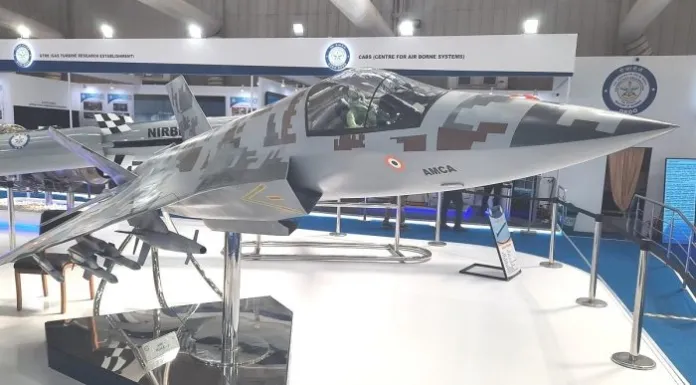
India has taken a significant step forward in enhancing its air combat capabilities with Defence Minister Rajnath Singh approving the execution model for the Advanced Medium Combat Aircraft (AMCA) programme. This ambitious project aims to develop a fifth-generation, deep penetration fighter jet equipped with advanced stealth technology and medium weight specifications to strengthen the Indian Air Force’s operational edge. The approval marks a critical milestone in India’s journey towards self-reliance in aerospace and defense manufacturing.
Industry Partnership to Drive Development
The Defence Ministry clarified that the Aeronautical Development Agency (ADA) will spearhead the project’s execution by partnering with industry players. The “execution model” allows both private and public sector companies to compete equally, either independently, as joint ventures, or in consortia, to contribute to the development of the AMCA prototype. However, all participating entities must comply with Indian laws and regulations, ensuring that the project remains firmly rooted in domestic expertise and resources.
This inclusive approach is expected to foster a robust aerospace industrial ecosystem within the country, encouraging innovation and collaboration across sectors. The Defence Ministry described this model as a key step to leveraging indigenous capabilities and capacity, positioning India as a global player in advanced combat aircraft technology.
Project Backing and Financial Commitment
The cabinet committee on security, led by Prime Minister Narendra Modi, had already given its in-principle approval for the AMCA programme last year, signaling the government’s strong commitment to boosting India’s defense manufacturing capabilities. The initial development cost of the project is estimated to be around Rs 15,000 crore.
The Indian Air Force has long advocated for the AMCA project, seeing it as crucial to fulfilling its long-term operational requirements. The confidence in India’s indigenous aircraft development received a major boost following the successful development and induction of the Light Combat Aircraft (LCA) Tejas, which demonstrated India’s growing aerospace capabilities.
With the approval of the execution model, India is set to advance towards a future where its air force operates highly advanced fighter jets designed and manufactured domestically, reflecting a major stride in defense self-reliance and technological innovation.