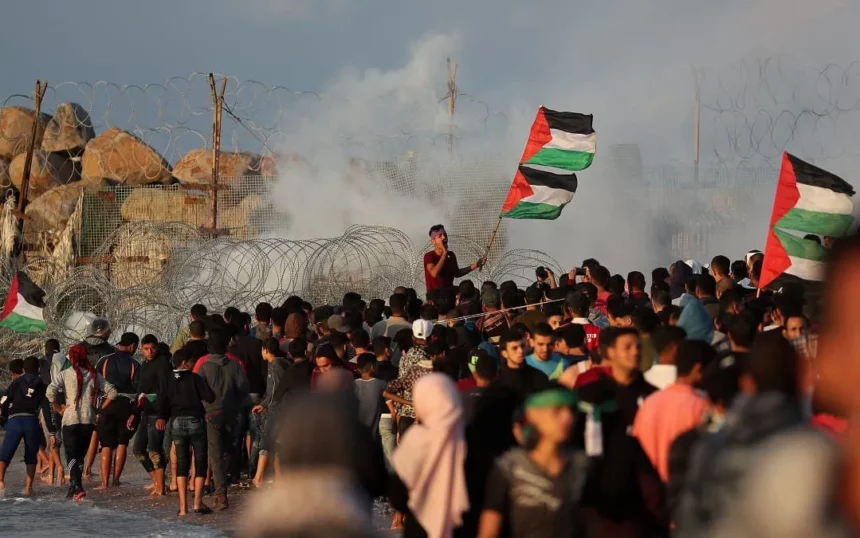
The ongoing conflict between Israel and Hamas shows no signs of ending soon, as Hamas refuses to surrender despite facing overwhelming hardship. With Gaza enduring unimaginable suffering and the global spotlight on Israel’s actions, Hamas remains resolute, driven by its commitment to resist occupation and maintain its influence over the Palestinian cause.
Gaza, often described as a killing field or the world’s largest concentration camp, remains a focal point of human suffering. The devastation in Gaza, with Israel’s airstrikes, blockades, and destruction of vital infrastructure, has left many questioning the future of the region. However, while some may call for Hamas to surrender, the reality is far different. Hamas’s leadership in Gaza has made it clear that they will not abandon their people. The group’s stance is unwavering: no surrender, no disarmament, and no peace until Israeli forces withdraw completely from Gaza.
Despite repeated offers from Israel, Hamas has held firm to its demands: the release of Palestinian prisoners and an end to the Israeli occupation. The offer Israel presented to Hamas—freeing hostages in exchange for 45 days of food and water, followed by disarmament—was rejected by the group, who proposed an alternative agreement. Hamas offered to release hostages in exchange for Palestinian prisoners, while also agreeing to a long-term truce, or hudna, but would not disarm or agree to an Israeli presence in Gaza.
Israel’s Prime Minister, Benjamin Netanyahu, has repeatedly shown a lack of understanding of the situation. His broken promises and inability to secure a lasting peace agreement have led to a prolonged conflict. Past negotiations, facilitated by U.S. officials, have failed to bring about lasting results due to Benjamin Netanyahu’s unilateral decisions to abandon deals that could have ended the fighting. This cycle of broken promises has hardened Hamas’s resolve, and the group has only grown stronger in its determination to resist.
What drives Hamas’s steadfastness? For one, the people of Gaza have suffered immense losses, with families losing loved ones and homes in the ongoing violence. The war has become symbolic, not just for Hamas, but for Palestinians as a whole. Gaza is no longer just a geographic location; it is sacred ground for all Palestinians, and resistance is viewed as the only path to self-determination and justice.
Hamas’s resistance is also deeply tied to its faith. Unlike past Palestinian factions such as Fatah, which saw leaders go into exile, Hamas views itself as a religiously motivated movement, unyielding in its commitment to Palestinian rights. Its discipline and collective belief have kept the group from crumbling under pressure. As seen in the tragic case of 23-year-old paramedic Rifaat Radwan, who died while calling for forgiveness, the faith-driven sacrifice reflects the group’s enduring resolve.
Hamas’s strategy has not only impacted military tactics but has also shaped global opinion. As more people worldwide question Israel’s actions, especially in the U.S. and Europe, Hamas’s message of resistance is gaining traction. Although Israel’s attempts to crush Hamas may persist, the group has already achieved its primary objective: to place the Palestinian struggle for freedom at the center of global attention.