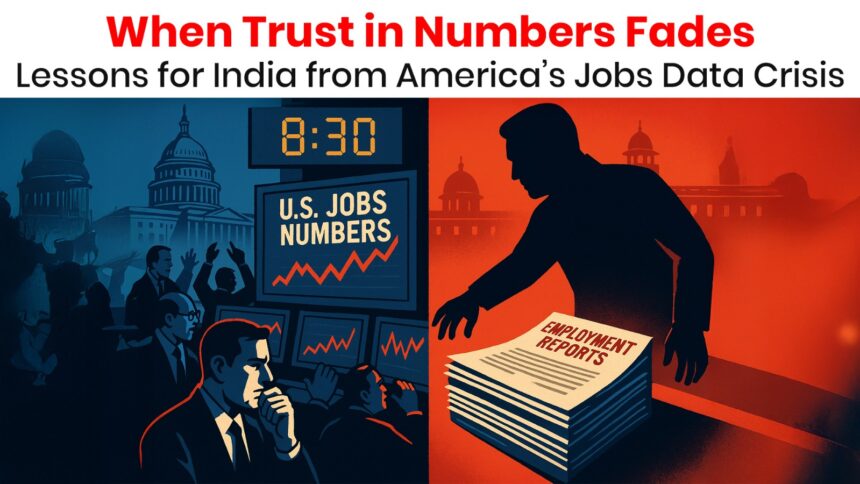
Between 2004 and 2018, I lived in a world defined by ticking clocks and sudden bursts of adrenaline. The first Friday of every month was almost sacred. At exactly 8:30 in the morning in New York, the US Bureau of Labor Statistics would release the Nonfarm Payrolls report. It was a single number but it could set off a chain reaction across the world’s markets. It told us how many jobs had been created in the United States, excluding the agricultural sector. For traders like me, this was not just an update on employment. It was a direct pulse check on the largest economy in the world and a signal for where interest rates, currencies, and even commodity prices might be headed.
The build-up before the release was electric. Liquidity would dry up. Spreads would widen. Everyone watched the clock. In those moments just before the number came out, you could almost feel the air thicken. When the figure was higher than expected, the dollar would surge, Treasury yields would jump, and equity markets would sometimes stumble. When it was lower, the opposite happened. In those days, I cared about the number because of what it did to my trading book. But over time I understood it was much more than a trading trigger. It was a foundation stone in how the world understood the health of the US economy.
This was data people trusted. Governments used it to shape policy. Businesses used it to decide whether to expand or hold back. Investors used it to calibrate their portfolios. It was not perfect, but it was independent. And because it was independent, it was credible. That credibility was the glue that held together the link between information, decision making, and trust in the system.
Now, watching events unfold in 2025, I feel that glue being tested. In recent weeks, President Donald Trump has moved aggressively against the very institution that produces the Nonfarm Payrolls. After a jobs report came out showing a sharp slowdown in hiring, he dismissed the commissioner of the Bureau of Labor Statistics. He accused the data of being phony and politically motivated. He nominated a replacement who has been openly critical of the agency’s methods and has proposed releasing jobs data only once a quarter instead of every month. There are also discussions about moving the BLS under the Commerce Department, which would bring it closer to the political leadership of the White House.
For someone who once sat at a desk trading millions of dollars based on this number, the danger is immediately clear. If the data is delayed, altered, or seen as politically filtered, the markets will treat it as unreliable. Investors, both domestic and foreign, might start adding a risk premium to anything tied to the US economy. That can mean higher borrowing costs for the government, more volatility in markets, and a slow erosion of the dollar’s status as the most trusted currency in the world.
But the implications are not just economic. In a democracy, official statistics are part of the public’s shared reality. They allow voters to judge whether the economy is improving or declining. If those numbers are manipulated, elections stop being contests of ideas based on facts and become contests of competing stories. This weakens the bond of trust between citizens and the state. And when trust in official statistics falls, people turn to partisan sources or conspiracy theories. At that point, it becomes harder to find common ground on any issue at all.
For India, this moment in the United States is more than a news story. It is a cautionary tale. Our country is on track to become one of the world’s largest economies and with that growth comes the responsibility of maintaining the credibility of our own data. The National Statistical Office, which produces India’s key economic figures, must remain insulated from political pressure. Reports must be released on time whether they show good news or bad. The methods used to collect and process the data should be open to public scrutiny so that independent economists can verify the findings. And India should actively encourage multiple sources of data, including private and academic surveys, so that no single institution becomes the only arbiter of truth.
It is also important to prepare structures that can withstand political cycles. This could mean legislating the operational autonomy of statistical agencies, much like the Reserve Bank of India has in monetary policy. It could mean having an independent statistical ombudsman who can address concerns about data integrity. It could even mean making anonymised raw data publicly accessible so that research institutions can validate official conclusions.
When I think back to my trading days, one truth stands out. Markets can handle bad news but they cannot handle uncertainty about whether the news is real. Democracies are the same. People can accept tough realities if they believe the facts are honest. The current turmoil over Nonfarm Payrolls in the US is a reminder that credibility is not just a technical matter. It is a national asset. Once it is damaged, restoring it is slow and costly.
The youth of India will inherit the task of building institutions that last longer than any government. In the rush to grow faster, we cannot forget that the trustworthiness of our statistics is as important as the numbers themselves. If we can protect that trust, we will protect both our economy and our democracy. And that will be worth more than any single data release or any single market move I ever traded.