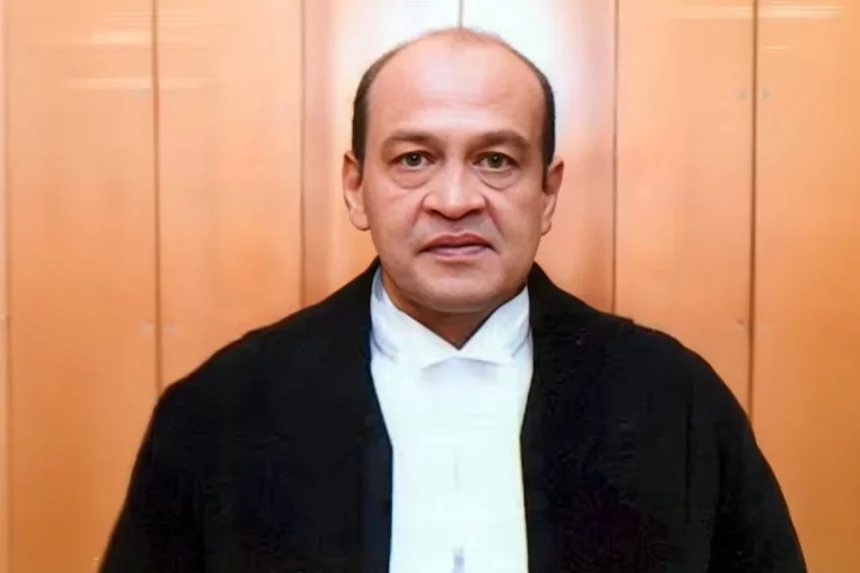
In a significant move that could mark one of the rare instances of judicial impeachment in India, Lok Sabha Speaker Om Birla on Tuesday constituted a three-member panel to examine allegations against Justice Yashwant Varma, a former judge of the Delhi High Court, in connection with a sensational cash recovery case. The panel’s formation follows the acceptance of a motion backed by 146 Members of Parliament seeking his removal after a substantial quantity of unaccounted cash was reportedly found at his residence.
Panel to Investigate Allegations and Recommend Action
Announcing the decision in the Lok Sabha, Speaker Om Birla said the panel would comprise Supreme Court judge Justice Aravind Kumar, Madras High Court Chief Justice Manindra Mohan Shrivastava, and senior jurist B V Acharya. The committee has been tasked with probing the charges levelled against Justice Varma and will have the authority to summon evidence, examine witnesses, and assess the facts in detail.
According to Birla, the committee will present its findings at the earliest, and the proposal for impeachment will remain pending until its report is submitted. Once the committee completes its work, its report will be tabled in the House for further action.
The move comes after 146 MPs, cutting across political lines, signed and supported a motion to impeach Justice Varma. The rare show of consensus between the ruling coalition and the opposition signals that the impeachment process could move forward with little political resistance.
Impeachment Process Under Constitutional Provisions
The impeachment of judges in India is governed by Article 124(4) of the Constitution, which lays out a stringent process to safeguard judicial independence while ensuring accountability. If the committee concludes that Justice Varma is guilty of the allegations, the report will first be presented to the House where it was initially introduced—in this case, the Lok Sabha.
The motion for impeachment must be passed in that House with the support of at least two-thirds of the members “present and voting.” If passed, it moves to the other House—here, the Rajya Sabha—where the same voting threshold applies. Only if both Houses approve the motion with the required majority does the impeachment succeed, resulting in the removal of the judge from office.
Historically, impeachment motions against judges in India have been rare and difficult to execute, given the high threshold for approval and the detailed investigative process involved. This case, however, appears to have strong momentum due to bipartisan agreement.
The Yashwant Varma Cash Recovery Controversy
The origins of the controversy date back to the evening of March 14, when a fire broke out at the residence of Justice Yashwant Varma. According to reports, firefighters responding to the blaze allegedly discovered a large quantity of unaccounted cash at the premises. In a twist that intensified public and media scrutiny, a video emerged soon after showing bundles of currency notes burning in the fire.
The shocking visuals triggered widespread speculation and allegations of corruption against Justice Varma. The judge, however, strongly denied the accusations, claiming that the incident was part of a larger conspiracy aimed at framing him.
Following the uproar, Chief Justice of India D Y Chandrachud ordered an in-house inquiry into the matter. On March 22, the CJI constituted a separate three-member committee to investigate the allegations. Justice Varma was subsequently repatriated to his parent court, the Allahabad High Court, where he was recently sworn in again. However, in line with the CJI’s directions, all judicial work was withdrawn from him pending the outcome of the probe.
This development marks a critical moment in India’s judicial and parliamentary history. The case will now proceed under constitutional procedures, and with both political sides aligned, the outcome could be swift compared to previous impeachment attempts in the country.