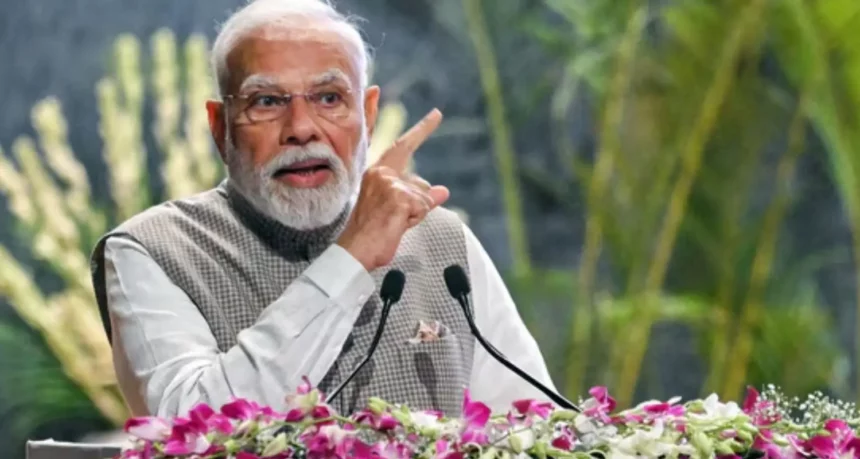
Prime Minister Narendra Modi is expected to attend the 80th session of the United Nations General Assembly (UNGA) in New York next month, where he is likely to address world leaders amid escalating trade frictions between India and the United States. The visit, if confirmed, would coincide with US President Donald Trump’s own appearance at the UNGA and comes in the wake of steep reciprocal tariffs imposed by Washington on Indian imports.
PM Modi’s Possible UNGA Address and Packed Diplomatic Agenda
According to a provisional list of speakers released by the UN and cited by news agency PTI, the Indian “Head of Government” is scheduled to speak during the morning session on September 26. On the same day, leaders from Israel, China, Pakistan, and Bangladesh are also expected to address the Assembly. The high-level General Debate for the 80th UNGA session will run from September 23 to 29, maintaining the long-standing tradition of Brazil delivering the opening speech, followed by the United States.
If confirmed, PM Modi’s address would take place just three days after Trump’s own speech, scheduled for September 23 from the iconic UNGA podium in New York. This will be Trump’s first appearance at the UN General Assembly since beginning his second term as US President.
PM Modi’s anticipated visit would not only mark another high-profile diplomatic engagement in 2025 but also take place in a highly charged geopolitical climate. The annual UNGA session, often called the “busiest diplomatic season” of the year, is expected to be shaped by ongoing global crises, including the Israel-Hamas conflict and the continuing war in Ukraine. Both issues are likely to dominate the debate, adding weight to the speeches of world leaders.
India’s participation in this year’s session will also come against the backdrop of intensifying trade disputes with Washington. PM Modi’s presence at the UN could provide opportunities for bilateral interactions, although no formal meeting between PM Modi and Trump on the sidelines of the General Assembly has yet been confirmed.
Rising Trade Tensions and the Tariff Dispute
The expected UNGA visit follows a turbulent phase in India-US trade relations. In February 2025, PM Modi travelled to the United States for a bilateral meeting with President Trump at the White House. The meeting concluded with a joint statement announcing plans to negotiate the first part of a Bilateral Trade Agreement (BTA), envisioned to be mutually beneficial and targeted for completion by the fall of 2025.
However, relations were soon strained by Washington’s decision to impose steep additional tariffs on Indian imports. Despite ongoing negotiations for the trade pact, Trump announced a 25 percent additional tariff on India for its purchase of Russian oil, raising the total tariff rate to 50 percent. The move, framed as a “reciprocal” measure by the US administration, was met with sharp criticism from New Delhi.
India’s Ministry of External Affairs (MEA) described the action as “unjustified and unreasonable,” stating that, like any major economy, India would take all necessary measures to safeguard its national interests and economic security. The MEA’s strong response signalled New Delhi’s unwillingness to accept the tariffs without contest and hinted at possible retaliatory measures.
The timing of Trump’s tariff order added to the diplomatic tension, coming just weeks before a US delegation is scheduled to visit India from August 25 for the sixth round of talks on the proposed BTA. Both sides have been aiming to finalise the first phase of the agreement by October or November this year, but the escalation in trade measures risks complicating the path to consensus.
The broader context of the dispute lies in Washington’s increasingly assertive trade policy under Trump’s second term. The administration has pursued aggressive tariff regimes not only with India but also with other major economies, framing them as measures to protect American industries and balance trade deficits. For India, the tariffs on oil imports carry added significance, as they directly affect the country’s energy costs and overall economic strategy at a time when global energy markets remain volatile due to geopolitical conflicts.
This 80th session of the UN General Assembly will therefore serve as a critical diplomatic stage for both PM Modi and Trump. While Trump will use his address to reinforce US positions on global and trade matters, PM Modi is likely to highlight India’s perspective on pressing international issues, including conflict resolution, economic cooperation, and sustainable development, while also subtly signalling India’s stance on the trade dispute with Washington. The coming weeks will determine whether the provisional schedule holds and whether both leaders use their time in New York to reset, or further harden, their positions on bilateral trade.