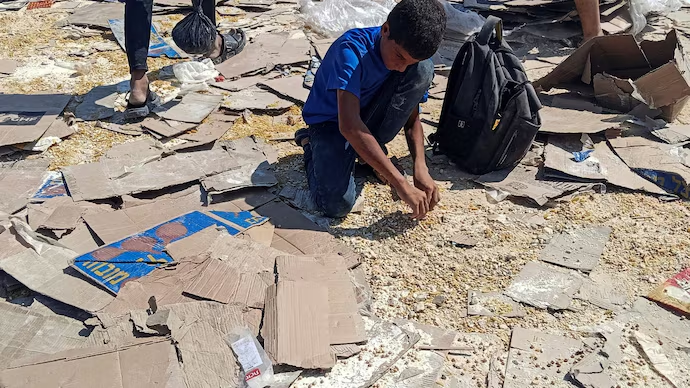
The US State Department is reportedly considering allocating $500 million to the Gaza Humanitarian Foundation (GHF), a newly established aid organization providing assistance in war-ravaged Gaza. This move, according to multiple anonymous sources and former US officials, would deepen American involvement in a controversial relief effort plagued by violence, operational challenges, and questions over the foundation’s neutrality. The funding, if approved, would come from the US Agency for International Development (USAID), which is currently being integrated into the State Department.
Concerns Over Security and Management
The plan to channel substantial funds to the GHF has faced opposition within the US government, with some officials raising alarms about the safety of aid distribution sites. In recent weeks, several deadly shootings have occurred near these hubs, resulting in dozens of Palestinian casualties. Moreover, the GHF has been criticized by humanitarian groups, including the United Nations, for alleged partiality and mismanagement. Reports of overcrowding, chaotic distribution, and senior staff resignations have further fueled doubts about the foundation’s competence in handling such a critical operation. The GHF currently relies on private American security and logistics contractors to manage aid transport and distribution inside Gaza.
Political and Diplomatic Dimensions
The proposal to fund the GHF reportedly comes at Israel’s request to support its operations for six months. While the US and Israel officially deny financing the GHF, both have urged the UN and international agencies to collaborate with the foundation, arguing that established UN aid networks were compromised by Hamas. However, Hamas has rejected these accusations. The initiative emerges against the backdrop of USAID’s ongoing restructuring under former President Donald Trump’s administration, which has seen most of its programs curtailed as part of a broader “America First” policy.
There is also internal debate about involving experienced non-governmental organizations in the aid distribution process, a move some officials advocate to mitigate risks associated with GHF’s current operations. Yet, Israel is reportedly resistant to this idea. Meanwhile, Gaza hospitals report more than 80 Palestinians killed and hundreds wounded near GHF distribution points in early June, with conflicting claims about the source of violence. Israeli military forces claim to have fired warning shots at individuals approaching their positions, while eyewitnesses blame Israeli soldiers for the casualties.
This evolving situation highlights the complexities faced by international aid efforts in conflict zones, where political, security, and humanitarian concerns intersect in challenging ways.