India’s Operation Sindoor saw a decisive military response to the Pahalgam terrorist attack, with Indian forces successfully downing over six Pakistani fighter jets and striking key terror headquarters in Pakistan’s Bahawalpur and Muridke. The operation, planned and executed with meticulous precision, reflected India’s growing strategic capabilities while dismissing claims of external pressure to cease hostilities. This military action sent a clear message of India’s resolve against terrorism, amidst political debates and scrutiny within the country.
Strategic Planning and Execution
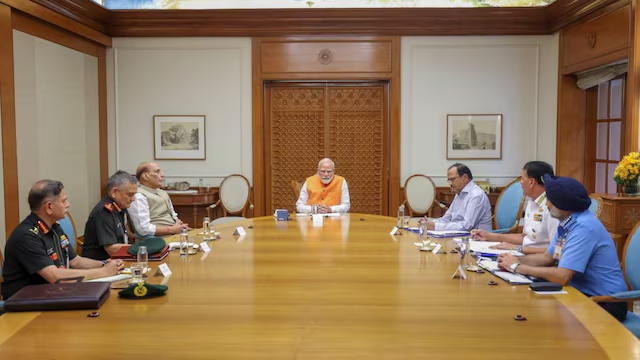
According to senior defence sources, the strike plans were finalized in high-level meetings on April 23, a day after the Pahalgam attack. Defence Minister Rajnath Singh convened a crucial meeting with the three service chiefs, Chief of Defence Staff General Anil Chauhan, and National Security Adviser Ajit Doval to decide the course of action. The service chiefs assured full readiness for the retaliatory strike, which was subsequently approved in the Cabinet Committee on Security meeting chaired by Prime Minister Narendra Modi. The PM cut short his Saudi Arabia visit to oversee the operation’s planning.
The strikes targeted terrorist headquarters in Bahawalpur and Muridke, with operations timed between 12:30 am and 2 am to capture clear visuals of the damage. Importantly, India did not cross the international border or the Line of Control, instead relying on advanced long-range precision capabilities, ensuring pilot safety—a lesson learned from earlier conflicts like the 2019 Balakot strike.
Combat Details and Political Context
The operation, executed in under 30 minutes on May 7, saw India destroying multiple terrorist sites and downing at least six Pakistani jets, including F-16s and JF-17s, as well as a Pakistani C-130J military transport aircraft and an AWACS plane. While some Indian jets were lost due to tactical errors early in the operation, all pilots returned safely. The Indian Navy stayed on high alert but did not engage, a posture that reportedly influenced Pakistan’s decision to seek a ceasefire.
Top defence officials refuted allegations that the US or former President Donald Trump pressured India to halt the operation. Sources emphasized that PM Modi maintained a firm stance, even rejecting calls from external parties for a ceasefire. Political opponents, including Congress and Rahul Gandhi, criticized the government, claiming undue foreign influence; however, defence insiders dismissed these claims as unfounded and politically motivated.
The operation benefited from emergency procurement powers granted after the 2020 Galwan clash, enabling rapid military preparedness. Additionally, multi-party delegations, including prominent opposition leaders, were involved in briefings and diplomatic messaging, reinforcing domestic unity and sending strong signals internationally.
Operation Sindoor underscores India’s evolving military strength and strategic autonomy in addressing cross-border terrorism while navigating complex political and diplomatic landscapes.