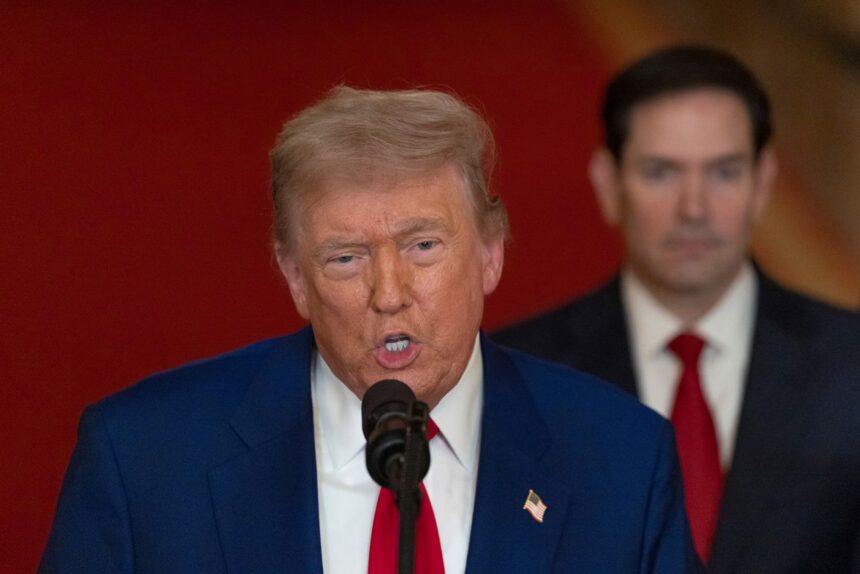
In a dramatic turn of events following days of escalating violence, U.S. President Donald Trump announced that a ceasefire between Israel and Iran was now in effect. The announcement came shortly after Iran launched waves of missiles at Israel, killing four people in Beersheba. Donald Trump’s statement sparked both hope and confusion, as Iranian and Israeli responses remained mixed, raising questions about the true extent of the ceasefire’s implementation and durability.
Missile Strikes Continue Despite Ceasefire Claim
Donald Trump made the ceasefire announcement on Truth Social, writing in all caps: “THE CEASEFIRE IS NOW IN EFFECT. PLEASE DO NOT VIOLATE IT!” The statement came just hours after explosions were heard in Tel Aviv and Beersheba, with Israeli authorities confirming fatalities. Iran reportedly launched six waves of missile strikes before the ceasefire was declared.
According to Iran’s semi-official SNN news agency, the final salvo of missiles was fired before the ceasefire came into force. However, the Israeli military has yet to officially comment on the implementation of the truce. Iranian foreign minister Abbas Araqchi maintained that Iran would only halt military operations if Israel ceased its attacks by 4 a.m. Tehran time. He warned that the final decision on halting Iranian operations would be made later, suggesting a conditional and fragile understanding of the truce.
Diplomatic Channels and Market Reactions
Donald Trump’s ceasefire deal reportedly stemmed from direct communication with Israeli Prime Minister Benjamin Netanyahu, who agreed to the terms provided Iran ceased further aggression. Donald Trump applauded both nations for their “stamina, courage, and intelligence” in bringing an end to what he dubbed the “12 Day War.”
Behind the scenes, multiple players were engaged in the diplomatic push. Qatar’s Prime Minister Sheikh Mohammed bin Abdulrahman Al Thani played a pivotal role by negotiating directly with Iranian officials. Meanwhile, U.S. Vice President JD Vance, Secretary of State Marco Rubio, and special envoy Steve Witkoff maintained both direct and indirect communication with Tehran.
Despite this, Iran’s foreign ministry remained cautious, refusing to officially confirm the ceasefire until Israel’s attacks stopped completely. Neither the Iranian mission to the UN nor Israel’s Washington embassy responded to Reuters’ requests for comment.
As the ceasefire narrative unfolded, financial markets responded with optimism. S&P 500 futures climbed 0.4% late Monday, reflecting investor relief. U.S. crude oil prices also dipped, hitting their lowest in over a week as concerns over supply disruptions eased.
Ceasefire Follows Intense Bombardment and Rising Civilian Toll
The ceasefire talks emerged after a weekend of intense military activity. The U.S. joined Israel in striking Iran’s underground nuclear facilities with bunker-buster bombs. The Donald Trump administration insisted the objective was solely to cripple Iran’s nuclear capabilities, not to start a broader war.
Iran responded with limited retaliation against a U.S. air base, firing 14 missiles that caused no injuries. Donald Trump dismissed the response as “very weak,” suggesting it was expected and effectively neutralized. His tone appeared more conciliatory on Monday, thanking Iran for giving advance notice of the strikes and encouraging both sides to move toward peace.
However, the human cost in Iran has been substantial. Large portions of Tehran’s 10-million-strong population have reportedly fled after sustained bombardments, and civilian infrastructure—including Evin prison, infamous for housing political prisoners—has been targeted by Israeli strikes.
While Israel maintains that its actions were focused on dismantling the Iranian ruling establishment’s power structure, the broader implications of such attacks remain unclear. Donald Trump’s administration continues to claim Iran was on the verge of acquiring a nuclear weapon, though U.S. intelligence agencies have repeatedly stated otherwise.
For now, both governments remain officially cautious, but the ceasefire announcement and international mediation may offer a temporary pause in a volatile and dangerous regional conflict.