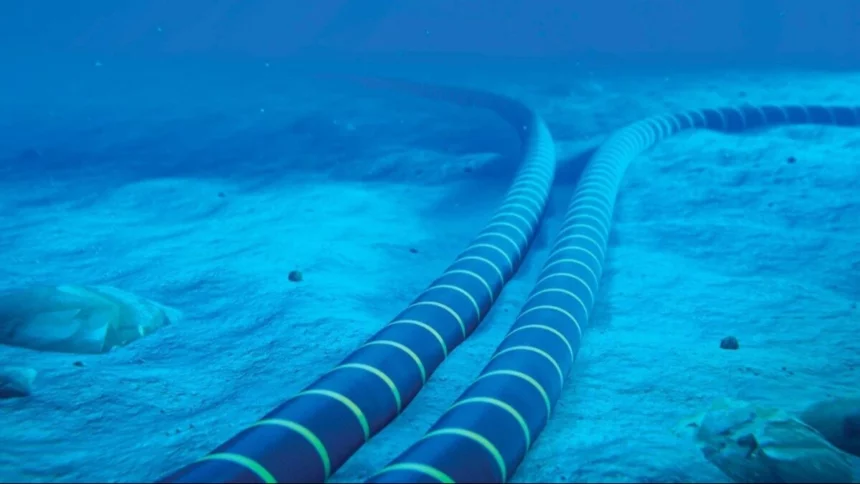
Undersea fiber optic cable cuts in the Red Sea have caused significant disruption to internet connectivity across parts of Asia and the Middle East, raising concerns about both technical vulnerabilities and potential geopolitical implications. While the precise cause of the incident remains unclear, experts suggest that the disruption could have far-reaching effects on digital communications, business operations, and essential services that rely on uninterrupted internet access. Microsoft confirmed that users in the Middle East may experience increased latency due to these fiber cuts, while internet traffic not routed through the region remains unaffected. The incident highlights the fragility of global internet infrastructure and the potential for external events—whether accidental or intentional—to impact digital connectivity on a wide scale.
Impact on Connectivity and Technical Overview of Undersea Cables
Undersea cables are a critical backbone of the global internet, complementing satellite connections and terrestrial fiber networks. These cables carry vast amounts of data between continents, enabling everything from banking transactions and cloud computing to social media and streaming services. Typically, internet service providers have redundant routes to reroute traffic in case of a failure along one path. However, even minor disruptions in undersea cables can lead to slower speeds, increased latency, and intermittent connectivity for users, particularly in regions heavily reliant on specific cable systems.
In this case, NetBlocks, an organization that monitors internet access, reported that a series of subsea cable outages in the Red Sea degraded connectivity in multiple countries, including India and Pakistan. The disruption affected the South East Asia–Middle East–Western Europe 4 (SMW4) and India-Middle East-Western Europe (IMEWE) cable systems near Jeddah, Saudi Arabia. Tata Communications, which manages the SMW4 system, and the Alcatel-Lucent consortium overseeing the IMEWE cable, did not immediately comment on the outages. Pakistan Telecommunications Co. Ltd. also acknowledged the cuts, confirming their occurrence on Saturday.
In the United Arab Emirates, residents on state-owned networks such as Du and Etisalat reported slower internet speeds. Authorities in Saudi Arabia and the UAE have not publicly commented on the cause of the disruption. The technical repair process for undersea cables is complex, requiring specialized ships and crews to locate and fix the damaged sections, which can take several weeks. Accidental damage from ship anchors is common, but deliberate targeting is also possible in regions affected by political or military conflicts.
The Red Sea is a strategic corridor for maritime traffic, connecting Europe, the Middle East, and Asia. Its importance to global commerce and communications makes any disruption potentially significant, affecting not only internet services but also financial transactions, shipping operations, and international trade. Analysts warn that disruptions in this region could have cascading effects, especially for countries dependent on specific subsea cables for connectivity.
Geopolitical Context and Potential Houthi Involvement
The cable cuts have raised concerns about a potential link to ongoing regional conflicts, particularly involving Yemen’s Houthi rebels. The Houthis, who have repeatedly targeted Israel over the Israel-Hamas war in the Gaza Strip, have been accused of planning attacks on undersea infrastructure in the Red Sea in the past. While the rebels have denied responsibility for previous cable disruptions, their al-Masirah satellite news channel acknowledged the latest cuts on Sunday, citing NetBlocks reports.
The Houthis’ military campaign since November 2023 has targeted more than 100 ships using missiles and drones, leading to the sinking of vessels and the deaths of several mariners. These attacks have coincided with escalations in the Israel-Hamas conflict, as well as tensions involving Iran and the United States. The Red Sea, being a major maritime corridor for global trade and energy supplies, makes it a strategic location for any group seeking to exert pressure through disruption of critical infrastructure.
Israel has responded to Houthi attacks with airstrikes targeting rebel leadership and military infrastructure, escalating regional tensions. The recent undersea cable cuts occurred amid ongoing international diplomatic efforts to negotiate ceasefires in the Israel-Hamas conflict and address Iran’s nuclear program, further complicating the geopolitical environment. The situation underscores the vulnerability of vital communication infrastructure in conflict-prone regions and the potential for hybrid forms of warfare that extend beyond traditional battlefields to include attacks on digital and logistical networks.
The Red Sea incident is not the first instance of cable disruptions in the region. In early 2024, the Yemeni government-in-exile alleged that the Houthis planned to target undersea cables, although the rebels denied involvement. Past incidents involved multiple cuts to subsea cables, emphasizing the recurring risk posed by both natural and human-induced factors. Repairing undersea cables requires locating the damaged section, lifting it to the surface, and replacing or splicing the fiber, a process that demands highly specialized equipment and personnel. The Red Sea’s strategic importance, combined with the ongoing regional conflict, highlights the dual technical and geopolitical dimensions of this disruption.
Regional Impact and Internet Service Challenges
The recent cable cuts have had a direct impact on users in India, Pakistan, and the Middle East, where slower internet speeds and higher latency have been reported. Businesses reliant on cloud-based services, financial institutions, and government operations could experience delays in data transfer and communication. For individuals, disruptions can affect everything from work-from-home arrangements to online education and digital commerce.
Microsoft’s announcement regarding increased latency in the Middle East reflects the sensitivity of modern digital infrastructure to such disruptions. While redundant routes exist, the concentration of critical cables in specific maritime corridors like the Red Sea means that localized failures can have disproportionate effects. This incident also serves as a reminder of the reliance of global connectivity on physical infrastructure that is vulnerable to both accidental damage and deliberate attacks.
Governments and internet service providers are likely to monitor the situation closely, coordinating with international cable operators to expedite repairs and minimize the impact on users. The process involves mobilizing cable repair ships, assessing the extent of damage, and restoring connectivity through splicing or rerouting traffic where possible. While full restoration may take weeks, partial rerouting can alleviate some of the immediate connectivity challenges, though increased latency may persist.
Strategic and Security Implications of Subsea Cable Vulnerability
Subsea cables are often overlooked in discussions of national security, yet they carry over 95% of global internet traffic. Any disruption, whether accidental or intentional, has implications for national security, economic stability, and public safety. In conflict zones, undersea cables become potential targets for groups seeking to exert pressure or disrupt communications. The Red Sea’s status as a key maritime corridor connecting Europe, the Middle East, and Asia makes the current cable cuts particularly concerning from both security and economic perspectives.
Experts emphasize the need for robust monitoring, rapid repair capabilities, and international cooperation to safeguard these essential assets. Redundancy in cable routes, enhanced surveillance of maritime corridors, and diplomatic efforts to reduce regional conflicts are critical measures to ensure the resilience of global digital infrastructure. The recent Red Sea incident highlights the intersection of technology, geopolitics, and security, demonstrating how physical attacks on digital infrastructure can have far-reaching consequences.
The ongoing Israel-Hamas conflict, coupled with Houthi actions and broader tensions involving Iran and the United States, adds complexity to the situation. Subsea cables are no longer just technical infrastructure—they are strategic assets whose disruption can influence political, economic, and military outcomes. The Red Sea cuts underscore the need for heightened awareness of these vulnerabilities and proactive measures to mitigate risks, including international coordination and rapid response mechanisms.
As repairs proceed, the incident is likely to prompt discussions among governments, telecom operators, and international organizations about the security of undersea cables, the resilience of global connectivity, and contingency planning for potential future disruptions. Ensuring uninterrupted internet access in conflict-sensitive regions is crucial not only for economic and social stability but also for maintaining effective communication and coordination in times of crisis.
The Red Sea cable disruption serves as a stark reminder that modern digital infrastructure, while critical to everyday life, remains highly dependent on physical assets vulnerable to environmental, human, and geopolitical risks. The situation highlights the importance of ongoing vigilance, investment in repair and monitoring capabilities, and international cooperation to secure the backbone of global internet connectivity.
Through the lens of this incident, analysts can assess the broader implications for regional stability, digital resilience, and the strategic significance of subsea cables in an increasingly interconnected world. With ongoing conflicts in the Middle East and tensions in the Red Sea, ensuring the security of undersea internet infrastructure remains a top priority for governments, businesses, and global organizations alike.
The Red Sea undersea cable cuts illustrate the intricate link between digital infrastructure and geopolitics, showing how fragile systems can be disrupted by regional conflicts and highlighting the importance of preparedness and resilience in maintaining global connectivity.