In a bold move highlighting the growing friction between state and central powers, the DMK-led Tamil Nadu government has constituted a high-level committee to examine Centre-state relations and suggest ways to enhance state autonomy. Headed by retired Supreme Court judge Kurian Joseph, the panel comes against the backdrop of ongoing disputes over education policy, medical entrance exams, and gubernatorial overreach. The initiative reflects Tamil Nadu’s broader push to reclaim administrative control over subjects it believes have been unfairly centralized.
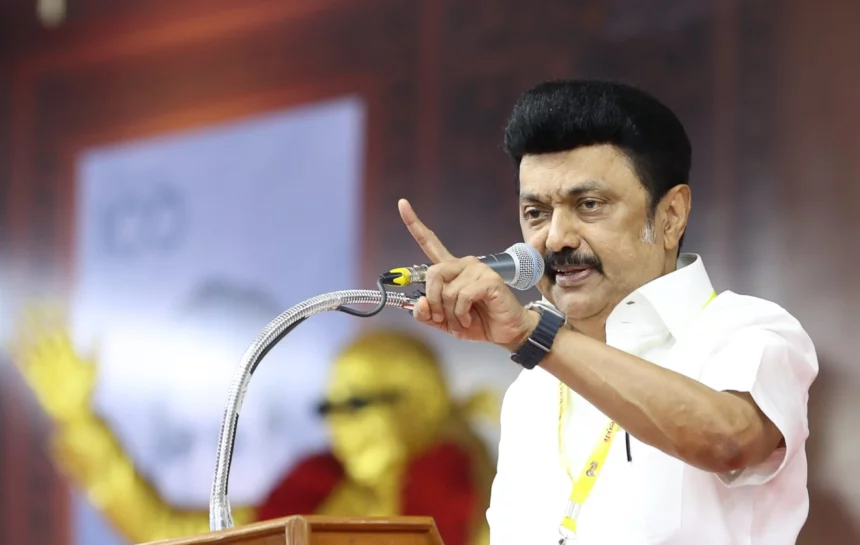
Chief Minister MK Stalin announced the formation of the committee in the Assembly, stating it would present an interim report by January 2026, followed by a final report within two years. The committee includes former IAS officer Ashok Vardhan Shetty and ex-State Planning Commission vice-chairman M Naganathan. Chief Minister MK Stalin emphasized the need to revisit the transfer of subjects from the State List to the Concurrent List, specifically pointing to education, which he said has been misused to undermine state authority.
Battle over Education Policy and NEET
One of the key flashpoints driving the panel’s formation is the dispute over the National Eligibility-cum-Entrance Test (NEET), which Tamil Nadu views as discriminatory. The state has consistently opposed NEET, advocating for medical admissions based on Class XII marks. A state bill aimed at this change was passed twice by the Tamil Nadu Assembly, only to be rejected by President Droupadi Murmu. Chief Minister MK Stalin has pledged to seek legal remedies, reaffirming the state’s commitment to reversing what it calls an unjust mandate.
Another issue stirring tension is the National Education Policy (NEP), particularly its three-language formula. Tamil Nadu insists its two-language system — Tamil and English — has been crucial to its educational success and economic growth. The DMK argues that imposing a third language, especially Hindi, infringes on regional identity. Allegations have also surfaced that Union Education Minister Dharmendra Pradhan threatened to withhold Rs 2,500 crore in educational funds unless Tamil Nadu agreed to fully implement NEP — a claim denied by the BJP.
Governor’s Role and Supreme Court’s Rebuke
Adding fuel to the fire, Tamil Nadu’s friction with Governor RN Ravi has escalated. The Supreme Court recently criticized the Governor for stalling assent to ten state bills, some pending for over five years. The court called the delays “arbitrary” and “illegal,” reinforcing Chief Minister MK Stalin’s longstanding accusation that the Governor was obstructing governance. Among the stalled bills were measures aimed at curbing the Governor’s role in appointing Vice-Chancellors to state universities.
The committee on state autonomy marks a significant step in Tamil Nadu’s constitutional and political assertion, signaling that its battle for decentralized governance is far from over.