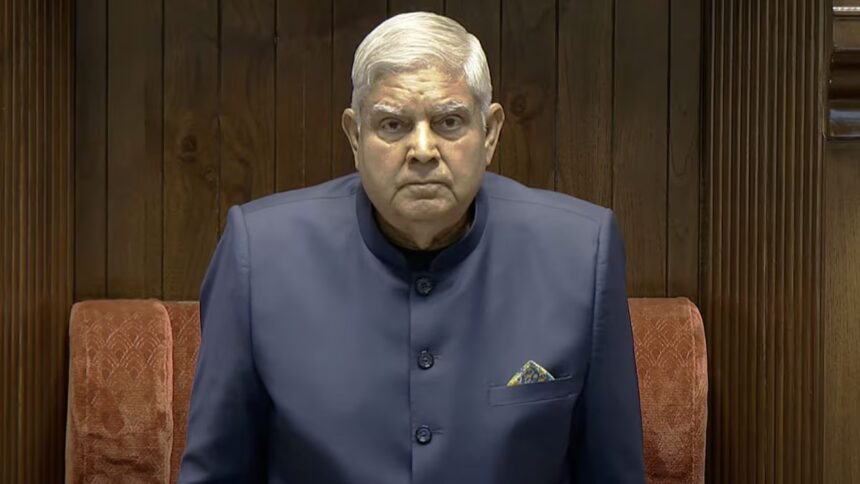
Former Vice President Jagdeep Dhankhar, who resigned from his post in July 2025 citing health reasons, has now been allotted a Type VIII bungalow at 34 APJ Abdul Kalam Road in Delhi’s prestigious Lutyens’ Zone. This development comes weeks after Jagdeep Dhankhar vacated his official residence and temporarily moved into the farmhouse of INLD leader Abhay Chautala, marking a deviation from the long-standing tradition of former constitutional office holders being allotted government accommodation immediately after stepping down. Officials have confirmed the allocation, underscoring the procedural and institutional provisions in place for former constitutional dignitaries and the special privileges accorded to them even post-resignation. The move has also reignited discussions about Jagdeep Dhankhar’s unexpected resignation, his health concerns, and the political context surrounding his departure from the Vice-President’s office.
Allocation of Government Accommodation and Post-Resignation Privileges
Jagdeep Dhankhar, who tendered his resignation as Vice President on July 21, 2025, did so citing medical reasons, stepping down on the very first day of the Parliament Monsoon Session. His resignation made him the third vice-president in India’s history to leave the post before completing the full term, creating a unique situation in the annals of Indian political and constitutional history. Following the resignation, Jagdeep Dhankhar temporarily relocated to the farmhouse of Abhay Chautala, bypassing the immediate allotment of official government accommodation, which is customary for former constitutional heads. However, this temporary arrangement ended when he was formally allotted a Type VIII bungalow in the heart of Delhi’s Lutyens’ Zone, highlighting that government procedures ensure continued residential privileges for ex-office holders while balancing protocol and personal choices.
Officials have clarified that Jagdeep Dhankhar, now 74, is entitled to a monthly pension of Rs 42,000 along with comprehensive facilities including medical care, travel allowances, and other entitlements accorded to former vice-presidents. This pension is in addition to the benefits and allowances he continues to draw as a former Member of Parliament and from his previous service in the State Assembly. The allocation of the Lutyens’ Zone bungalow, which is considered among the most prestigious and secure residential areas in Delhi, underscores the respect and protocol maintained for former holders of high constitutional offices, even when they choose temporary or alternative living arrangements.
Jagdeep Dhankhar’s brief hiatus from public life following his resignation sparked significant attention across political and media circles. His sudden departure was unprecedented and led to speculation about the underlying reasons, particularly in the context of his health claims. Analysts have noted that the allocation of the Lutyens’ Zone bungalow not only reflects the formal administrative process but also serves as a statement of institutional respect, emphasizing that former constitutional dignitaries continue to enjoy privileges in line with their service and position, irrespective of the circumstances surrounding their resignation.
Political Implications and Reactions to Jagdeep Dhankhar’s Resignation
The resignation of Jagdeep Dhankhar generated widespread discussion in political circles, with many opposition leaders raising questions about the motivations behind his exit. Speculations emerged about potential differences between Jagdeep Dhankhar and other political leaders, fueling debates over whether the resignation was entirely voluntary or influenced by political pressures. The unprecedented nature of his early resignation has led to retrospective analyses of the Vice-President’s role in Indian politics and governance, and how personal, health, and political factors can intersect in the functioning of high constitutional offices.
Observers have pointed out that Jagdeep Dhankhar’s case is particularly significant because it highlights the balance between personal health priorities and public responsibilities. Resigning due to health concerns while ensuring that post-office entitlements and privileges remain intact reflects the constitutional safeguards in place for high office bearers. Furthermore, his temporary move to a private farmhouse prior to the allotment of official accommodation has been interpreted as a demonstration of personal discretion, indicating that former office holders have some flexibility in managing their living arrangements while adhering to institutional protocols.
Jagdeep Dhankhar’s current residence in the Type VIII bungalow also places him in close proximity to the central administrative and political hub of Delhi, providing access and connectivity that former vice-presidents often require for ceremonial, advisory, or consultative roles even after leaving office. Political analysts suggest that such placements ensure a smooth transition from active constitutional service to post-office life while maintaining the dignity, security, and functionality expected of someone who has held a high national office.
The reactions to his resignation have varied across political parties, with some leaders emphasizing respect for his decision and health concerns, while others continue to question the underlying political dynamics. The allotment of a prestigious bungalow is also seen as a means of maintaining continuity and protocol, signaling that the state continues to uphold its obligations toward former office holders regardless of the circumstances of their exit. Additionally, the move reinforces public understanding of the formal entitlements for vice-presidents and the structured procedures associated with their post-service privileges, including residential allocations, pensions, and other official benefits.
As Jagdeep Jagdeep Dhankhar settles into his new residence in Delhi’s Lutyens’ Zone, the focus remains on the broader implications of his resignation, both in terms of personal health and political discourse. The official allotment of the Type VIII bungalow formalizes his status as a former vice-president entitled to government support and facilities while ensuring that his contributions to constitutional office are recognized and accommodated within existing administrative frameworks. Political commentators note that this episode offers insight into how the Indian system balances individual needs, constitutional protocol, and public perception in the management of post-office arrangements for high-ranking officials.
The developments surrounding Jagdeep Dhankhar’s resignation and new residence also shed light on the evolving norms for constitutional office holders in India, illustrating how personal circumstances, procedural adherence, and institutional respect coexist in shaping post-service life. Analysts highlight that the provision of secure, dignified housing in central Delhi is part of broader efforts to maintain institutional integrity, ensure continuity in public perception, and facilitate the former vice-president’s engagement in public and ceremonial activities as needed.
Additionally, the case of Jagdeep Jagdeep Dhankhar highlights the procedural clarity in the allocation of government residences, which involves assessment of entitlement, historical precedence, and compliance with official rules. By allotting him a Type VIII bungalow, authorities have demonstrated the application of established protocols while accommodating the specific circumstances that arose due to his temporary relocation to a private farmhouse. This instance provides a reference point for future considerations regarding former constitutional dignitaries, their entitlements, and the flexibility inherent in administrative processes to manage unique situations.
The narrative around Jagdeep Dhankhar’s early resignation, his temporary farmhouse stay, and subsequent formal accommodation also contributes to public discourse on transparency, protocol, and respect for office. It emphasizes the importance of structured procedures in upholding the dignity of high constitutional positions while allowing for personal discretion. Experts suggest that such arrangements are essential for preserving the decorum and sanctity of offices like the Vice-President, where institutional norms intersect with individual choices and health-related considerations.
Furthermore, the attention given to Jagdeep Dhankhar’s pension, medical care, and other post-office facilities underlines the comprehensive nature of support provided to former vice-presidents. Analysts point out that such provisions are not merely ceremonial but are designed to ensure that former dignitaries can maintain their well-being, security, and ability to participate in national and ceremonial functions without disruption. These arrangements form an integral part of the governance framework surrounding high constitutional offices in India.
In conclusion, the allocation of a Type VIII bungalow to Jagdeep Dhankhar in Delhi’s Lutyens’ Zone encapsulates the intersection of personal choice, procedural adherence, and institutional respect. While his resignation raised questions and sparked political debates, the formal allotment of government accommodation reinforces the state’s commitment to supporting former constitutional office holders in line with established entitlements and protocols. Jagdeep Dhankhar’s new residence, alongside his pension and other facilities, reflects a structured approach to post-service life for dignitaries while accommodating individual circumstances and ensuring that institutional dignity is maintained at all times.
This development also provides an opportunity for the public and political observers to reflect on the broader implications of constitutional office tenure, early resignation, and the administrative mechanisms in place to facilitate a smooth and dignified transition for former vice-presidents in India. By balancing personal needs, health considerations, and procedural norms, the state demonstrates the flexibility and robustness of its governance structures in addressing unique circumstances while upholding institutional respect.
Jagdeep Dhankhar’s case, marked by temporary private residence, formal government accommodation, and entitlement to comprehensive post-office benefits, serves as a model for understanding the evolving norms and procedures for former constitutional dignitaries in India, offering insights into how the system accommodates individual circumstances while maintaining institutional integrity and public trust.