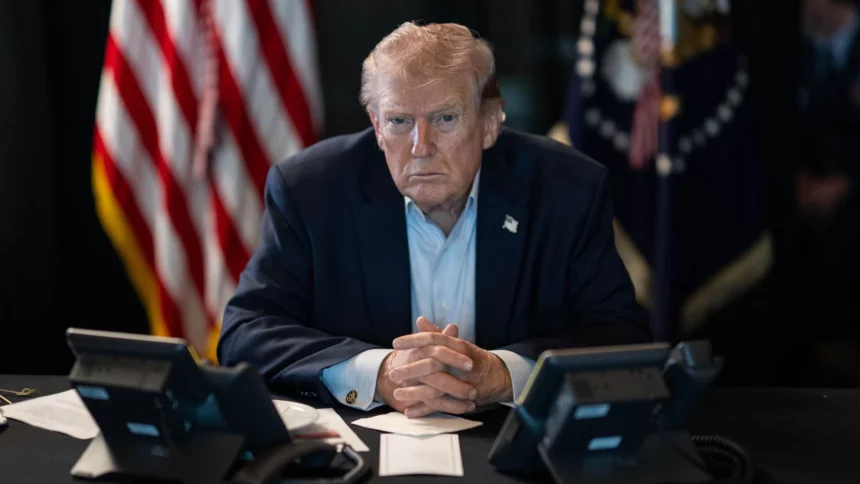
Global financial markets, including India’s Dalal Street, have come under pressure after US President Donald Trump issued a sharp ultimatum to Iran, escalating tensions in an already fragile geopolitical environment. The warning, centered around reopening the strategically critical Strait of Hormuz, has triggered widespread investor anxiety, with fears of supply disruptions, rising oil prices, and prolonged conflict influencing market sentiment. For Indian investors, the developments carry particular significance, as the country’s heavy dependence on crude oil imports makes it especially vulnerable to global energy shocks.
escalating geopolitical tensions trigger risk-off sentiment across markets
The ultimatum issued by Donald Trump, which included a strict deadline and threats of severe military consequences, has intensified uncertainty in global markets. Iran’s refusal to comply and insistence on broader guarantees has only deepened the standoff, raising fears of further escalation.
Financial markets typically react sharply to geopolitical instability, and this situation has been no exception. Investors across the world have shifted toward a “risk-off” approach, moving away from equities and riskier assets in favor of safer investments. This shift has led to volatility in stock markets, including Dalal Street, where benchmark indices have faced selling pressure.
One of the most immediate impacts of the crisis has been the surge in oil prices. The Strait of Hormuz, through which a significant portion of global oil supply passes, has seen severe disruption due to the ongoing conflict. Any threat to this route directly affects energy prices, which in turn influences inflation, currency stability, and corporate earnings.
Rising crude oil prices have historically been a major concern for India, as higher import costs widen the trade deficit and put pressure on the rupee. This ripple effect often leads to cautious investor behavior, particularly in sectors sensitive to fuel costs such as aviation, logistics, and manufacturing.
dalal street reacts as uncertainty clouds investor confidence
The reaction on Dalal Street reflects a broader pattern seen in global markets, where uncertainty has become the dominant theme. Investors are closely monitoring developments in the Middle East, particularly any signs of military escalation or disruption to oil supply chains.
Reports indicate that global markets have already experienced volatility following Trump’s aggressive stance, with stocks declining and oil prices surging significantly.
For Indian markets, the situation presents a complex challenge. On one hand, sectors like oil and gas exploration may benefit from rising prices. On the other hand, industries dependent on fuel imports face increased costs, which can impact profitability and overall economic growth.
The uncertainty is further compounded by the unpredictability of political decisions. Trump’s shifting deadlines and mixed signals regarding negotiations have made it difficult for investors to anticipate the next move. This lack of clarity has contributed to heightened volatility, as markets react to every new development or statement.
Additionally, the broader economic implications of the conflict cannot be ignored. Prolonged tensions could lead to sustained high energy prices, supply chain disruptions, and inflationary pressures globally. For emerging markets like India, these factors can have significant consequences, influencing everything from monetary policy to foreign investment flows.
As the situation continues to evolve, Dalal Street remains closely tied to global cues, with investor sentiment likely to remain cautious in the near term. The interplay between geopolitical developments and market dynamics underscores the fragile balance that defines today’s financial landscape.