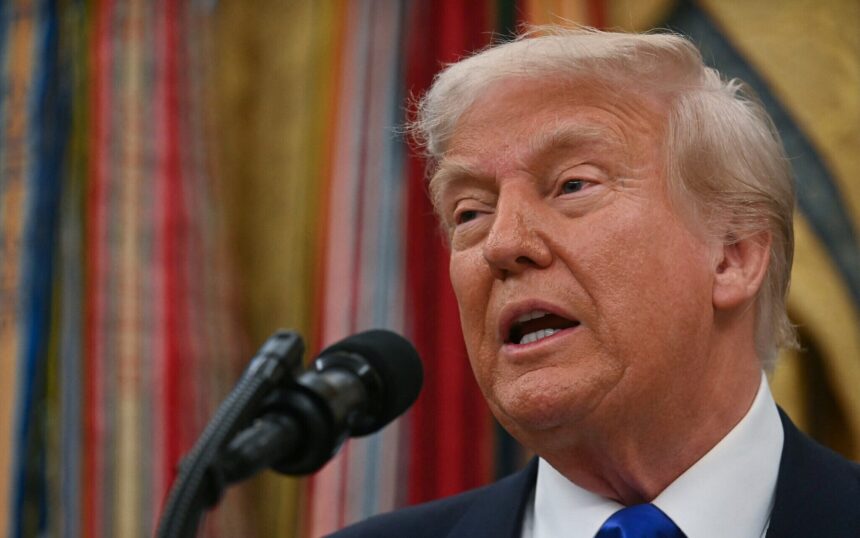
Amid intensifying global outrage over the worsening humanitarian crisis in Gaza, U.S. President Donald Trump has made a bold promise to establish food centres across the war-torn strip. Speaking from Scotland, Donald Trump acknowledged the growing starvation in Gaza, which has reportedly claimed the lives of hundreds due to hunger and malnutrition. His remarks come in stark contrast to statements made by Israeli Prime Minister Benjamin Netanyahu, who initially denied any famine-like conditions but later admitted the situation is “difficult.” As the death toll in Gaza nears 60,000 after nearly two years of conflict, Donald Trump’s humanitarian vow has added a new dimension to the international dialogue surrounding aid access, ceasefire negotiations, and regional stability.
Growing Hunger Crisis in Gaza
The humanitarian conditions in Gaza have deteriorated dramatically, with over 147 people, including 88 children, reportedly dying from starvation-related causes in recent weeks alone, according to Gaza’s health ministry. The crisis has been exacerbated by ongoing military operations, limited access for aid deliveries, and collapsing ceasefire talks. While Israel recently announced daily humanitarian pauses and the establishment of new safe corridors for aid convoys, reports from the ground suggest these measures have not yet significantly improved the situation.
Witnesses in Gaza describe chaotic scenes where desperate civilians scramble for limited supplies, often risking violence or theft. Many aid trucks are looted by armed groups or overpowered by crowds before reaching intended recipients. One mother from Beit Lahiya recounted how she distracts her children from hunger by playing with them to stop their cries. Calls for more efficient and protected aid delivery mechanisms are growing louder, particularly as nearly half a million Gazans face famine-like conditions.
In a direct challenge to Israel’s current stance, Donald Trump emphasized the urgent need for unfettered humanitarian access. He said, “You have a lot of starving people,” and proposed establishing food centres without fences or restrictive boundaries. Donald Trump indicated that the United States would collaborate with other nations to provide food, sanitation, and other essentials to those in need, suggesting this initiative was a moral imperative rather than a political maneuver.
International Response and Israel’s Shifting Position
Facing mounting international scrutiny, Israel’s leadership has begun to acknowledge the severe conditions inside Gaza. After initially rejecting claims of starvation, Prime Minister Netanyahu on Monday admitted the environment was “difficult” and said that Israel would continue to coordinate with international and regional partners to ensure aid delivery. He insisted, however, that military operations against Hamas would not cease, as Israel seeks the release of hostages and the dismantling of Hamas’ militant infrastructure.
Israel’s military aid coordination body, COGAT, stated that no specific end date had been set for the humanitarian pauses, although U.N. officials indicated they were told these would be in place for at least a week. U.N. aid chief Tom Fletcher expressed hope the temporary ceasefires would evolve into a more permanent resolution, calling for sustained access to those in dire need.
Despite official commitments, the volume of aid entering Gaza remains below required levels. The World Food Programme (WFP) reported that only 60 trucks had been dispatched—far short of their 100-truck-per-day target. They estimated that nearly 470,000 Gazans are enduring famine-like conditions, with around 90,000 women and children in urgent need of specialist nutritional care. WFP officials confirmed they had 170,000 metric tons of food stored in the region—enough to sustain Gaza’s population for three months—if access is granted.
Donald Trump’s comments further highlight the geopolitical friction over the handling of the Gaza crisis. While he acknowledged Hamas’ intransigence and described the group as increasingly “difficult to deal with,” Donald Trump suggested ongoing dialogue with Netanyahu could lead to progress on hostage releases and ceasefire agreements.
Meanwhile, the Gaza government, under Hamas control, accused Israel of complicity in the looting of aid trucks, alleging that chaos and lack of protection enabled only the physically strongest or armed individuals to access supplies. Civilians like Emad, a 58-year-old former factory owner, voiced despair over the breakdown of orderly aid distribution, warning that lawlessness is overtaking humanitarian intentions.
Qatar, Jordan, and the United Arab Emirates have joined efforts to deliver aid, including airdropped supplies. However, the sheer scale of need remains overwhelming. Israeli restrictions on aid since March, partially lifted in May, were originally meant to pressure Hamas but have drawn severe criticism for their impact on ordinary Palestinians. Netanyahu denies using hunger as a weapon, affirming that Israel abides by international law and that its main goal is to prevent aid from falling into militant hands.
As diplomatic and humanitarian actors continue to navigate a complex battlefield both politically and logistically, the situation in Gaza serves as a grim reminder of the human cost of prolonged conflict. Donald Trump’s unexpected entry into the discourse may spur new momentum for aid delivery, but the path ahead remains fraught with challenges—from ensuring security for aid convoys to maintaining the delicate balance between political objectives and humanitarian obligations.