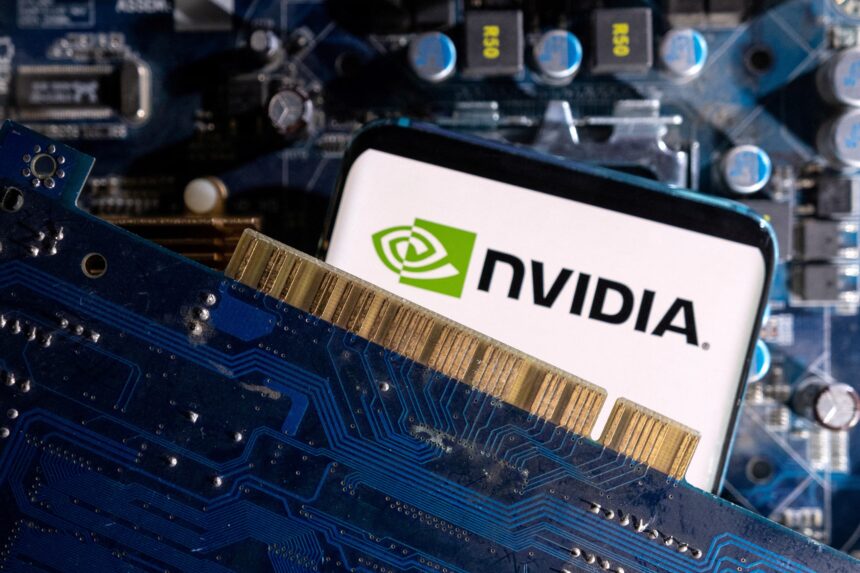
Nvidia has placed a fresh order for 300,000 H20 AI chips with its longtime manufacturing partner TSMC, signaling a significant pivot driven by surging demand from China. This decision comes despite ongoing export restrictions and political pushback in the U.S., as Nvidia seeks to retain a foothold in the lucrative Chinese AI market. The move marks a reversal in strategy after earlier suggesting it would rely solely on existing inventory, and underscores the delicate balance the tech giant must navigate between U.S. regulations and global market realities.
The H20 chip, custom-designed for the Chinese market after sweeping U.S. export controls were imposed in late 2023, lacks the computing power of Nvidia’s flagship H100 or newer Blackwell series. However, its strategic value has skyrocketed as Chinese tech firms scramble to secure AI hardware amid restrictions. Nvidia had earlier warned that it would write off $5.5 billion in inventory and lose up to $15 billion in potential revenue after the U.S. halted H20 shipments in April. The resumption of sales to China has now opened a new chapter in the company’s AI strategy.
Fresh Orders Reflect Shift in Nvidia’s Strategy
Despite holding between 600,000 and 700,000 H20 units in inventory, Nvidia’s decision to order an additional 300,000 chips indicates a renewed confidence in the product’s commercial viability in China. The company had initially paused production and stockpiled units following the April ban, but rising interest from Chinese firms has shifted the outlook dramatically. The total projected sales for H20 chips in 2024 hover around one million units, underscoring the chip’s popularity despite its limited performance compared to Nvidia’s premium offerings.
Chinese technology companies like Alibaba, Tencent, and ByteDance had reportedly placed substantial orders before the ban, using the H20 in conjunction with DeepSeek’s cost-efficient AI models and their in-house systems. Even after the halt, demand remained robust—evident in a growing grey market where older Nvidia GPUs have been smuggled into the country and repaired to meet local needs.
The renewed purchase orders, however, are not just a supply-side move. Nvidia is also asking Chinese customers to provide more detailed documentation, including order volume forecasts, to ensure a steady supply chain. These measures aim to better align with regulatory requirements and streamline future shipments.
Export Licenses Still Pending Amid Political Pressure
Although Nvidia received assurances in mid-July that export licenses for H20 chips would soon be granted, formal approval from the U.S. Department of Commerce remains pending. The delay adds uncertainty to Nvidia’s supply chain restart plans, which CEO Jensen Huang noted could take up to nine months to fully resume. During his recent trip to Beijing, Huang signaled that production could begin again if enough orders were confirmed, hinting at the balancing act between regulatory risk and market opportunity.
The Trump administration’s decision to allow the resumption of H20 sales was reportedly linked to broader trade negotiations with China, particularly around rare earth magnets critical to multiple industries. However, the move sparked bipartisan backlash in Washington, with lawmakers warning that any easing of AI hardware restrictions could undermine U.S. national security interests and strategic leadership in artificial intelligence.
Despite this, Nvidia and its supporters argue that maintaining a presence in China is crucial to prevent local developers from migrating entirely to rival platforms such as Huawei. Unlike Nvidia’s chips, Huawei’s AI hardware often lacks compatibility with the broader Nvidia software ecosystem, which remains integral to many advanced AI applications worldwide.
While TSMC, Nvidia’s Taiwan-based manufacturing partner, has declined to comment on the reported orders, industry analysts suggest the company is already preparing to restart the H20 chip production line. Given the projected lead time of up to nine months, early preparations would be essential to meet future demand.
The popularity of the H20, even after its temporary restriction, highlights Nvidia’s brand dominance and the strategic importance of maintaining even limited access to the Chinese market. As AI development accelerates globally, companies across sectors—from social media and e-commerce to cloud computing and robotics—require scalable, reliable AI chips to train and deploy their models.
While Nvidia faces mounting scrutiny and regulatory hurdles, the company appears committed to navigating this complex environment by staying adaptable. The decision to place a new order signals more than just a business move—it’s a high-stakes bet on China’s enduring role in the future of artificial intelligence, even under the shadow of geopolitical tension and protectionist policies.
In the coming months, much will depend on whether the U.S. government follows through on its export license commitments and how quickly TSMC can ramp up production. For now, Nvidia is treading a fine line—balancing its ambitions in the world’s second-largest AI market with the shifting sands of international policy and trade dynamics.