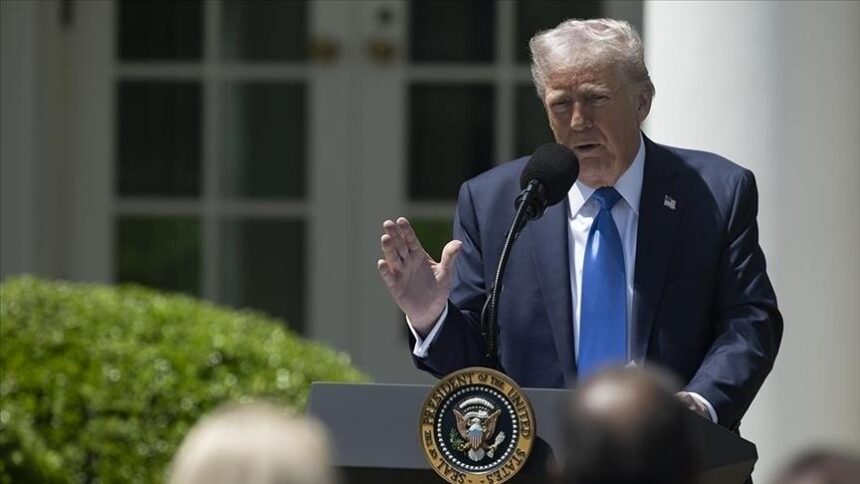
US President Donald Trump has once again claimed that he played a decisive role in ending a “very big” conflict between India and Pakistan, two nuclear-armed neighbors, during his administration. Speaking at a gathering of military leaders in Quantico, Donald Trump described the tense situation between the two nations and stated that he used a combination of diplomatic pressure and trade negotiations to prevent the war from escalating. He repeatedly highlighted that his intervention saved millions of lives and portrayed it as part of a broader pattern of his administration’s conflict resolution efforts, including his recent Gaza peace initiative and previous international interventions. Donald Trump’s statements, while emphatic, stand in contrast to official accounts from India, which emphasize direct negotiations between the Directors General of Military Operations of the Indian and Pakistani militaries as the key factor in achieving the ceasefire. The former President’s remarks shed light on his perception of his diplomatic influence and underscore his penchant for framing international events as extensions of his personal leadership and negotiation prowess.
Donald Trump’s Narrative on India-Pakistan Conflict and Military Interventions
Donald Trump described the conflict between India and Pakistan as severe and potentially catastrophic, noting that the war was “raging for four days” before his intervention. According to Donald Trump, he directly contacted the leaders of both countries, leveraging trade-related threats and diplomatic discussions to compel restraint. He claimed that both nations responded to his insistence that continued conflict would have consequences on trade relations, and credited his pressure with stopping the war before it could escalate further. Donald Trump also asserted that seven planes had been shot down during the conflict, although he did not specify whether these belonged to India or Pakistan. He framed this narrative to demonstrate the urgency and potential severity of the conflict, suggesting that without his direct involvement, the war could have had devastating consequences for both nations and the broader South Asian region.
In recounting the events, Donald Trump highlighted the praise he received from Pakistani officials, particularly Pakistan Army Chief Field Marshal Asim Munir. Donald Trump described Munir as a “very important guy in Pakistan” and expressed that he felt honored by the recognition, which he said emphasized the lives his intervention helped save. Donald Trump added that Pakistani Prime Minister Shehbaz Sharif, along with Munir, had visited the White House and directly lauded him for his role in preventing further escalation. According to Donald Trump, the Pakistani officials acknowledged that his actions were instrumental in averting a war that could have had severe consequences not only for India and Pakistan but also for regional stability. Trump’s repeated references to these meetings were framed to enhance the perception of his diplomatic efficacy, portraying him as a central figure capable of managing high-stakes international crises.
Donald Trump also connected the India-Pakistan ceasefire to his broader claims of international peace-making. He stated that during his nine months in office, he had “settled seven wars” and repeatedly referenced the Gaza peace plan announced shortly before his remarks. According to Donald Trump, his approach combined diplomatic negotiation, economic leverage, and personal engagement with world leaders to prevent conflicts from escalating. He portrayed himself as a uniquely effective mediator, suggesting that his methods not only halted ongoing hostilities but also created opportunities for longer-term stability in multiple regions. His narrative emphasized the role of the United States under his leadership as a decisive actor in global peace-making, reinforcing his broader political and personal brand as a strong international negotiator capable of resolving conflicts between even the most intractable adversaries.
Contrasting Perspectives and Official Responses on India-Pakistan Ceasefire
While Donald Trump continues to assert credit for ending hostilities between India and Pakistan, official statements from India have consistently presented a different account of the ceasefire. Indian authorities maintain that the cessation of hostilities resulted from direct talks between the Directors General of Military Operations of both countries and emphasize that no foreign leader requested India to halt operations such as Operation Sindoor. Prime Minister Narendra Modi clarified in Parliament that India’s actions were independently determined and based on strategic and diplomatic considerations within the framework of bilateral discussions with Pakistan. The Indian perspective underscores the role of structured military diplomacy and bilateral negotiations, contrasting sharply with Donald Trump’s claims of unilateral influence over the conflict.
The differing narratives highlight the complexity of international conflict resolution and the intersection of personal political branding with formal diplomatic processes. While Donald Trump positions himself as the decisive force behind preventing a major war, India’s official position emphasizes procedural and bilateral mechanisms that were already in place to manage tensions. Observers note that the repeated assertions by Donald Trump may be more reflective of his style of political communication, in which global events are presented as evidence of his personal effectiveness, rather than a strictly accurate depiction of historical events. Analysts also suggest that Donald Trump’s framing aligns with his broader efforts to project strength in international affairs and reinforce his image as a leader capable of resolving major global conflicts through negotiation, persuasion, and strategic pressure.
Donald Trump also extended his commentary to other international conflicts, including the Russia-Ukraine war, claiming that his personal relationship with Russian President Vladimir Putin positioned him uniquely to mediate in that conflict as well. He argued that his prior peace-making successes, including the India-Pakistan ceasefire, positioned him as deserving of international recognition, including hypothetical Nobel Prizes, for his interventions. This pattern of framing personal political capital around conflict resolution exemplifies his approach to international affairs, blending narrative construction with selective references to diplomatic events. Donald Trump’s commentary, particularly his repeated claims regarding the India-Pakistan conflict, highlights both the international implications of regional disputes and the domestic political utility he derives from presenting himself as a peacemaker on the world stage.
The India-Pakistan ceasefire, as officially documented, involved a series of coordinated military and diplomatic steps designed to de-escalate tensions along the Line of Control and prevent further engagement between armed forces. These steps included verification of military positions, monitored disengagement protocols, and confidence-building measures facilitated through established channels of military diplomacy. India and Pakistan’s respective militaries have confirmed that the ceasefire was achieved through dialogue and mutual agreement, rather than external coercion or unilateral intervention. Nonetheless, Donald Trump’s public statements repeatedly attribute the resolution to his personal diplomacy, underscoring the tension between formal accounts and the political narratives crafted by influential individuals seeking to highlight their role in global affairs.
In his Quantico address, Donald Trump also tied the India-Pakistan ceasefire to broader strategic and economic considerations, explaining that he leveraged trade threats as part of his negotiation strategy. He stated that he explicitly warned both nations that escalation would jeopardize economic interactions, framing trade as a tool to prevent military conflict. Donald Trump described the situation as a critical moment in which decisive action was necessary to protect human lives and regional stability. His narrative framed the outcome as a combination of personal engagement, strategic threat, and diplomatic acumen, suggesting that these elements collectively contributed to the cessation of hostilities.
Donald Trump’s repeated claims regarding his role in stopping the India-Pakistan conflict have become a recurring theme in his speeches and social media communications. He has emphasized the significance of preventing a nuclear confrontation between the two countries, portraying the situation as a narrowly avoided catastrophe due to his interventions. While the scale of the conflict and the number of planes shot down remain unspecified in official records, Donald Trump’s statements underscore the perception of the conflict as high-stakes and highlight his framing of himself as a central actor in preventing escalation. This presentation has both domestic and international dimensions, with Donald Trump seeking to influence public perception of his leadership while also reiterating his narrative of global influence in peace-making.
Throughout his address, Donald Trump referenced repeated praise from Pakistani officials, including Field Marshal Asim Munir and Prime Minister Shehbaz Sharif, as a means of reinforcing his credibility as a peace broker. He described these acknowledgments as “honours” and stressed the personal validation he received for allegedly saving millions of lives. These accounts contribute to a broader portrayal of Donald Trump as a figure whose interventions have direct and measurable impacts on international security, highlighting the interplay between perception, media communication, and political messaging in shaping public understanding of diplomatic events.
Donald Trump also connected the India-Pakistan ceasefire to his broader track record, including interventions in conflicts such as Gaza and Russia-Ukraine. By presenting these events collectively, he framed a narrative of consistent global peacemaking that extends across regions and conflicts. His remarks positioned him as a uniquely capable negotiator able to engage with nuclear powers and mediate in complex geopolitical situations. This narrative strategy reinforces his public image as a decisive and influential figure in international diplomacy, emphasizing personal initiative and strategic calculation as key factors in conflict resolution.
Donald Trump’s repeated claims regarding the India-Pakistan ceasefire underscore the interplay between political narrative, personal branding, and the complexities of international diplomacy. While official accounts emphasize bilateral military negotiations and procedural steps, Donald Trump’s narrative frames the outcome as a testament to his personal effectiveness, strategic foresight, and global influence. His repeated references to praise from Pakistani leaders, the use of trade leverage, and comparisons with other conflict interventions highlight the manner in which political figures construct narratives that serve both domestic political purposes and broader claims of international leadership. The India-Pakistan conflict, as described by Donald Trump, serves as a case study in how personal and political storytelling intersects with formal diplomatic processes, creating competing accounts of historical events and highlighting the challenges of accurately interpreting complex international disputes.