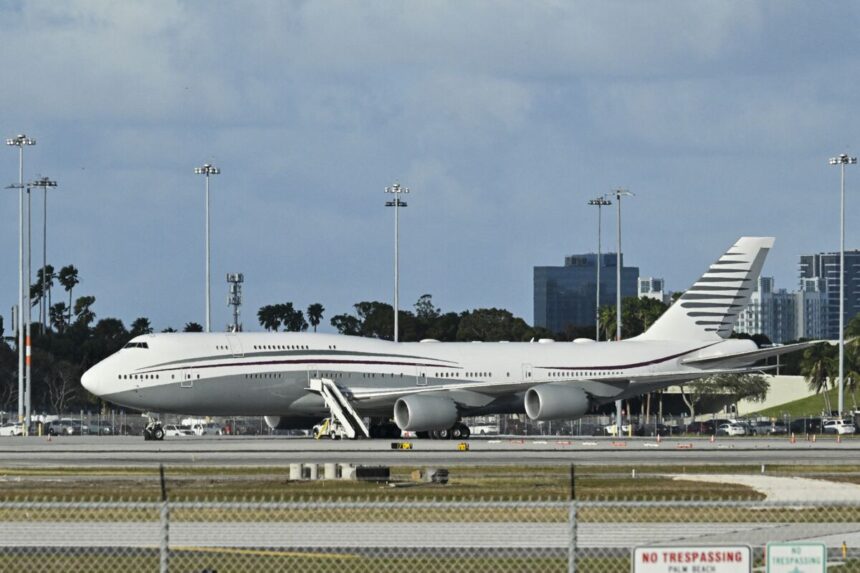
Qatar’s offer of a luxury Boeing 747 to President Donald Trump has raised alarm within the US intelligence and diplomatic circles. While the lavish gift—a plane with an 89-seat capacity and a French-designed interior—may seem like a symbol of generosity, it has triggered concerns over national security, espionage, and the potential for foreign influence. Gifts from foreign governments have long been scrutinized for their potential to compromise sensitive information, and this jet is no exception.
The Boeing 747, built in 2012, was previously owned by Hamad bin Jassim bin Jaber Al Thani, one of Qatar’s wealthiest figures. With its creamy white and tan furnishings and artwork by renowned designers, the aircraft reflects the luxurious tastes of the Qatari royal family. However, its intended gift status to Donald Trump is less about luxury and more about the risks it poses to US national security. According to experts, such high-profile gifts provide opportunities for foreign governments to monitor communications or implant surveillance devices.
Security Concerns Over Surveillance
Experts like Thad Troy, a former CIA station chief, argue that any aircraft given by a foreign government could be tampered with for surveillance purposes. If the plane were built with the knowledge that it would be transferred to a foreign power, it might have been bugged to track the movements and communications of its passengers. In the past, even American embassies have been stripped of surveillance devices hidden within their structure. To bring the plane to the level of Air Force One, it would need significant retrofitting to meet security standards, including hardened surfaces to withstand explosions and secure communications systems. Such changes would require months or even years to complete.
Donald Trump’s Defense of the Gift
Despite the concerns, Donald Trump defended accepting the gift, arguing that the US should have the most impressive plane, especially since Gulf monarchies possess superior aircraft. However, his decision has received significant backlash, even from his staunchest supporters, some of whom view the gift as a bribe or an attempt to exert influence by Qatar. Critics have questioned how the situation would have been handled if a Democrat had accepted such a lavish gift, suggesting that it would have sparked outrage.
While Qatar is a key US ally and plays an important role in diplomatic efforts in the Middle East, the offer of such a high-value gift presents a complex dilemma. Accepting or rejecting it both carries risks, and the decision could affect not only US-Qatar relations but also the broader Middle East diplomatic landscape.