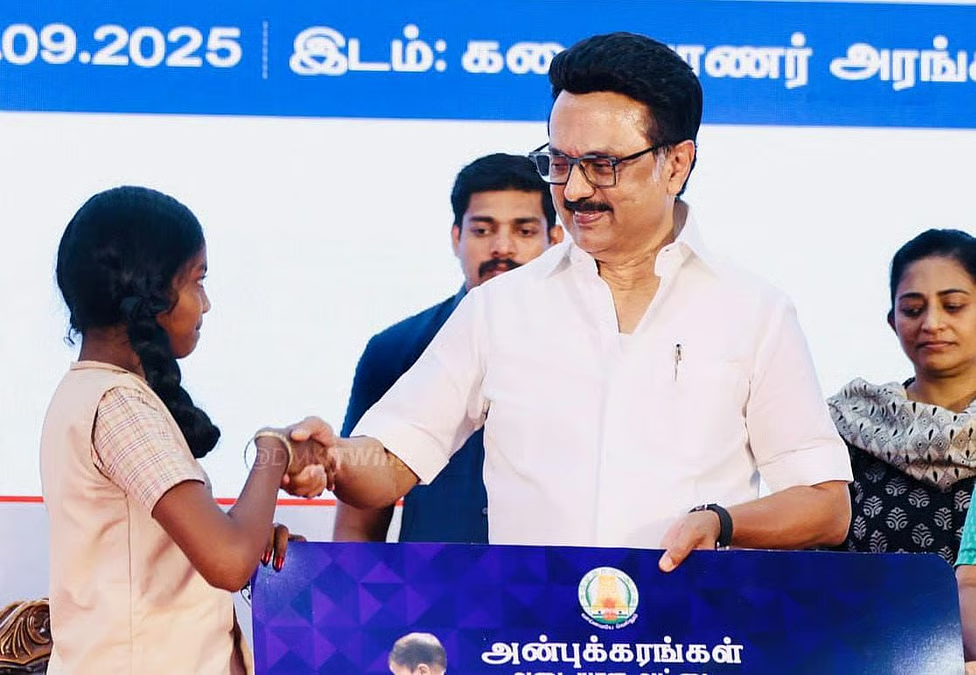
Tamil Nadu Chief Minister M.K. Stalin has unveiled a landmark welfare initiative, the ‘Anbu Karangal’ (Hands of Love) scheme, aimed at supporting orphaned and vulnerable children across the state. This ambitious program is designed to provide a monthly financial aid of Rs 2,000 to children who have lost both parents or whose surviving parent is unable to care for them. The scheme seeks to ensure that these children can continue their education uninterrupted until they reach adulthood or complete their schooling, thus preventing the disruption of their academic journey due to the absence of parental support. The launch of this initiative reflects the state government’s commitment to child welfare, social security, and inclusive development, and comes amid a series of welfare-focused programs being implemented in the lead-up to the 2026 assembly elections.
Support for Orphaned and Vulnerable Children
The ‘Anbu Karangal’ scheme represents a comprehensive approach toward safeguarding the welfare of children left without adequate parental care. Under this initiative, eligible children will receive a monthly stipend of Rs 2,000 until they either complete their school education or turn 18 years of age, whichever comes first. The scheme emphasizes that every child, regardless of personal or family circumstances, deserves the opportunity to pursue their education without financial barriers. In its inaugural phase, the program will directly benefit 6,082 children across Tamil Nadu, with financial assistance being disbursed through a streamlined process to ensure transparency and efficiency.
Beyond the financial aid, the government has also taken steps to provide educational support through digital resources. As part of the launch, 1,340 students who had lost both parents and successfully completed their Class 12 examinations received laptops to facilitate higher education studies. This step underscores the administration’s recognition of the role technology plays in modern learning and ensures that orphaned students have the tools necessary to compete on an equal footing with their peers. The scheme aligns with the broader principles of the Juvenile Justice (Care and Protection of Children) Act, 2015, empowering the state to intervene and provide protective measures for children who are orphaned, abandoned, or otherwise vulnerable.
To enhance accessibility and efficiency, the Tamil Nadu e-Governance Agency has developed a dedicated mobile application for the ‘Anbu Karangal’ scheme. This digital platform allows parents, guardians, and caregivers to submit applications, track approvals, and register grievances, thereby ensuring accountability and continuous monitoring of the program. Officials have highlighted that this app-based approach will reduce bureaucratic delays, improve the delivery of benefits, and maintain a clear record of all beneficiaries, enabling the state to track impact and address challenges in real-time.
Integrating Welfare With Educational Continuity and Social Security
The launch of the ‘Anbu Karangal’ scheme reflects the Tamil Nadu government’s wider welfare-oriented agenda, which seeks to provide financial security and social support to vulnerable segments of society. By ensuring monthly stipends for orphaned children, the administration aims to prevent the interruption of education caused by the sudden loss of parental income or support. Education, as envisioned under this initiative, is not merely an academic pursuit but a pathway to empowerment, enabling children to overcome socioeconomic disadvantages and build productive futures.
The scheme also complements other welfare programs implemented by the ruling DMK, particularly those targeting women and students. For instance, under the Kalaignar Magalir Urimai Thogai program, over a crore women receive monthly financial assistance of Rs 1,000, promoting economic independence and reducing financial vulnerability. Students in government schools pursuing higher education are similarly supported with scholarships and aid to ensure continuity in their studies. Together, these initiatives reflect a holistic approach to social welfare, linking financial assistance with educational opportunities and inclusive growth.
Politically, the timing of the scheme is significant, coming in the run-up to the 2026 assembly elections. Welfare initiatives like ‘Anbu Karangal’ reinforce the government’s commitment to social protection, projecting an image of responsiveness and care toward marginalized communities. At the same time, these programs help consolidate public support by directly impacting citizens’ lives, addressing critical gaps in child welfare, and demonstrating the administration’s proactive approach to governance.
The scheme also has broader societal implications, including reducing vulnerability among children, minimizing the risk of child labor, and encouraging holistic development. By providing consistent financial support, the government aims to create an environment where orphaned children can focus on education and personal growth, free from the pressures of economic insecurity. The integration of technology through the mobile application ensures that benefits reach the intended recipients efficiently, with minimal leakage or mismanagement.
Moreover, the initiative emphasizes inclusivity and equity, ensuring that all children who meet eligibility criteria receive support irrespective of regional or socio-economic differences. This is particularly relevant in areas where access to education and social services may be limited. By systematically addressing the needs of orphaned children, the government is not only fulfilling a statutory obligation under the Juvenile Justice Act but also laying the groundwork for long-term social development and resilience among vulnerable populations.
Educational support through laptops and digital access further demonstrates a forward-thinking approach, recognizing that modern education increasingly relies on technological tools. By equipping students with devices to access online learning and digital resources, the program bridges the digital divide and enhances the ability of orphaned children to compete academically and socially with their peers. This emphasis on technology integration reflects a commitment to equipping students for the demands of higher education and the evolving job market.