West Bengal and the central government have reached an unprecedented security truce following the recent political unrest in Nepal, underscoring the need for coordinated measures along sensitive border regions. Traditionally, the state government led by Chief Minister Mamata Banerjee’s Trinamool Congress and the BJP-led central administration have been at odds, particularly as the 2026 assembly elections approach. However, escalating instability in Nepal has temporarily altered this dynamic, compelling both sides to prioritize national security over political rivalry. Bengal shares a roughly 100-kilometer border with Nepal, including the strategically critical “chicken’s neck” corridor in Siliguri, making the area highly sensitive to any disturbances in the Himalayan nation. This agreement highlights the pragmatic alignment between the state and the Centre, emphasizing collaboration in intelligence sharing, troop deployment, and monitoring to ensure the safety of citizens in border districts.
Heightened Border Security and Joint Operations
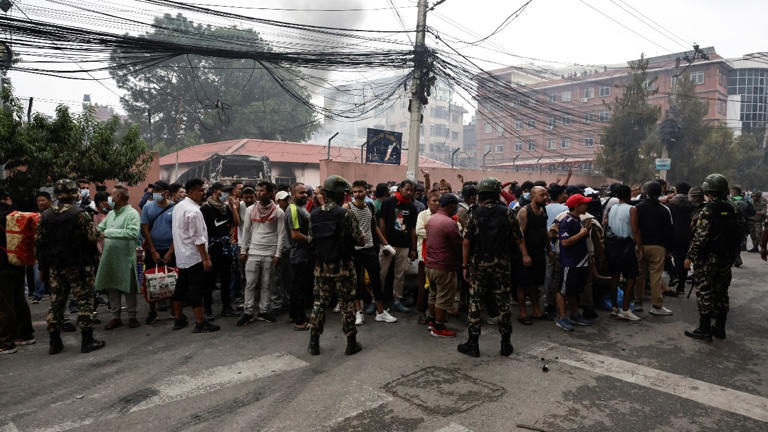
The unrest in Nepal, driven largely by Gen Z-led protests and recent political upheaval, has prompted India to maintain heightened vigilance along its northern frontier. Even with an interim government led by Sushila Karki in Kathmandu, the Indian administration has not relaxed its security measures, recognizing the potential spillover effects in neighboring regions. Prime Minister Narendra Modi’s visit to West Bengal in recent weeks did not address political disputes, signaling a deliberate focus on national interest and security imperatives. Chief Minister Mamata Banerjee reinforced this approach, stating, “These are issues of national interest, and on these issues, there is no Trinamool-BJP rift. We should be careful about national interest. We are united on the security issue.”
A first-of-its-kind combined meeting of corps commanders was convened at Fort William, the headquarters of the Eastern Command, in which Defence Minister Rajnath Singh and National Security Advisor Ajit Doval were present. This high-level meeting underscored the seriousness with which both the Centre and the state regard the security situation along the Bengal-Nepal border. Measures have been intensified, including increased deployment of the Border Security Force, augmentation of army presence, and enhanced surveillance. The Sashastra Seema Bal (SSB) is working in close coordination with state police to monitor critical points, such as the Panitanki bridge connecting Nepal and India, ensuring real-time responsiveness to any security breaches or suspicious activities.
Intelligence coordination has emerged as a cornerstone of the security arrangement. Bengal has a dedicated state intelligence wing whose findings are regularly shared with the offices of the Prime Minister and the National Security Advisor. Reports generated by the state police chief, Rajeev Kumar, form part of this intelligence-sharing framework, while the Chief Secretary liaises closely with the Union Home Secretary and the Prime Minister’s Office. This multi-layered structure facilitates rapid assessment and response to threats, ensuring that security forces are adequately informed and equipped.
Notably, intelligence sources have reported the circulation of Chinese currency in Kathmandu markets, raising concerns about potential external influence in Nepal. While India and China have experienced an upswing in bilateral relations following the recent SCO summit, vigilance remains critical. The perceived presence of Chinese influence in a neighboring country with strategic significance has reinforced the need for constant monitoring and readiness along the sensitive Siliguri corridor.
In addition to monitoring and surveillance, physical security measures have also been strengthened. Governor CV Ananda Bose’s recent visit to the Nepal border, specifically the Phasidewa area, involved inspecting fencing and interacting with deployed security personnel. Although Chief Minister Banerjee initially expressed concerns over the security risks of such a visit, she ensured full logistical support and coordination with state police to facilitate the governor’s inspection. This visit not only underscored the government’s commitment to border safety but also highlighted the importance of visible leadership engagement in maintaining morale and operational effectiveness among frontline personnel.
Political and Strategic Implications
The temporary truce between West Bengal and the central government carries significant political implications, especially as the state approaches crucial assembly elections in 2026. Historically, the Trinamool Congress and BJP have maintained adversarial relations, often trading barbs on issues ranging from governance to development. The present collaboration, prompted by security imperatives, demonstrates the capacity of political actors to prioritize national interests in the face of external threats. By publicly articulating unity on border security, Mamata Banerjee has projected a message of responsibility and pragmatism, signaling to both domestic and international observers that security considerations transcend partisan politics.
Strategically, the developments reflect a broader recalibration of India’s northeastern security posture. Seemanchal and the Siliguri corridor hold immense strategic value due to their proximity to Nepal, Bhutan, and Bangladesh. Any instability in this region could have cascading effects on trade, transportation, and national security. By integrating state and central security apparatuses, India aims to preemptively neutralize risks associated with political upheavals, protest movements, and potential foreign interference. The alignment also ensures that intelligence, law enforcement, and military assets operate under a unified command structure, reducing response times and enhancing situational awareness.
The collaborative efforts extend beyond immediate security enforcement to include economic and logistical considerations. Enhanced surveillance along trade routes and key crossings ensures uninterrupted commerce, which is vital for local communities dependent on cross-border trade. Coordination between the SSB, state police, and army units helps maintain the flow of goods and services while simultaneously mitigating risks posed by smuggling, contraband, or unregulated currency movements. These measures are critical in reinforcing both security and economic stability in the border districts.
Furthermore, the intelligence sharing between state and central agencies exemplifies an evolved approach to threat management. By continuously analyzing developments in Nepal and sharing actionable insights, the Indian government ensures that security forces are adequately informed and can preempt potential crises. The detection of Chinese currency in Kathmandu markets illustrates the importance of such vigilance, as it provides early warning signals for foreign influence, enabling the government to take preventive steps. This coordinated intelligence framework not only strengthens border security but also enhances India’s broader regional strategic posture.
The unified stance between Mamata Banerjee and the Centre also serves as a model for intergovernmental collaboration in other sensitive areas. By demonstrating that political differences can be set aside for national security, the state and central governments send a clear signal to both domestic and foreign actors regarding India’s resolve to protect its territorial integrity. In the long term, such collaborations may serve as templates for handling crises along other sensitive borders, including those with China, Bangladesh, and Pakistan.
At the operational level, the integration of forces at Panitanki and other critical points ensures continuous monitoring and rapid response capabilities. Troop rotations, enhanced communication networks, and coordinated patrolling schedules provide a robust security cover while allowing for efficient resource allocation. These measures, combined with visible political support, help maintain high morale among security personnel tasked with protecting the border under potentially volatile circumstances.