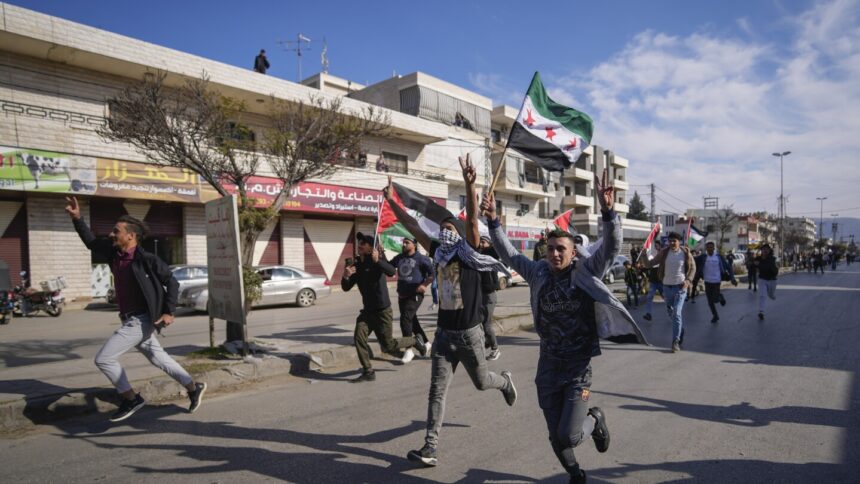
In the aftermath of Assad’s fall, Syria’s Alawite and Sunni communities faced a harrowing reality of revenge, fear, and uncertainty. Sectarian violence erupted in Baniyas and other cities, leaving families trapped in the crossfire and questioning whether reconciliation or forgiveness was ever possible. Amid decades of political oppression, civil war, and intergenerational trauma, the promise of a new government offered little protection as ordinary Syrians struggled to survive in a country still haunted by massacres and mistrust.
Chaos in Baniyas: Sectarian Violence and Family Survival
On the night of March 6, Munir, his wife, and their two adult sons huddled together in a cramped bedroom, unable to sleep. Their neighborhood of Qusour in coastal Baniyas was under siege as government troops and militias entered homes indiscriminately. “There was no plan, just violence and looting,” Munir recalled. Houses were raided randomly; some were spared while others became sites of revenge. Fighters would ask residents if they were Sunni or Alawite, and that answer determined their fate. Sunnis were often spared, sometimes looted, but Alawite homes faced theft, assault, or murder. “If one didn’t kill you, the next one might,” Munir said.
Munir, a committed Marxist and former political prisoner under Bashar al-Assad, had spent more than a decade in the brutal Assad prison system. While he initially celebrated the regime’s fall in December, he quickly realized that his Alawite background placed him and his family in a precarious position. Members of the Alawite community had been deeply intertwined with Assad’s regime, involved in acts of imprisonment, torture, and disappearances during the civil war. After the regime’s collapse, the countryside surrounding Homs, Hama, and various mountain villages descended into chaos. Arbitrary arrests, kidnappings, and killings became routine, with revenge attacks by armed gangs replacing organized law enforcement.
In Munir’s neighborhood, a recent wave of attacks was the culmination of tit-for-tat raids. Days earlier, government troops had terrorized Baniyas streets in pickup trucks. On March 6, a General Security unit heading to an Alawite village was attacked by armed men, prompting Alawite gunmen to retaliate by killing civilians and seizing buildings. Syrian media described these fighters as “foloul,” remnants of a defeated regime attempting to reclaim influence. Government forces quickly mobilized to regain control, but for Munir and his family, the night brought only fear.
Munir’s brother, in his seventies, and his son were executed on a rooftop near their apartment, leaving Munir’s household in a state of constant dread. The family could only wait, listening to gunfire and trying to find a way to survive. The violence extended beyond Baniyas, reflecting the broader pattern of revenge and sectarian conflict that had become entrenched during Syria’s civil war.
The Fragile Promise of Reconciliation
Ahmed al-Sharaa, Syria’s new leader, initially projected confidence and goodwill. He promised the dissolution of all military factions, the formation of a new national army, and a transitional government. He issued a blanket amnesty to Syrians, signaling a chance for safe passage for former regime loyalists and Alawites. Munir, hopeful for peace, attempted to engage with the new authorities, encouraging his community to cooperate. He believed gradual engagement might prevent a large-scale bloodbath.
However, the transitional administration quickly revealed its Sunni-majority identity, purging Alawites from state institutions and disbanding the army and security forces where they had held influence. Tens of thousands lost employment, and sectarian mistrust resurfaced. Survivors of Assad-era atrocities struggled to reconcile with those associated with the regime. In Homs, a former prisoner described the impossibility of forgiveness: “The massacres the Alawites committed in our areas are too horrific to even speak of… How can you ask me to forgive?” Others, however, expressed a cautious acceptance that vengeance would not bring back lost loved ones. In the village of Houla, a woman recounted hiding as militiamen murdered her family, concluding that divine recompense, rather than human retribution, offered the only solace.
Munir’s hopes for a peaceful transition were shattered as reports of kidnappings, intimidation, and assassinations persisted. Sectarian violence spread to other communities, including Druze villages in southern Syria, escalating into clashes compounded by external military interventions. Munir noted grimly, “Yesterday the Alawites, today the Druze, tomorrow maybe the Kurds. Without a coherent new social contract for Syria, the killings will continue.”
The friendship between Munir, an Alawite, and Anas, a Sunni, highlighted the fragile but vital connections that transcended sectarian lines. Both men had been outsiders in their respective communities, and their bond endured through years of political oppression and civil war. During the March massacres, Anas risked his life to rescue Munir and other Alawite families, negotiating checkpoints and evading gunmen. The operation was fraught with danger; even mistaken identities nearly led to further deaths. Their efforts underscored that humanity and solidarity could offer protection amidst chaos, but such acts were exceptions rather than the rule.
Munir’s early life in poverty shaped his worldview. Born in 1960 to an Alawite family in the mountains overlooking Baniyas and Latakia, he witnessed systemic deprivation and the marginalization of mountain peasants. Many young Alawites were drawn into the Assad regime’s security forces and militias, often indoctrinated at a young age. Munir gravitated toward leftist activism, establishing Marxist reading circles and advocating for class struggle. Yet the civil war transformed perceptions: Alawites, once seen as oppressed, became associated with state violence and oppression, while Sunnis endured brutal crackdowns.
Anas’s trajectory contrasted sharply. Raised in a Sunni bourgeois family, he initially embraced Islam following family shifts after the 1967 war with Israel. Arrested and tortured at fifteen, he was forced into religious fervor, eventually becoming a devout fundamentalist. Over the years, his beliefs moderated, reflecting the evolution of many Syrians whose personal experiences were shaped by cycles of imprisonment, repression, and sectarian violence.
The narratives of Munir and Anas reveal the cyclical nature of Syria’s violence, where historical grievances and political repression perpetuate mistrust. Munir’s imprisonment, torture, and the loss of family members exemplify the brutal mechanisms through which the Assad regime maintained control. Yet, the subsequent civil war and revolutionary upheaval only intensified the cycles of revenge. Even as new governance emerged, sectarian tensions persisted, demonstrating that political change alone could not erase deep-rooted social fractures.
During the March massacres, Munir’s family narrowly survived through careful planning and the assistance of Sunni neighbors. They hid in storage nooks, negotiated with armed men, and ultimately escaped under cover of darkness. Anas’s interventions saved multiple families, exemplifying the rare instances of cross-sectarian solidarity amidst overwhelming violence. Such acts underscore a vital lesson: human compassion, rather than ideology, offers the only defense against the corrosive effects of fear and vengeance.
Historical patterns continued to influence contemporary violence. Under Hafez al-Assad, Alawites were elevated within the army and security services, wielding power in a predominantly Sunni country. Brutal campaigns, including the 1982 Hama massacre against the Muslim Brotherhood, left deep scars on Sunni communities. These historical atrocities fueled cycles of revenge, perpetuating mistrust between sects and shaping individual experiences of violence and survival.
Munir’s reflections emphasized the intergenerational nature of trauma in Syria. Despite decades of oppression, he and others were drawn into cycles of political struggle and ideological alignment, often facing persecution regardless of their beliefs. Meanwhile, friendships like that between Munir and Anas offered glimpses of reconciliation, showing that solidarity and courage could transcend historical enmities. Yet, even these connections existed within a context of ongoing danger, where sectarian killings and revenge attacks remained pervasive.
In Baniyas, the aftermath of March’s violence left streets littered with debris, shops gutted, and bodies of the dead lingering as reminders of the human cost of Syria’s fractured society. Families struggled to bury their loved ones, with survivors from different sects assisting each other in acts of humanity. Munir observed that the only positive outcome was the solidarity shown by Sunni neighbors who sheltered Alawites, highlighting the potential for human empathy to counteract the destructive impulses of revenge and fear.
The events also highlighted the inadequacies of state mechanisms. Despite official promises of national inquiries and accountability for the massacres, violence continued. Intimidation, kidnappings, and assassinations persisted, illustrating the difficulty of establishing justice and social cohesion in a post-conflict society. Sectarian tensions remained unresolved, and without a coherent framework for reconciliation, cycles of violence threatened to repeat across Syria.
The testimonies of Munir and Anas reveal that reconciliation and justice are complex, contested, and often unattainable goals in post-war Syria. While some survivors sought closure and forgiveness, others were consumed by the need for retribution. The persistence of fear, mistrust, and revenge underscores the fragile nature of peace and the monumental challenge of rebuilding a nation divided along historical, sectarian, and political lines.
Through the experiences of individuals like Munir and Anas, it becomes clear that the future of Syria rests not only on political restructuring but also on the willingness of ordinary citizens to embrace humanity over ideology. In a landscape marked by massacres, oppression, and displacement, acts of solidarity and courage shine as rare but crucial lifelines for survival and hope. Yet, the path forward remains perilous, and the lessons of the past continue to shape the present, reminding Syrians and the world that the scars of civil war cannot be healed by policy alone.