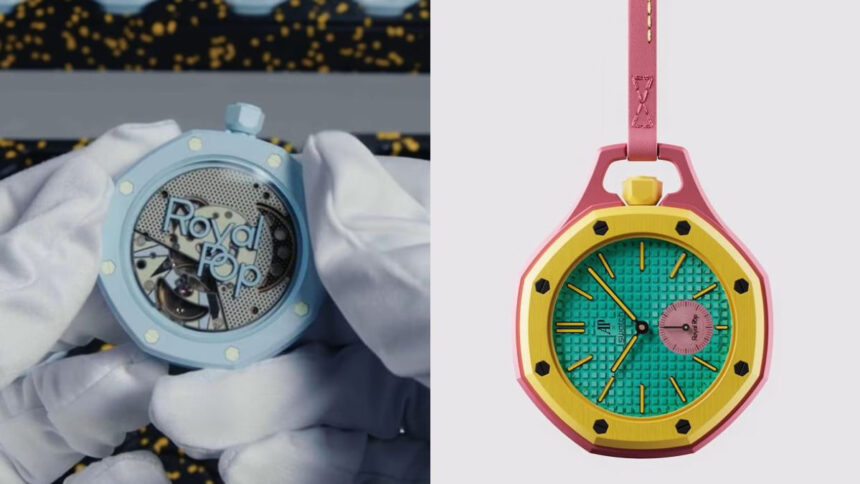
The launch of the limited-edition Royal Pop pocket watch by Swiss watchmaker Swatch in collaboration with luxury horology giant Audemars Piguet has triggered an unprecedented global shopping frenzy, forcing stores to shut down, police to intervene and launch events to be cancelled in multiple countries. What began as a highly anticipated product release quickly transformed into a worldwide phenomenon that exposed the extraordinary influence of luxury branding, resale culture and social media-driven consumer behaviour in the modern fashion industry.
Across major cities including Mumbai, Delhi, London, Paris, Milan, Dubai and New York, thousands of customers gathered outside Swatch stores hoping to purchase the newly released Royal Pop watch. In several locations, crowds became uncontrollable, creating scenes rarely associated with wristwatch launches. Videos of stampedes, aggressive pushing, long overnight queues and police intervention spread rapidly online, further intensifying demand for the collectible timepiece.
The Royal Pop watch combines the iconic octagonal styling of Audemars Piguet’s legendary Royal Oak collection with Swatch’s colourful retro-inspired Pop aesthetic from the 1980s. Industry observers believe this fusion of luxury design and relatively affordable pricing created the perfect conditions for a mass-market craze unlike anything the watch industry has seen in recent years.
Global Launch Turns Into Massive Crowd Crisis
The excitement surrounding the Royal Pop began days before its official launch on May 16. Enthusiasts, collectors and resellers started camping outside stores in anticipation of limited availability. In several cities, queues stretched across entire shopping districts as buyers waited overnight for a chance to secure one of the watches.
In Mumbai, large crowds gathered outside the Swatch boutique at Palladium Mall hours before the launch. Similar scenes unfolded at Select Citywalk in Delhi, where security officials struggled to manage the growing number of people attempting to enter the store. Authorities ultimately cancelled launch events in India over safety concerns.
The situation was even more dramatic internationally. In Paris, police reportedly used tear gas after crowds became aggressive and difficult to control. In London, police dogs were deployed outside stores as authorities attempted to maintain order. In Milan and Dubai, launch events were either postponed or cancelled entirely due to security risks.
In New York, several individuals waiting outside stores reportedly suffered from exhaustion after camping overnight for extended periods. Swatch outlets in several cities remained temporarily closed even days after the release because of crowd-management concerns.
The scenes highlighted the enormous hype generated around the watch and demonstrated how luxury collaborations can create demand levels that overwhelm normal retail operations.
Affordable Luxury Creates Extraordinary Demand
A major reason behind the Royal Pop craze is its pricing strategy. Traditional Audemars Piguet watches often cost tens of lakhs or even crores of rupees, making them inaccessible to ordinary buyers. However, the Royal Pop watch was launched at approximately 350 pounds, equivalent to around ₹45,000 in India.
For many young buyers, the watch represented a rare opportunity to own a product carrying the design DNA of one of the world’s most prestigious luxury watchmakers without paying an ultra-premium price.
Watch collectors and fashion enthusiasts viewed the release as more than just a consumer product. It quickly became a status symbol associated with exclusivity, luxury culture and social media visibility.
Industry experts say limited-edition collaborations have become one of the most powerful marketing tools in luxury retail. By creating scarcity and restricting supply, companies encourage emotional buying behaviour and create a sense of urgency among consumers.
In the case of the Royal Pop, the strategy appears to have exceeded all expectations.
Resale Market Fuels The Frenzy
Another major driver of the extraordinary demand has been the booming resale market. Within hours of the launch, several Royal Pop watches appeared on online resale platforms at massively inflated prices.
Reports suggest some units have already been listed for as much as 16,000 pounds, equivalent to nearly ₹20 lakh. This enormous price jump transformed the watch into a speculative investment opportunity for resellers seeking quick profits.
The resale culture surrounding limited-edition luxury products has grown significantly in recent years. Sneakers, handbags and watches are increasingly viewed as alternative investment assets rather than simple lifestyle products.
Many buyers standing in line outside stores admitted they were not traditional watch collectors but were hoping to profit by reselling the watch later at much higher prices.
Experts believe this speculative buying behaviour significantly intensified crowd sizes and contributed to the chaotic scenes witnessed globally.
Design Features Behind The Popularity
The Royal Pop watch attracted attention not only because of its branding but also because of its distinctive technical and visual design.
The watch incorporates Swatch’s famous System51 mechanical movement, marking a major innovation for the brand. Unlike standard battery-operated models, the Royal Pop features a hand-wound calibre mechanism that appeals strongly to traditional watch enthusiasts.
The design includes a transparent sapphire caseback, an open mainspring barrel and premium Super-LumiNova coating for improved visibility in low-light conditions.
The watch’s octagonal case shape directly references Audemars Piguet’s iconic Royal Oak design language, one of the most recognisable luxury watch silhouettes in the world.
Fashion analysts say the collaboration successfully combined nostalgia, affordability and prestige into a single product, making it highly attractive across multiple consumer groups.
Social Media Amplified The Obsession
Social media platforms played a central role in transforming the Royal Pop launch into a worldwide viral phenomenon.
Videos showing massive queues, chaotic crowds and emotional customer reactions spread rapidly across platforms such as Instagram, TikTok and X. Influencers and watch enthusiasts posted live updates from outside stores, encouraging even more people to join the frenzy.
Luxury product launches increasingly rely on online visibility to build hype, but in the case of the Royal Pop, the viral momentum escalated beyond expectations.
Marketing experts say the fear of missing out became one of the strongest psychological triggers behind the buying rush. As more users posted about limited availability and rising resale prices, demand accelerated further.
Swatch itself later appealed to customers through social media, requesting people not to crowd stores in unsafe numbers.
Luxury Collaborations Redefining Consumer Culture
The Royal Pop phenomenon reflects a larger transformation taking place within the global luxury industry.
Luxury brands are increasingly partnering with mainstream companies to reach younger audiences who may not traditionally afford ultra-high-end products. Similar collaborations in fashion, footwear and streetwear have generated enormous commercial success over the past decade.
By partnering with Swatch, Audemars Piguet effectively introduced elements of its luxury identity to a broader global audience.
At the same time, collaborations like these blur the line between luxury ownership and mass-market accessibility. While traditional luxury products depend on exclusivity, limited-edition partnerships create controlled accessibility that still maintains scarcity.
The result is often an explosive mix of aspiration, collectibility and investment-driven demand.
Concerns Over Crowd Safety And Retail Security
The disorder surrounding the Royal Pop launch has also raised important questions about public safety and retail preparedness.
Several analysts criticised the lack of effective crowd-control planning despite clear indications of extraordinary demand. In many cities, people had reportedly begun queuing days in advance, yet security arrangements were insufficient.
Retail experts argue that luxury brands must develop more sophisticated launch systems, including digital lotteries, timed appointments or online reservation mechanisms to avoid dangerous crowd situations.
The incidents have also renewed debate over resale profiteering and whether brands should take stronger measures against bulk purchasing by resellers.
Some customers expressed frustration that genuine enthusiasts struggled to purchase the watches while resellers quickly secured multiple units for profit.
What Happens Next For Swatch And Audemars Piguet
Despite the chaos, the Royal Pop launch is likely to be viewed as a major commercial success for both companies.
The collaboration generated extraordinary global publicity, dominated social media conversations and reinforced the power of limited-edition luxury products in contemporary consumer culture.
However, the intense crowd incidents may force brands to rethink how future releases are managed.
Industry observers expect Swatch and Audemars Piguet could potentially expand the collaboration with additional designs or future limited editions given the overwhelming response.
For now, the Royal Pop has achieved something few watch launches ever accomplish — it transformed a timepiece into a global cultural event.
As stores continue managing demand and resale prices remain extraordinarily high, the Royal Pop phenomenon stands as one of the most dramatic examples of luxury consumer frenzy in recent years.