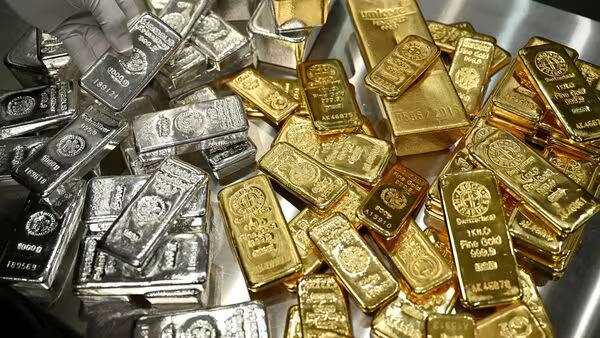
India’s bullion market witnessed another dramatic rally on May 19 as gold and silver prices surged sharply, extending the powerful upward trend that has dominated the precious metals market throughout 2026. According to the latest figures released by the India Bullion and Jewellers Association, the price of 24-carat gold climbed by ₹1,168 per 10 grams, taking the rate close to the historic ₹1.59 lakh mark. Silver also recorded a major jump, with prices rising by ₹2,181 per kilogram to reach ₹2.70 lakh.
The latest rise has once again intensified discussions among investors, jewellers, economists and ordinary consumers about the future direction of precious metal prices. Analysts believe the rally reflects a combination of global economic uncertainty, geopolitical tensions, rising investment demand and domestic policy changes that continue to push investors towards safe-haven assets like gold and silver.
The sharp increase has also revived concerns for middle-class buyers preparing for the upcoming wedding and festive seasons, as jewellery purchases become significantly more expensive with every major price jump.
Precious Metals Continue Extraordinary Rally In 2026
The year 2026 has turned into one of the most volatile and remarkable periods for the precious metals market in recent history. Gold prices have already gained approximately ₹26,000 per 10 grams since the beginning of the year, while silver prices have surged by nearly ₹40,000 per kilogram.
At the end of December 2025, gold was trading around ₹1.33 lakh per 10 grams. Since then, prices have climbed steadily despite intermittent corrections. Similarly, silver prices have moved from around ₹2.30 lakh per kilogram to ₹2.70 lakh.
Market experts say several global and domestic factors are simultaneously supporting the rally. Persistent geopolitical conflicts, fears of economic slowdown in major economies, uncertainty surrounding international trade and continued investor preference for low-risk assets have all contributed to rising bullion demand.
Gold is traditionally viewed as a store of value during uncertain times. Whenever global markets experience instability, investors often shift funds away from equities and high-risk investments into precious metals. The ongoing global political and economic environment has strengthened this trend considerably.
Import Duty Hike Adds Further Pressure On Domestic Prices
One of the most important domestic factors behind the latest price surge is the government’s decision to increase import duties on gold and silver. The central government has raised the total import duty from 6 percent to 15 percent.
Under the revised structure, gold imports now attract a 10 percent basic customs duty along with a 5 percent Agriculture Infrastructure and Development Cess.
Since India imports a substantial portion of its gold requirements, any increase in import duties directly impacts retail prices in the domestic market. Jewellers say the revised tax structure has significantly increased procurement costs.
Industry observers believe the higher duties may also encourage unofficial gold inflows and smuggling activities if domestic prices continue rising sharply above international rates.
However, government officials maintain that the duty hike is aimed at controlling the trade deficit and reducing excessive dependence on imports.
International Factors Driving Gold Prices Higher
Global developments continue to play a crucial role in determining bullion prices. Economic uncertainty in several major economies has strengthened investor appetite for gold as a defensive asset.
Ongoing geopolitical tensions in multiple regions, including conflicts affecting energy markets and global trade routes, have added further pressure on financial markets. Investors worldwide are increasingly seeking stability through precious metals investments.
Another major factor supporting gold prices is uncertainty surrounding global interest rates. Central banks across several countries continue balancing inflation concerns against slowing economic growth. Whenever investors anticipate interest-rate cuts or weaker economic performance, gold typically benefits because it becomes more attractive relative to other financial instruments.
International central banks have also continued purchasing significant quantities of gold reserves, adding further support to global demand.
Silver, meanwhile, is benefiting not only from investment demand but also from industrial consumption. The growing use of silver in renewable energy technologies, electronics and electric vehicles has strengthened long-term demand projections.
Gold Prices Across Major Indian Cities
Gold rates across major Indian cities remained elevated on May 19, reflecting the nationwide impact of the rally.
Delhi recorded gold prices near ₹1.57 lakh per 10 grams for 24-carat gold. Similar levels were observed in Mumbai, Kolkata, Jaipur, Lucknow and Ahmedabad.
Jewellers across several cities reported mixed consumer sentiment. While some buyers delayed purchases hoping for corrections, others rushed to invest further fearing prices could rise even higher in coming months.
Retail jewellery demand traditionally weakens during periods of rapid price increases because consumers become cautious about making large purchases. However, investment-oriented buying often rises sharply during such rallies.
Wedding Season Buyers Face Growing Pressure
The continuous increase in gold prices has become a major concern for families preparing for weddings and traditional ceremonies, where gold jewellery remains culturally significant across India.
Jewellers say many consumers are now reducing the quantity of jewellery purchases or shifting towards lighter-weight designs to manage budgets.
Some buyers are increasingly exploring alternatives such as gold exchange schemes, lightweight collections and digital gold investments.
Industry associations believe sustained high prices could eventually impact overall jewellery demand if affordability concerns intensify further.
However, despite rising prices, India’s emotional and cultural connection with gold continues to remain exceptionally strong.
Investors See Precious Metals As Safe Haven
Financial advisors say the current environment has strengthened gold’s role as a strategic investment asset.
During periods of inflation, currency volatility or market uncertainty, precious metals often help investors preserve wealth more effectively than several traditional financial instruments.
Many investors are now diversifying portfolios by allocating a larger share towards bullion investments, including physical gold, exchange-traded funds and sovereign gold bonds.
Silver has also emerged as an increasingly attractive investment option because of its dual role as both an industrial and precious metal.
Analysts caution, however, that precious metal prices can remain highly volatile. Investors should avoid panic buying and instead focus on long-term allocation strategies based on financial goals and risk tolerance.
Experts Warn Against Unverified Purchases
With prices at record levels, experts are advising consumers to remain extremely cautious while purchasing gold jewellery and bullion products.
Consumers are strongly encouraged to buy only certified gold carrying a Bureau of Indian Standards hallmark. Hallmark certification confirms the purity level of the metal and protects buyers from fraud.
Experts also recommend cross-checking daily prices through trusted industry sources before making purchases.
Jewellery buyers are additionally advised to examine making charges, wastage charges and buyback conditions carefully, as these can significantly affect the final cost.
Financial fraud related to fake gold investments and misleading purity claims tends to increase during periods of strong market demand.
Can Gold Reach Even Higher Levels?
Market analysts remain divided on the future trajectory of gold prices. Some believe continued geopolitical instability and central-bank buying could push gold towards fresh record highs later this year.
Others expect periodic corrections as profit-booking emerges after rapid rallies.
Much will depend on global economic conditions, interest-rate policies, currency movements and political developments across major economies.
Silver prices are also expected to remain volatile because of their sensitivity to both industrial demand and investment sentiment.
Despite short-term fluctuations, many experts continue viewing precious metals as important components of diversified investment portfolios.
Bullion Market Reflects Broader Economic Anxiety
The extraordinary rise in gold and silver prices during 2026 reflects broader concerns dominating the global economy.
Investors remain worried about inflation risks, slowing growth, geopolitical tensions and instability across financial markets. In such environments, traditional safe-haven assets often attract substantial capital inflows.
For ordinary consumers, however, the rally has created mixed emotions. While investors celebrate rising valuations, jewellery buyers face increasing affordability pressures.
As prices continue fluctuating sharply, the bullion market is likely to remain at the centre of financial discussions throughout the remainder of the year.