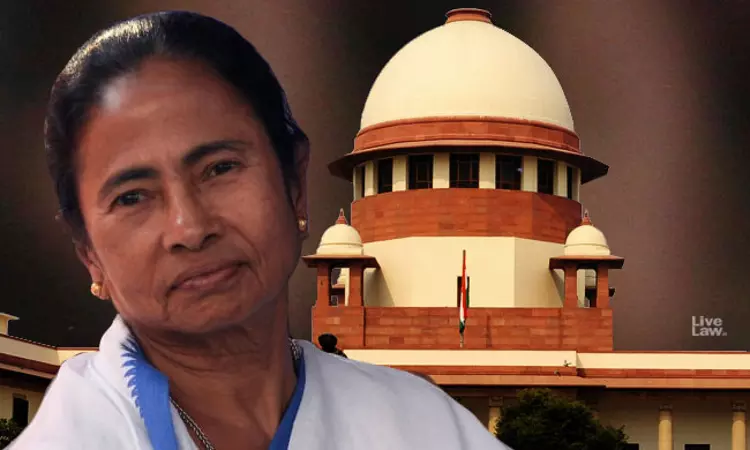
The Supreme Court of India is set to hear a significant petition filed by the Enforcement Directorate concerning alleged obstruction during search operations linked to i-pac in West Bengal, placing federal investigative authority and constitutional governance under close judicial scrutiny. The matter has drawn national attention as it involves allegations against the sitting Chief Minister and raises broader questions about the balance of power between central agencies and state administrations, the limits of executive intervention, and the protection of investigative processes within India’s constitutional framework.
Enforcement directorate allegations and the legal questions before the court
The case before the Supreme Court of India arises from search operations conducted by the Enforcement Directorate at premises associated with Indian Political Action Committee, widely known as i-pac. These searches were reportedly part of an ongoing money-laundering investigation connected to a larger financial probe. According to the central agency, its officials faced resistance and alleged obstruction during the lawful execution of their duties, prompting the ED to seek the Supreme Court’s intervention.
In its plea, the ED has alleged that the presence and actions of the West Bengal Chief Minister, Mamata Banerjee, along with certain state officials, interfered with the search process. The agency claims that such interference included disruption of the search environment and the alleged removal of documents and electronic devices that were relevant to the investigation. These assertions, if examined and substantiated, raise serious legal concerns regarding obstruction of justice and interference with statutory functions entrusted to a central investigative body.
The ED has approached the apex court seeking a judicially monitored probe into these allegations, arguing that the matter goes beyond routine procedural disputes and directly affects the independence and effectiveness of federal investigative agencies. The petition underscores that central agencies derive their authority from parliamentary legislation and are expected to function without intimidation or undue influence, regardless of the political stature of individuals involved. The agency has also contended that such alleged actions, if left unchecked, could set a precedent that undermines the rule of law and weakens institutional safeguards.
On the other hand, the West Bengal government has signalled its intention to contest the ED’s claims, maintaining that the allegations are unfounded and politically motivated. By filing a caveat in the Supreme Court, the state has sought to ensure that no adverse orders are passed without giving it a full opportunity to present its case. The state’s position reflects a broader argument often raised by regional governments, asserting that central agencies are sometimes used selectively and that their actions must be subject to judicial oversight to prevent misuse.
The legal questions before the Supreme Court are therefore multifaceted. They include determining whether the alleged conduct amounts to obstruction under law, whether the presence of a constitutional functionary at the site of a search automatically implies interference, and how to balance the powers of central agencies with the rights and responsibilities of state governments. The court’s consideration of these issues is expected to focus on constitutional principles, statutory interpretation, and established legal precedents governing searches, seizures, and investigative autonomy.
Political context, federal balance, and wider implications
Beyond the immediate legal dispute, the case unfolds within a charged political environment in West Bengal, where relations between the state government and central authorities have often been contentious. I-pac, as a political consultancy firm, has played a visible role in election strategies across India, making the raids and subsequent allegations politically sensitive. The involvement of such an organisation adds another layer of complexity, as the case touches upon the intersection of politics, consultancy, and financial investigations.
The matter has also been linked, at least contextually, to ongoing probes into alleged financial irregularities, including cases that have previously brought central agencies into confrontation with state administrations. In this backdrop, the Supreme Court’s hearing is being closely watched for signals on how the judiciary views the scope of central investigative powers and the extent to which political executives can involve themselves in ongoing probes without crossing legal boundaries.
From a constitutional perspective, the case highlights enduring tensions inherent in India’s federal structure. While law and order is primarily a state subject, central agencies like the ED operate under central legislation to investigate specific categories of offences, including money laundering. The overlap of these domains can lead to friction, especially when investigations touch upon politically influential individuals or entities. The court’s handling of the ED’s plea may contribute to clarifying these grey areas, offering guidance on cooperation, jurisdiction, and mutual respect between different layers of governance.
Public discourse around the case has also reflected concerns about institutional trust. Supporters of the state government have questioned the timing and intent of the raids, while proponents of strong federal enforcement have emphasised the need for agencies to function without fear or favour. The judiciary’s role, therefore, becomes crucial not only in adjudicating the specific allegations but also in reinforcing confidence in democratic institutions and legal processes.
As the Supreme Court prepares to hear the matter, its observations and directions are expected to resonate beyond the courtroom. They may influence how future search operations are conducted, how political executives engage with investigative processes, and how disputes between state governments and central agencies are resolved. The case thus stands as a significant moment in the ongoing conversation about accountability, federalism, and the rule of law in India.