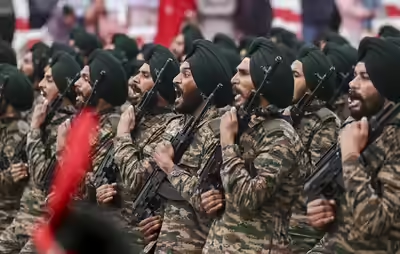
Jaipur witnessed a landmark moment in India’s military history as the city hosted the army day parade on public streets for the first time, transforming a traditionally closed ceremonial event into a people-centric celebration of national pride, military heritage, and modern defence capability. The parade marked a significant shift in how the Indian Army connects with citizens, bringing soldiers, equipment, and ceremonial traditions directly into the heart of the city and allowing thousands of spectators to experience the discipline and spirit of the armed forces at close quarters.
A people-centric celebration of military tradition and national pride
For decades, army day celebrations have largely been confined to cantonments and controlled military spaces, attended mainly by service personnel, veterans, and invited dignitaries. This year, however, the Indian Army chose to break with convention by hosting the parade along public roads in Jaipur, opening the event to citizens from all walks of life. From early morning, families, students, veterans, and tourists lined the parade route, creating a festive atmosphere that blended civic enthusiasm with patriotic sentiment.
The public setting gave the parade a distinctly inclusive character. Children waved flags, elders recalled memories of service and sacrifice, and first-time viewers watched in awe as uniformed contingents marched past with precision and discipline. The sight of soldiers moving through familiar city streets strengthened the emotional bond between the army and the people it serves, reinforcing the idea that the armed forces are not distant institutions but an integral part of national life.
Marching columns from various regiments demonstrated the timeless values of unity, discipline, and duty that define the Indian Army. Each contingent reflected a unique history and regional identity while standing together under a shared national banner. The ceremonial drills, perfectly synchronized movements, and commanding presence of officers highlighted the rigorous training and professionalism that underpin military readiness.
The parade also paid tribute to veterans, whose presence added depth and continuity to the celebrations. Many retired soldiers attended as honoured guests, receiving warm applause from the crowd. Their participation served as a reminder that today’s military strength is built upon generations of service and sacrifice. Stories of past campaigns, shared informally among spectators, infused the event with a sense of historical continuity and respect.
By taking the parade out of cantonments and into the public domain, the Indian Army signalled a conscious effort to strengthen civil-military relations. The decision reflected an understanding that public trust and awareness are essential components of national security. The open format allowed citizens to see the human side of the military, fostering appreciation not only for its ceremonial grandeur but also for the dedication and discipline required to safeguard the nation.
Showcasing modern capabilities and the evolving face of the indian army
Beyond its symbolic importance, the parade served as a powerful showcase of the Indian Army’s evolving capabilities in an era defined by technological change and complex security challenges. Alongside traditional marching units, the event featured displays of modern equipment, specialised formations, and advanced systems that illustrated how the army is adapting to contemporary warfare while remaining rooted in its core values.
One of the most striking aspects of the parade was the presentation of new-age military technologies. Drones, robotic systems, and advanced surveillance tools were displayed to the public, offering a glimpse into how innovation is reshaping defence preparedness. These technologies, once visible only in controlled demonstrations or defence exhibitions, were now part of a public narrative about the future of national security. For many spectators, especially young students, the displays sparked curiosity and interest in science, technology, and defence careers.
Specialised units trained for modern operational environments marched alongside traditional formations, symbolising the army’s dual commitment to heritage and transformation. Their presence underscored the reality that contemporary military challenges require flexibility, rapid response, and technological integration. The seamless inclusion of these units in a ceremonial setting conveyed a message of confidence and readiness, reassuring citizens of the army’s ability to protect national interests in a changing world.
Aerial elements added further grandeur to the event, with helicopters and other aircraft flying in formation above the parade route. The fly-past not only thrilled spectators but also demonstrated coordination between ground and air elements, a crucial aspect of modern military operations. The roar of engines overhead, combined with disciplined movements on the ground, created a multisensory experience that highlighted the scale and complexity of defence preparedness.
The public parade also reflected a broader narrative of self-reliance and indigenous capability. Equipment and systems developed within the country featured prominently, reinforcing the message that India is steadily advancing towards greater autonomy in defence manufacturing and technology. This emphasis resonated strongly with audiences, aligning military progress with national aspirations for innovation and self-sufficiency.
Cultural elements woven into the celebrations further enriched the experience. Patriotic music, traditional performances, and evening programmes complemented the formal parade, blending martial pride with cultural expression. These events transformed army day into a city-wide celebration rather than a single ceremonial moment, leaving a lasting impression on residents and visitors alike.
By hosting the army day parade on public streets, Jaipur became the setting for a new chapter in how military traditions are shared with society. The event demonstrated that ceremonial practices can evolve without losing their dignity, and that openness can enhance, rather than diminish, respect for institutions. As spectators dispersed at the end of the day, the memory of soldiers marching through the city remained a powerful symbol of unity, pride, and collective responsibility toward the nation.