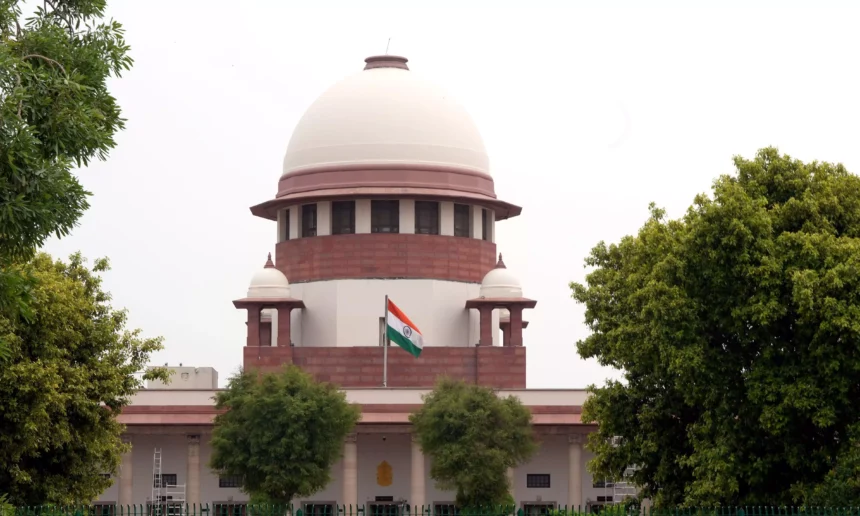
The Supreme Court on Tuesday set aside a Madhya Pradesh High Court order that mandated three years of legal practice for candidates to qualify for the post of civil judge. A bench comprising Justices P. S. Narasimha and Atul S. Chandurkar allowed the appeal filed by the Madhya Pradesh High Court challenging the division bench ruling, thereby clearing the path for ongoing recruitment processes.
Background of the Recruitment Dispute
The legal dispute arose after the Madhya Pradesh High Court, while reviewing the recruitment of civil judges, had directed that only candidates with three years of legal practice could be considered eligible. Advocate Ashwani Kumar Dubey, representing the high court, argued before the Supreme Court that conducting a fresh re-examination for all candidates would be “unconstitutional and impractical” and could lead to a flood of litigation.
It may be recalled that last year, the apex court had stayed the high court order that temporarily stalled the recruitment process, which had been conducted without enforcing the three-year practice requirement. While the amended recruitment rules had previously been upheld by the high court, further legal challenges followed when two unsuccessful candidates claimed they would meet the eligibility criteria under the amended rules and sought a review of the cut-off.
Supreme Court’s Ruling and Its Implications
The division bench of the Madhya Pradesh High Court had initially restrained the recruitment process, directing the exclusion of candidates who had cleared the preliminary examination but did not satisfy the amended eligibility norms. Specifically, the June 13, 2024 order of the division bench instructed that all successful preliminary candidates from the January 14, 2024 examination who did not meet the amended eligibility criteria be removed from consideration.
By allowing the high court’s appeal, the Supreme Court effectively nullified the three-year practice requirement imposed by the division bench, permitting candidates who had cleared the preliminary exam to remain eligible. The ruling ensures that the recruitment process, which had faced significant delays due to multiple rounds of litigation, can proceed without further obstruction.
This decision is likely to have a significant impact on Madhya Pradesh’s judicial recruitment, as it reinforces the amended rules and provides clarity regarding candidate eligibility. By striking down the division bench order, the Supreme Court has emphasized procedural practicality and the need to avoid unnecessary litigation that could impede the functioning of the judiciary