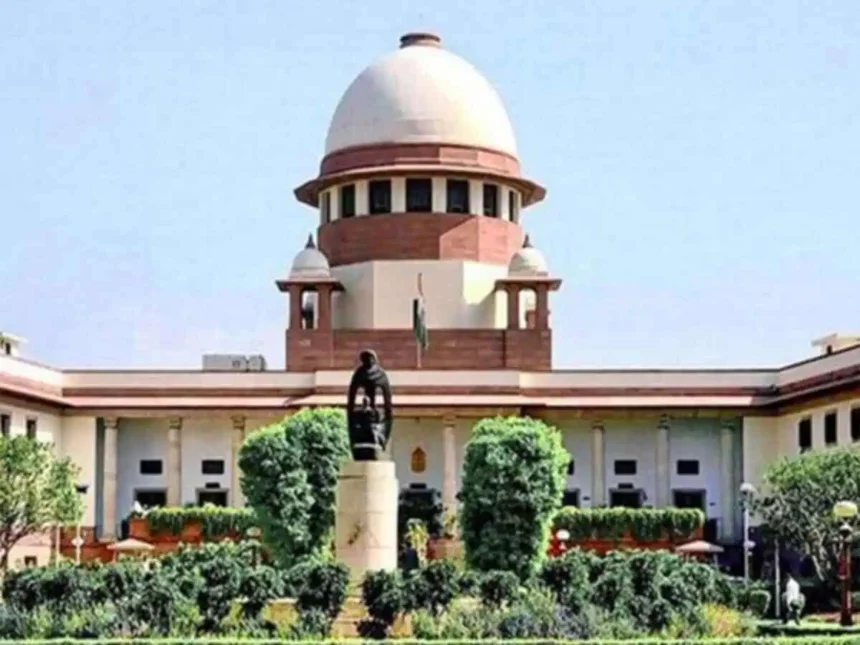
The Supreme Court of India has delivered a landmark judgment clarifying the criteria used to determine the “creamy layer” within the Other Backward Classes (OBC) category. In an important decision that could affect recruitment and reservation policies across the country, the apex court ruled that the salary of parents alone cannot be used to decide whether a candidate belongs to the OBC creamy layer.
The ruling provides significant relief to several candidates who had successfully cleared the Union Public Service Commission (UPSC) Civil Services Examination but were denied government jobs after authorities classified them under the creamy layer category based solely on their parents’ salary.
A bench comprising Justice PS Narasimha and Justice R Mahadevan dismissed the appeals filed by the central government challenging earlier High Court decisions that had ruled in favour of the affected candidates. The court observed that the authorities had applied incorrect criteria by relying only on parental income rather than considering other factors such as the position and status of the parents.
According to the court, the process used by government authorities to classify certain candidates as part of the creamy layer was inconsistent with existing policy guidelines and violated the principle of equality under the Constitution.
The ruling is expected to influence future recruitment processes and provide clarity regarding how the creamy layer within OBC reservations should be determined.
Supreme Court Clarifies Criteria for Determining OBC Creamy Layer
The concept of the creamy layer was introduced as part of India’s reservation framework to ensure that the benefits of affirmative action reach the most disadvantaged sections of society. The principle aims to exclude relatively affluent and socially advanced individuals within the OBC category from reservation benefits so that opportunities are available to those who genuinely need them.
However, determining who falls under the creamy layer has often been a matter of legal interpretation and administrative policy. In the present case, the Supreme Court examined whether the government was justified in classifying candidates as part of the creamy layer solely based on the income or salary of their parents.
The court referred to the 1993 government order issued following the landmark Indira Sawhney judgment, which laid down the basic framework for identifying the creamy layer among OBC communities. The Indira Sawhney case, decided by the Supreme Court in 1992, established the constitutional validity of reservations for OBCs while also introducing the concept of excluding the creamy layer from such benefits.
According to the guidelines issued in 1993, the position or rank held by parents in government service is a key factor in determining whether a candidate belongs to the creamy layer. For example, children of parents who occupy high-ranking government posts, such as Group A or certain Group B positions, may be excluded from reservation benefits.
The court observed that the policy framework clearly emphasises the importance of status and position rather than income alone. It also noted that certain forms of income, including agricultural income, are not included in the calculation of family income when determining creamy layer status.
In its judgment, the Supreme Court clarified that salary by itself cannot be treated as the sole determinant of creamy layer status, as doing so would ignore other important aspects of social and economic standing.
The bench further noted that administrative authorities had relied on a 2004 clarification letter issued by the government, which allowed the salary of parents working in certain institutions to be included while determining whether their children fell under the creamy layer category.
However, the court held that such a clarification could not override the original policy framework established under the 1993 order.
Dispute Over Salary of PSU and Bank Employees
The case specifically involved candidates whose parents were employed in public sector undertakings (PSUs), banks and similar institutions. In these instances, authorities included the salary of the parents while calculating whether the candidates crossed the income threshold for the creamy layer.
As a result, many candidates were declared ineligible for OBC reservation benefits despite having cleared the highly competitive UPSC Civil Services Examination.
The affected candidates challenged the government’s decision in various High Courts, arguing that the authorities had misinterpreted the policy guidelines. They contended that the creamy layer criteria focus primarily on the position or rank held by parents rather than simply their salary.
The candidates also argued that applying different standards to employees working in government departments and those employed in PSUs or banks created an unfair distinction.
High Courts had earlier ruled in favour of the candidates, stating that the government’s interpretation of the creamy layer criteria was inconsistent with the established policy framework. The courts held that including parental salary as the sole determining factor was contrary to the principles laid down in the Indira Sawhney case and the subsequent government order.
The central government challenged these decisions in the Supreme Court, leading to the present verdict.
After reviewing the matter in detail, the Supreme Court upheld the High Court judgments and dismissed the government’s appeals.
The bench observed that treating children of PSU employees differently from children of government employees would violate the constitutional guarantee of equality.
The judges pointed out that if the children of government officers are assessed based on the rank or status of their parents, then applying a different standard to children of PSU employees by focusing solely on salary would be discriminatory.
Such differential treatment, the court noted, would undermine the objective of the reservation policy and could lead to unfair exclusion of deserving candidates.
Relief for UPSC Candidates and Impact on Future Recruitment
One of the most significant outcomes of the Supreme Court’s ruling is the relief provided to candidates who were denied government jobs after clearing the Civil Services Examination due to being wrongly classified under the creamy layer category.
The court directed the central government to reconsider the claims of these candidates within six months. Authorities have been instructed to review each case in accordance with the correct interpretation of the creamy layer criteria as clarified by the court.
In a notable direction, the Supreme Court also stated that if necessary, the government may create additional posts to accommodate candidates who were previously denied appointments due to the incorrect application of the creamy layer rule.
This directive ensures that candidates who successfully cleared the rigorous UPSC selection process are not deprived of employment opportunities because of administrative errors or misinterpretation of policy guidelines.
The judgment is likely to have broader implications for recruitment processes across government services and public institutions. Authorities responsible for implementing reservation policies may now need to revisit their guidelines and ensure that creamy layer determinations are made in accordance with the legal principles clarified by the Supreme Court.
Legal experts believe the ruling will help bring greater clarity and consistency to the application of reservation policies in India. It reinforces the idea that affirmative action policies must be implemented carefully and fairly, ensuring that the benefits reach those who genuinely require social and economic support.
The verdict also highlights the importance of maintaining equality in administrative practices. By rejecting the practice of using parental salary as the sole determining factor, the Supreme Court has reaffirmed that reservation policies must be applied in a manner consistent with constitutional principles.
For candidates preparing for competitive examinations such as the UPSC Civil Services Examination, the judgment underscores the importance of transparent and fair implementation of reservation rules.
Ultimately, the Supreme Court’s decision represents a significant step toward ensuring that India’s reservation system functions in accordance with its intended objective—providing opportunities to disadvantaged sections of society while maintaining fairness and equality within the framework of the Constitution.