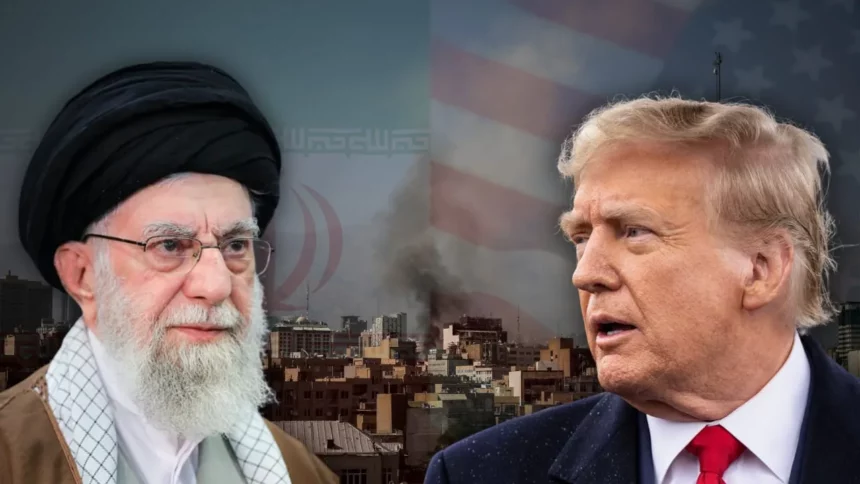
A classified assessment by the United States intelligence community has concluded that the Iranian political system is unlikely to collapse even after a large-scale military assault, raising doubts about the possibility of forced regime change in the country. The report, prepared by the US National Intelligence Council shortly before the ongoing military campaign involving the United States and Israel, highlights the resilience of Iran’s political structure and security institutions.
According to details of the intelligence assessment reported by international media, the Iranian government has developed extensive internal mechanisms designed to maintain stability even during severe military and political crises. The analysis suggests that the country’s leadership has established clear contingency plans to ensure the continuity of governance even if senior officials or top political figures are eliminated during conflict.
The report also notes that opposition groups inside and outside Iran remain fragmented and lack the organisational strength necessary to take control of the government in the event of political instability. Intelligence officials therefore believe that even under conditions of intense military pressure, the Iranian regime is unlikely to collapse quickly.
The assessment has drawn attention because it contrasts with political statements from US leaders suggesting that sustained military pressure could lead to major political changes in Tehran.
Intelligence Analysis Highlights Iran’s Political Resilience
The National Intelligence Council, which coordinates analysis across multiple American intelligence agencies, conducted the assessment to evaluate the stability of Iran’s political system during a potential military confrontation.
One of the most important conclusions of the report is that the Iranian government has established protocols intended to protect the continuity of leadership during times of crisis. These mechanisms include clearly defined chains of command and governance structures that allow the state to continue functioning even if key officials are killed or removed from power.
Such contingency plans are believed to have been developed over several decades, particularly after previous periods of instability in the region. As a result, Iran’s political leadership has created systems that prevent sudden collapse of authority.
The report also emphasises the central role played by the Islamic Revolutionary Guard Corps (IRGC), a powerful military and political institution within Iran. The IRGC exercises significant influence across the country’s security apparatus, economy and political networks.
Because of this extensive institutional presence, intelligence officials believe that the IRGC would play a major role in maintaining order and stability even if the country faced leadership losses during conflict.
Another key factor highlighted in the report is the absence of a unified opposition capable of replacing the current government. Iranian opposition movements remain divided across ideological, ethnic and political lines.
Many opposition groups operate independently and lack the coordination necessary to organise a nationwide political transition. As a result, intelligence analysts believe that the collapse of the existing government would not automatically lead to the emergence of a new political leadership.
The possibility of a large-scale public uprising was also considered unlikely under current conditions. Intelligence officials argue that wartime situations and ongoing military attacks tend to strengthen internal security structures rather than trigger mass movements capable of overthrowing the government.
Questions Raised Over US Strategy Toward Iran
The intelligence report has also raised questions about the broader strategic objectives of the United States in its confrontation with Iran.
The White House has previously outlined the goals of its military operation, which reportedly aims to weaken Iran’s strategic capabilities and prevent the country from developing nuclear weapons.
Officials have stated that the operation seeks to destroy Iran’s ballistic missile systems, reduce its naval capacity and limit its ability to support allied armed groups across the Middle East.
The military campaign is also intended to disrupt Iran’s defence infrastructure and reduce its influence in regional conflicts.
However, the intelligence assessment indicates that these military actions may not necessarily result in political transformation within Iran.
Experts suggest that while military pressure may weaken certain strategic capabilities, the internal structure of Iran’s political system remains resilient enough to survive external attacks.
Suzanne Maloney, an Iran expert and vice president at the Brookings Institution, described the intelligence report as a well-informed evaluation of Iran’s political institutions.
According to her, Iran’s governing system has evolved over many years to withstand both internal unrest and external pressure. This resilience makes sudden regime collapse highly unlikely.
Debate Over Iran’s Future Leadership
The report has also intensified discussion regarding possible changes in Iran’s leadership.
US President Donald Trump has previously indicated that the current leadership structure in Iran should be replaced and has suggested that Washington should play a role in shaping the country’s political future.
Trump recently criticised the possibility of Mojtaba Khamenei, the son of the late Iranian Supreme Leader Ayatollah Ali Khamenei, becoming the next leader of the country. He argued that installing a leader who continues the policies of the previous administration would increase the risk of future conflicts.
However, Iranian officials have strongly rejected the idea that foreign governments could influence their country’s leadership decisions.
Iranian Parliament Speaker Mohammad Bagher Ghalibaf stated that the leadership of the country will be determined solely by the Iranian people and not by external powers.
This disagreement highlights the growing tension between Iran and the United States over the future political direction of the country.
Global Implications of the Conflict
The ongoing confrontation involving Iran has far-reaching implications for global security and international politics.
Iran occupies a strategically important position in the Middle East and plays a major role in regional geopolitics. Any major political instability in the country could affect global oil markets, maritime trade routes and regional security dynamics.
The intelligence assessment suggests that attempts to change Iran’s political system through military action could face significant obstacles due to the country’s institutional strength.
Many analysts believe that any meaningful political transformation in Iran is more likely to emerge from internal social and political developments rather than external military intervention.
As the conflict in the Middle East continues to evolve, governments and policymakers around the world will closely monitor the situation and assess the potential long-term consequences for regional stability.
The intelligence report ultimately highlights the complexity of predicting political outcomes during wartime and underscores the resilience of established political systems even under intense external pressure.